
You’ve ordered the perfect bathroom tiles, but when they arrive, several boxes are damaged. Your contractor is ready to start installation, and the supplier says replacements will take another week. Now you’re wondering who should handle the problem and whether the delay will cost you extra.
This is a common concern when homeowners purchase renovation materials themselves. Buying your own tile, flooring, cabinets, or fixtures gives you more control over your choices, but it can also create confusion about delivery, storage, damage, and installation responsibilities.
For homeowners planning a renovation in Santa Clarita, understanding these responsibilities before placing an order can help avoid disputes and unexpected project delays.
Who Is Responsible for Owner-Supplied Renovation Materials?
When you purchase renovation materials directly, you’re generally responsible for ordering them, communicating with the supplier, and resolving purchase-related issues unless your contract states otherwise.
Your contractor remains responsible for the installation work covered by your agreement. However, responsibility for receiving deliveries, inspecting shipments, storing materials, and addressing damage depends on the contract and what actually happened.
The important distinction is that buying a product doesn’t automatically make you responsible for everything that happens to it.
Before ordering, confirm who will:
-
Verify product dimensions and installation compatibility.
-
Receive and inspect deliveries.
-
Report damaged or missing products.
-
Store materials safely before installation.
-
Handle replacement orders and scheduling changes.
These decisions should be documented rather than left to verbal assumptions.
What Are Owner-Supplied Materials in a Home Renovation?
Owner-supplied materials are products you purchase independently instead of having your remodeling contractor supply them.
Homeowners commonly purchase bathroom fixtures, decorative tile, kitchen appliances, cabinet hardware, lighting, flooring, and specialty finishes.
Sometimes the reason is simple: you’ve found a specific product you want. Other times, you prefer comparing suppliers or controlling your purchasing budget.
The challenge isn’t necessarily the purchase itself. It’s making sure the product fits the renovation plan.
For example, a bathroom vanity might fit the available wall space but interfere with the existing drain. A kitchen appliance may match the cabinet opening in width but require additional ventilation or door clearance.
These details should be checked before purchasing, not discovered during installation.
Before Buying Materials, Have Your Contractor Review the Specifications
A product description usually tells you what you’re buying, but it may not explain everything needed for installation.
Before placing an order, share the manufacturer’s installation instructions and exact model number with your contractor.
For kitchen remodeling, this is especially important when purchasing appliances, sinks, cabinet hardware, or countertops that must fit within a coordinated layout.
During bathroom remodeling, plumbing fixtures, tile, shower components, and vanities may require specific dimensions or compatible accessories.
What should be checked before ordering?
-
Dimensions: Will the product fit the actual installation space?
-
Compatibility: Does it work with the planned plumbing, electrical, or construction system?
-
Quantity: Have you included an appropriate allowance for cuts or waste?
-
Accessories: Are mounting parts, valves, connectors, or other required components included?
-
Delivery date: Will the product arrive before installation is scheduled?
Ask your contractor to explain any concerns in writing. Also clarify whether the review includes full technical verification or only a general compatibility check.
Who Handles Delivery of Homeowner-Purchased Materials?
Delivery is one of the easiest responsibilities to overlook.
You might order a large bathroom vanity expecting it to arrive inside your home, only to discover that the supplier provides curbside delivery. The driver leaves the box outside, and nobody has arranged to move it.
The same issue can occur with pallets of tile, heavy flooring cartons, and large appliances.
Before confirming delivery, establish who will receive the shipment, unload it, and move it to a suitable storage area.
Three delivery details to confirm
-
Delivery location: Will the supplier deliver curbside, to the garage, or inside the property?
-
Receiving responsibility: Will you or the contractor be present to accept and inspect the shipment?
-
Handling requirements: Does unloading require additional labor, equipment, or protective measures?
If your contractor agrees to receive materials, confirm the delivery window and whether that service is included in the agreement.
A signed delivery receipt doesn’t necessarily mean every product has been inspected and accepted as undamaged.
What Happens if Your Renovation Materials Arrive Damaged?
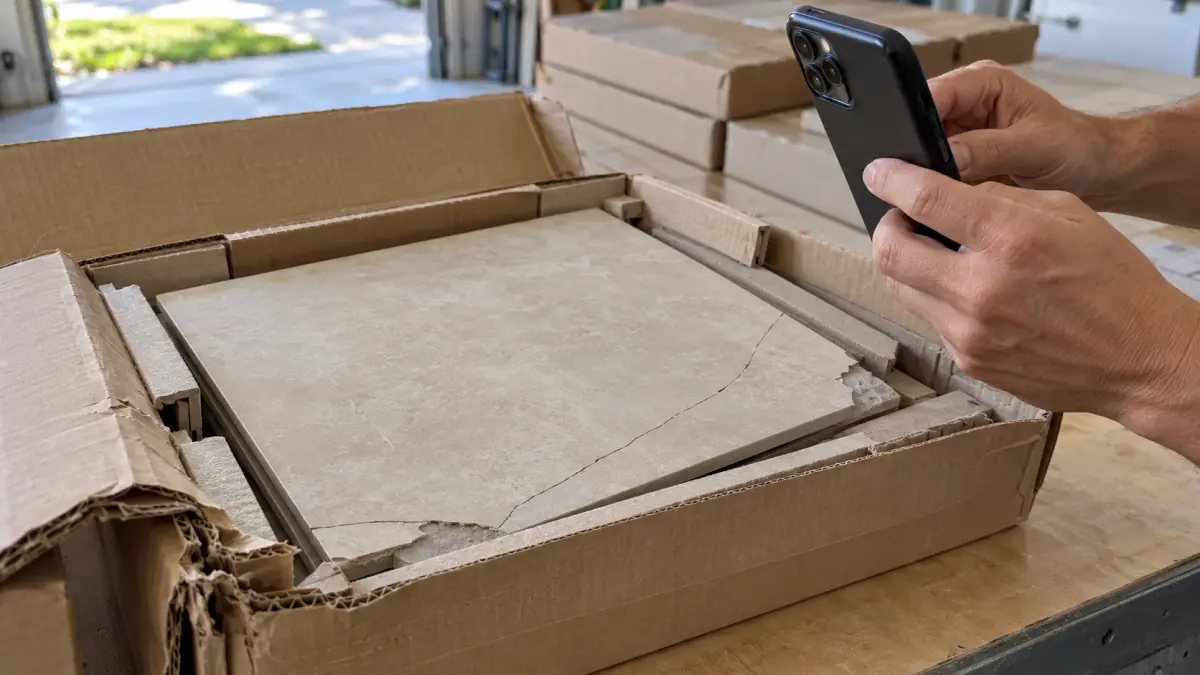
Suppose you purchase porcelain tile for your bathroom. The shipment arrives with crushed corners on several cartons, and you discover cracked pieces inside.
The next step depends on when the damage occurred.
Damage during shipping: The supplier or carrier may handle the claim according to the purchase and shipping terms.
Damage during contractor handling: Responsibility may involve the contractor if the damage resulted from their handling or work, depending on the facts and agreement.
Damage during storage: Responsibility depends on storage arrangements, the cause of damage, and who had control of the materials.
Don’t assume the homeowner always pays because they purchased the products. Similarly, a contractor isn’t automatically responsible for damage that occurred before delivery.
What to do immediately
-
Photograph the damaged materials and packaging.
-
Check the delivery receipt and packing list.
-
Record the quantity of damaged or missing items.
-
Contact the supplier within its reporting deadline.
-
Inform your contractor if installation may be delayed.
Keep the packaging until the supplier confirms whether it is needed for a return or claim.
Who Is Responsible for Storing Renovation Materials?
Materials often arrive before they’re needed. A shipment of flooring might sit in your garage while demolition, plumbing, or electrical work continues.
Storage conditions matter because certain materials can be damaged by moisture, temperature changes, or improper handling.
Wood flooring may require specific environmental conditions before installation. Adhesives and finishing products can have storage restrictions, while fragile fixtures need protection from construction activity.
Ask your contractor where materials should be kept and whether someone will move them when installation begins.
If storage is your responsibility, follow the manufacturer’s instructions. If the contractor agrees to store products, document the arrangement and any applicable limitations.
What if Your Materials Arrive With Missing Parts?
A product can look complete until the installer opens the packaging.
A bathroom faucet may need a separately purchased valve. A light fixture may lack a required mounting component. Cabinet hardware may arrive in the wrong size.
These issues can stop installation even when the main product is undamaged.
Before installation, compare the delivered items with the manufacturer’s parts list and the approved product specifications.
For technically complex products, ask the contractor which accessories are required. The purchase agreement should establish who orders missing components and how additional costs will be handled.
Can a Contractor Refuse to Install Materials You Purchased?
Yes, a contractor may raise legitimate concerns about installing homeowner-supplied materials.
A product might be defective, incompatible with the approved installation system, unsuitable for its intended use, or missing essential components.
For example, some shower waterproofing systems require compatible materials installed according to specific manufacturer instructions.
If the contractor identifies a problem, ask for a clear explanation and available alternatives.
Possible solutions include replacing the product, purchasing a compatible component, or revising the installation plan.
Any change affecting the scope, cost, or schedule should be documented before work continues.
Who Pays When Owner-Supplied Materials Delay the Project?
A late delivery can affect several parts of a renovation.
Imagine your kitchen cabinets arrive two weeks late. Countertop measurements may depend on those cabinets being installed, which can also delay backsplash work and appliance connections.
The contractor may need to rearrange labor or return to the project later.
Whether additional charges apply depends on the contract and circumstances.
Before ordering materials, ask:
-
What happens if a shipment arrives late?
-
Can other renovation work continue?
-
Will the project schedule be extended?
-
Could rescheduling create additional labor charges?
-
How will any extra costs be approved?
A delivery delay doesn’t automatically justify every additional charge. Review the agreement and request written explanations of proposed changes.
Does Your Contractor Warranty Materials You Purchased?
Product warranties and installation warranties address different issues.
A manufacturer’s warranty may cover eligible defects in the product itself. The contractor’s workmanship obligations concern the installation work under the agreement and applicable law.
For example, if a faucet has an internal manufacturing defect, the manufacturer may need to address the product issue.
If the faucet leaks because it was installed incorrectly, the installation work may need to be evaluated.
Buying the faucet yourself doesn’t automatically remove the contractor’s responsibility for their workmanship.
Keep your purchase receipts, warranty documents, installation instructions, and contractor records together.
Is It Better to Buy Renovation Materials Yourself or Through Your Contractor?
Both arrangements can work, but they involve different levels of coordination.
| Consideration | Homeowner purchases | Contractor purchases |
|---|---|---|
| Product selection | Direct purchasing control | Coordinated with contractor |
| Supplier communication | Usually homeowner-managed | Usually contractor-managed |
| Delivery | Must be assigned | Often coordinated by contractor |
| Damaged product claims | Usually initiated by purchaser | Often handled through contractor |
| Installation | Based on agreed scope | Based on agreed scope |
| Warranty coordination | May involve multiple parties | May be more centralized |
These are typical arrangements, not fixed rules.
For decorative accessories, buying independently may be manageable. For technical systems involving plumbing, waterproofing, or electrical compatibility, contractor coordination becomes especially important.
The lowest product price isn’t necessarily the lowest total project cost if additional installation changes or delays are required.
What Santa Clarita Homeowners Should Put in Writing
A renovation agreement should explain more than the installation price.
If you’re supplying materials, it should identify the products you’re purchasing and the responsibilities associated with them.
California homeowners can consult the Contractors State License Board for guidance on written home improvement contracts and change orders.
For larger full home remodeling projects, documenting material responsibilities is particularly helpful because deliveries may occur across several construction phases.
Before signing, confirm the following:
| Responsibility | What should be agreed upon |
|---|---|
| Ordering | Who purchases each product? |
| Compatibility | Who reviews installation specifications? |
| Delivery | Who receives and unloads shipments? |
| Inspection | Who checks for damage and missing parts? |
| Storage | Who protects materials before installation? |
| Replacement | Who contacts suppliers and arranges replacements? |
| Scheduling | How are material-related delays handled? |
| Warranty | Who coordinates product and workmanship issues? |
Homeowners planning a renovation in Santa Clarita can review Green Star Remodeling’s Santa Clarita remodeling services and discuss material purchasing arrangements during project planning.
Common Mistakes When Buying Your Own Renovation Materials
One frequent mistake is ordering materials before confirming their compatibility with the renovation design.
Another is assuming the contractor will automatically receive deliveries, unload heavy products, and inspect every item.
Homeowners may also underestimate material quantities, particularly for tile and flooring that require cutting allowances.
A less obvious problem is choosing products with long replacement lead times. If a specialty fixture arrives damaged, a matching replacement may not be available immediately.
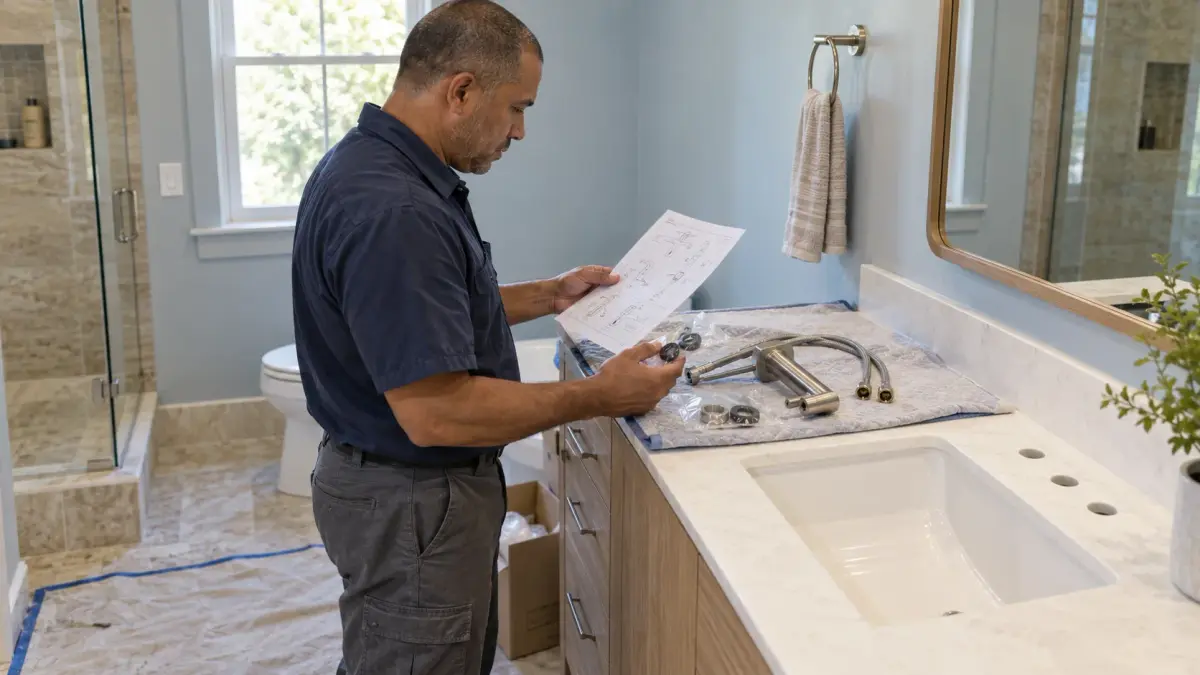
These issues are easier to manage when purchasing decisions are coordinated with the construction schedule.
Frequently Asked Questions
Who pays if my contractor damages materials I purchased?
Responsibility depends on how the damage occurred, the contract, and applicable law. Document the damage and request a written resolution.
What if my bathroom tile arrives in the wrong color?
Compare the shipment with your order confirmation and contact the supplier. Tell your contractor before installation begins.
Can I purchase my own fixtures and have a contractor install them?
Yes, if the contractor agrees and the products meet installation requirements. Confirm compatibility and labor responsibilities first.
What happens if my materials arrive after the installation date?
Notify your contractor immediately. Review the schedule and contract to determine whether rescheduling or additional charges are necessary.
Make Material Responsibilities Clear Before Renovation Begins
Purchasing your own renovation materials can give you more control over product selection, but successful installation depends on clear coordination.
Before placing orders, confirm who handles product compatibility, delivery, damage claims, storage, and installation scheduling.
If you’re planning a kitchen, bathroom, or full home renovation in Santa Clarita, Green Star Remodeling can discuss your project requirements and how owner-supplied materials fit into the renovation plan.