Yes, a home remodel can release toxins already trapped inside your walls, floors, and paint. Sanding, cutting, and demolition disturb lead paint, asbestos, and mold, sending dust and fibers into the air. New materials also add volatile organic compounds (VOCs) through off-gassing. The risk depends on your home’s age, the materials you disturb, and how well you contain the work area.
Primary Toxins Released During a Home Remodel
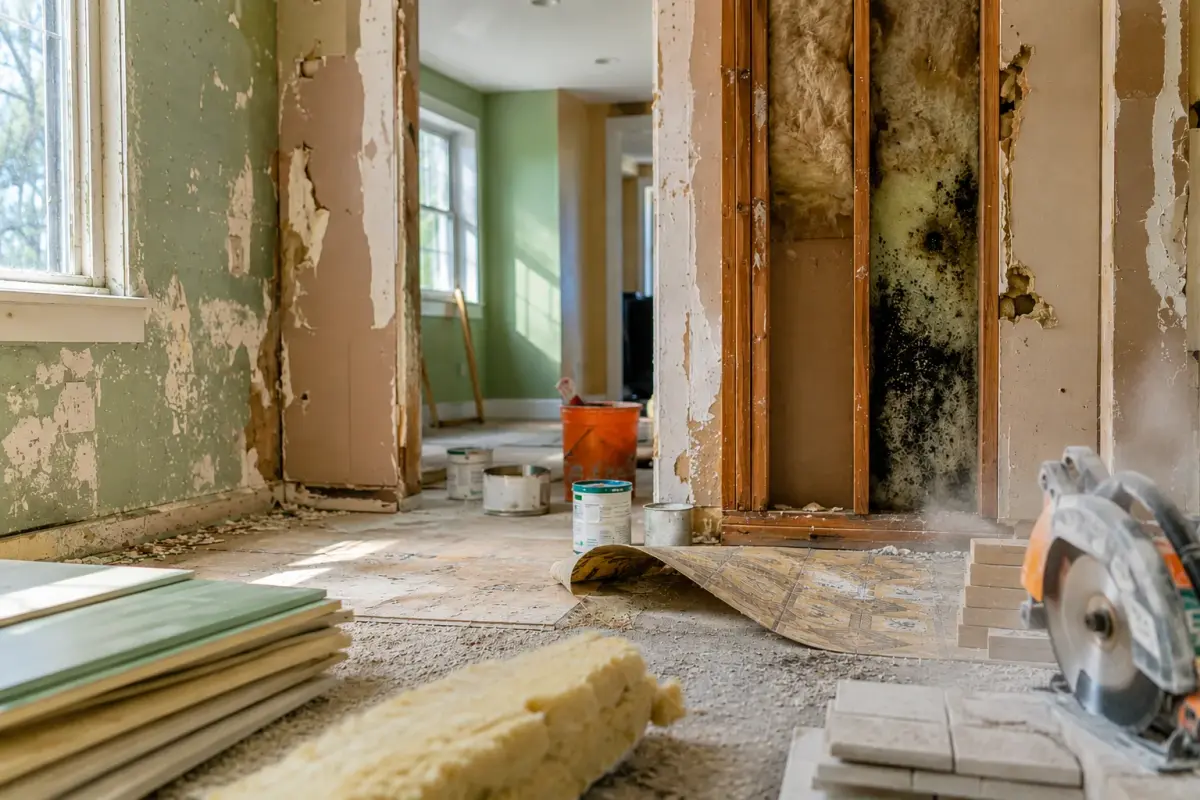
A remodel does not create new hazards out of nothing. It disturbs hazards that were already sitting still inside your home’s structure. Once a wall opens or a floor gets torn up, these materials become airborne, and airborne particulates are far easier to inhale than particulates sealed behind drywall.
Five hazards show up again and again in remodeling projects. Each one comes from a different building material, and each one needs a different response.
Lead Dust from Pre-1978 Paint Disturbance
Homes built before 1978 often used lead-based paint. Sanding, scraping, or demolishing painted surfaces in these homes can create lead dust, a known neurotoxin. The U.S. Environmental Protection Agency’s Renovation, Repair, and Painting (RRP) Rule covers this risk directly. It requires paid contractors working in pre-1978 homes to be lead-safe certified and to follow lead-safe work practices.
The RRP Rule does not apply to homeowners doing their own work in a home they live in. It does apply if you rent out part of the home, run a childcare business there, or renovate to resell. Even when the rule does not legally apply to you, the EPA still recommends the same lead-safe steps for any DIY project in an older home.
Example: Sanding a single painted door in a 1960s home can release enough lead dust to contaminate a room if the work area is not sealed off first.
Asbestos Fibers in Insulation, Flooring, and Drywall Joint Compounds
Asbestos shows up in older insulation, vinyl flooring, and the joint compound used on drywall seams. Friable asbestos, meaning asbestos that crumbles into powder by hand, releases microscopic fibers into the air when disturbed.
The EPA’s Asbestos NESHAP rule (40 CFR Part 61, Subpart M) covers this risk. Most demolition and renovation projects on commercial or larger residential buildings require a thorough asbestos inspection before work starts.
Single-family homes with four or fewer units are generally exempt from the full NESHAP notification process. The health risk from disturbed asbestos stays the same either way.
Example: Ripping up old vinyl floor tile in a 1970s home without testing it first can release asbestos fibers that stay airborne for hours.
Volatile Organic Compounds (VOCs) and Off-Gassing Solvents
VOCs are chemical gases released from paints, adhesives, sealants, and new building materials. This release process is called off-gassing, and it can continue for days or weeks after installation.
Green Seal, a nonprofit product-certification group, sets clear cutoffs for this. Flat paint under 50 grams of VOC per liter counts as low-VOC. Flat paint under 5 grams per liter counts as zero-VOC. Standard paint and adhesive products can carry far higher VOC content, which raises indoor air levels during and after a remodel.
Example: Freshly applied adhesive under new flooring can off-gas strong fumes for several days, even after the flooring looks finished.
Mold Spores and Microbial Volatile Organic Compounds (mVOCs)
Wall cavities often hide moisture from old leaks, condensation, or past water damage. Opening these cavities during a remodel can release mold spores and mVOCs, the gases mold produces as it grows.
The Centers for Disease Control and Prevention recommends keeping indoor humidity below 50% to limit mold growth. Once mold is disturbed during demolition, spores spread through the air far more easily than they would in an undisturbed wall cavity.
Example: Removing drywall near an old plumbing leak can release a cloud of mold spores that was previously sealed inside the wall.
Respirable Crystalline Silica from Masonry and Tile Cutting
Cutting tile, concrete, or masonry produces fine silica dust. This dust is small enough to reach deep into the lungs, where it can cause long-term respiratory damage.
The Occupational Safety and Health Administration’s silica standard sets a permissible exposure limit (PEL) of 50 micrograms of respirable crystalline silica per cubic meter of air, averaged over an 8-hour day. It also sets an action level of 25 micrograms per cubic meter, the point where employers must start monitoring exposure. These limits apply to workers. They still show how little silica dust it takes to become a health concern in any occupied space.
Example: Dry-cutting tile for a remodel without a wet saw or dust extraction can push silica dust levels far above safe limits in a small room.
Standard Construction Dust vs. Toxic Airborne Micro-Particulates
Not all remodel dust carries the same risk. The table below compares ordinary construction dust to the smaller, more hazardous particles covered above.
| Factor | Standard Construction Dust | Toxic Airborne Micro-Particulates |
|---|---|---|
| Typical particle size | 10+ microns (μm) | Under 10 microns, some under 1 micron |
| Settling rate | Settles within minutes | Can stay airborne for hours |
| Common source | Wood, drywall scraps, general debris | Lead paint, asbestos, silica, mold spores |
| Filter needed | Standard shop-vac filter | HEPA filtration (MERV 13 or higher) |
| Health risk | Mostly nuisance-level | Neurotoxic, carcinogenic, or respiratory disease risk |
DIY vs. Professional Remodeling: Assessing Exposure Risk
The method you use to remodel changes your exposure risk as much as the materials themselves. DIY home remodeling and professional remodeling handle airborne contaminants very differently.
Why DIY Demolition Heightens Airborne Contaminant Spread
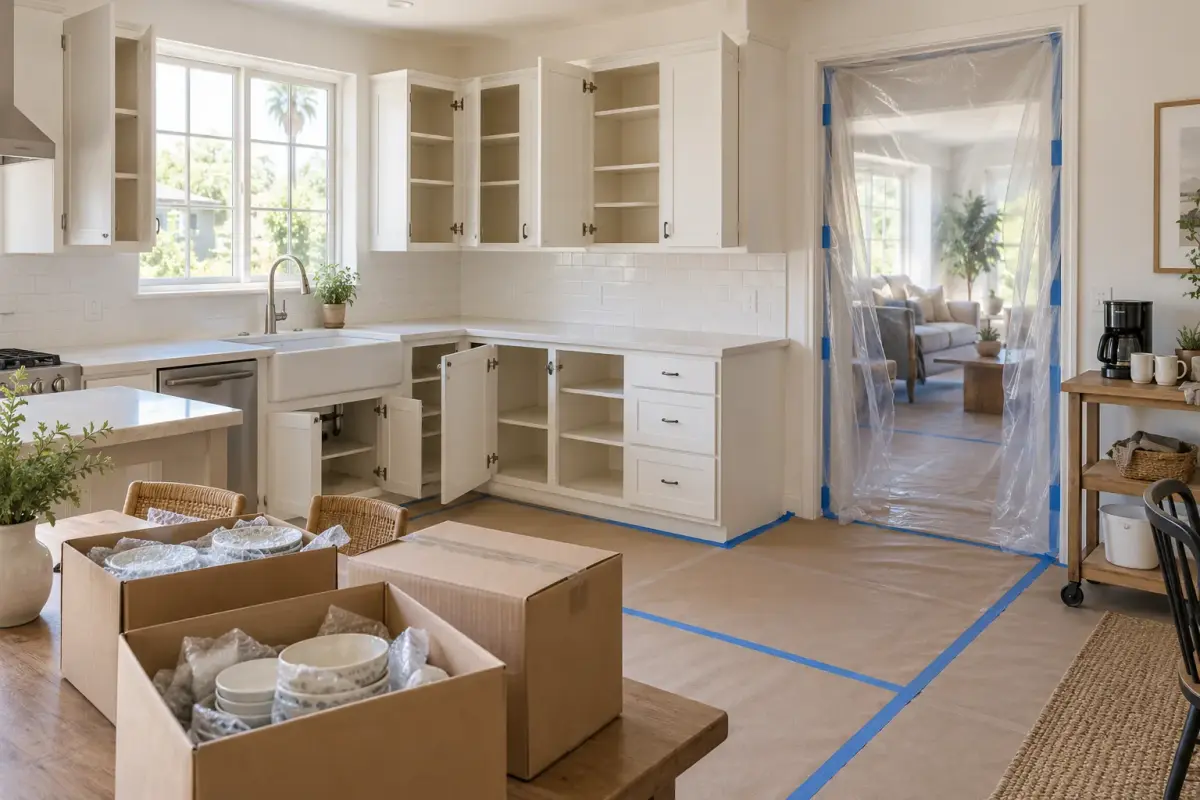
Do it yourself home remodeling projects often skip containment steps that professionals treat as standard. Without plastic sheeting barriers or negative air machines, dust and fibers spread past the work area into hallways, vents, and living spaces.
A homeowner tearing out a wall without sealing the doorway first can spread lead dust or asbestos fibers throughout the house within a single afternoon.
Professional Negative Air Pressure and Containment Standards
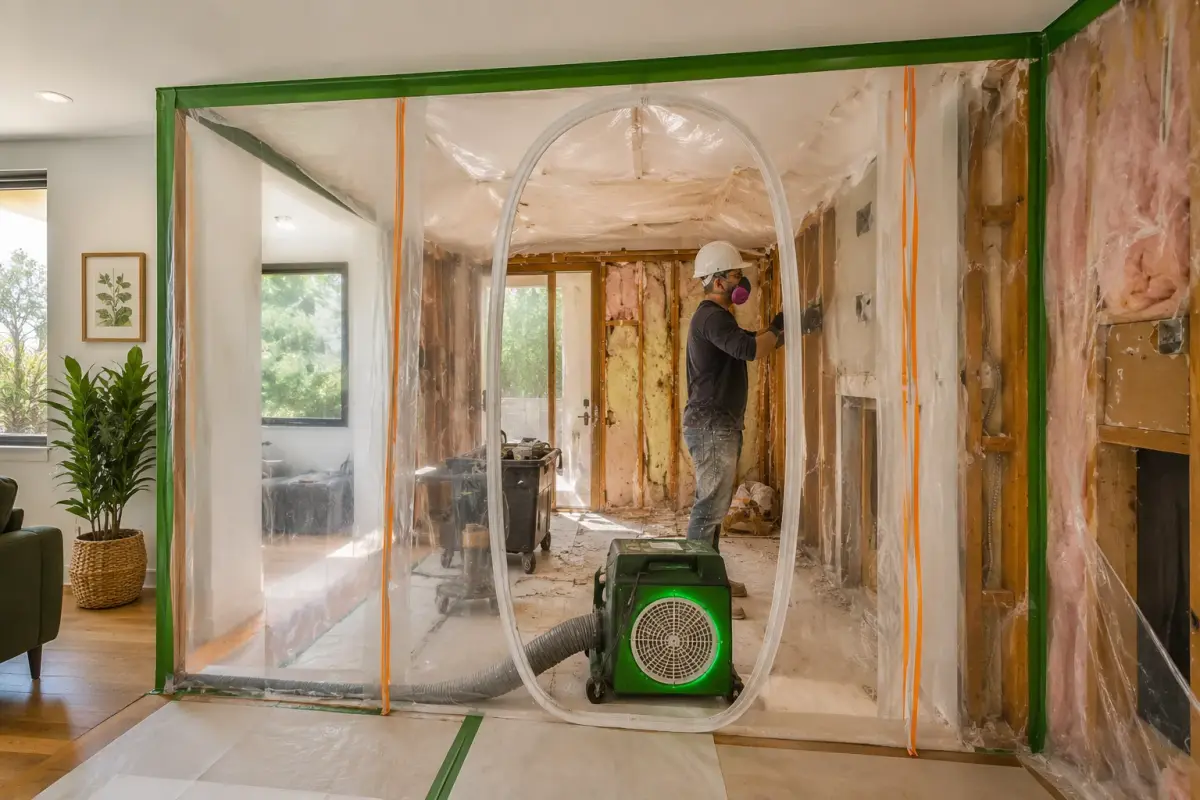
Licensed remodeling crews use negative air pressure to keep contaminated air inside the work zone. Negative air pressure means the air pressure inside the containment area is lower than the surrounding rooms, so air flows into the work zone instead of out of it.
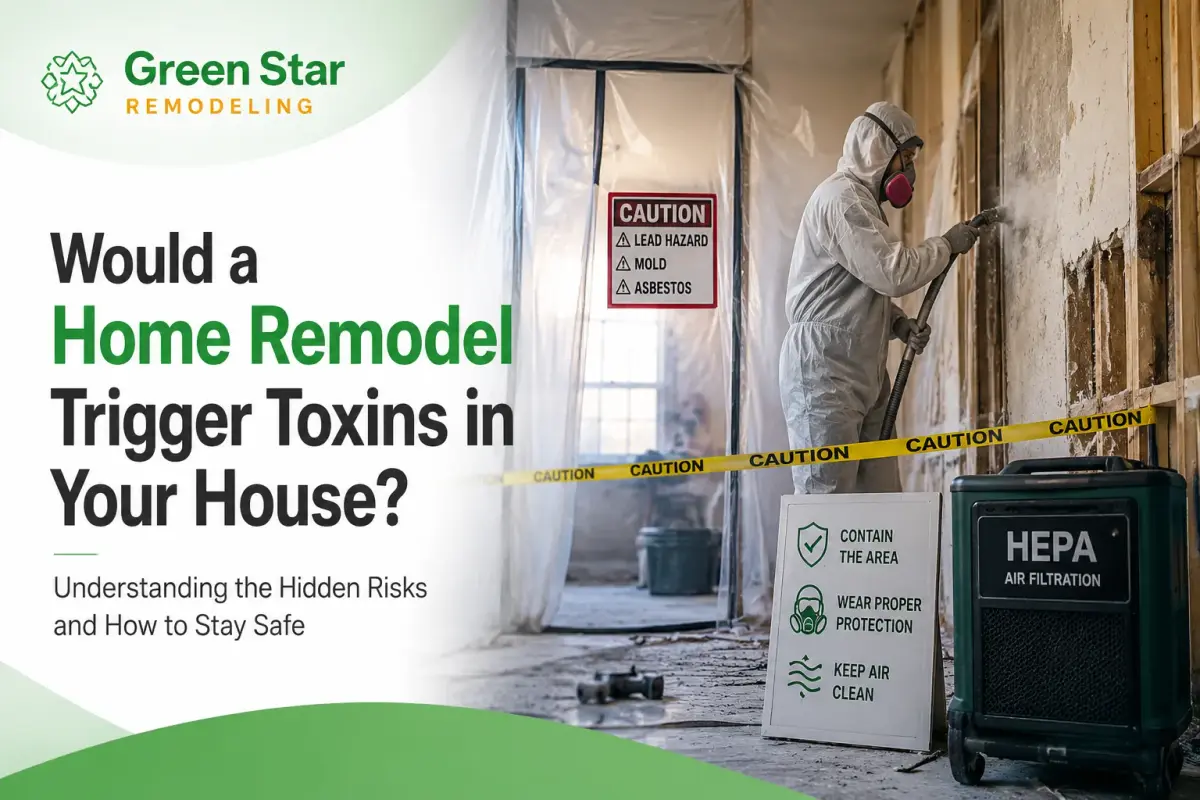
When isolating a living space during structural work, contractors commonly build zip-wall barriers with zippered doors. They then run negative air machines that exhaust filtered air through an exterior window. This keeps contaminated dust from migrating into the rest of the home while work is underway.
This is one reason a licensed full home remodeling team handles hazard containment differently than a single trade hired on their own. One crew manages testing, containment, and cleanup as one connected process instead of separate handoffs between contractors.
How and Where to Start a Home Remodel Safely
Knowing how to start a home remodel safely comes down to testing first, containing second, and choosing materials third. Where to start when remodeling a home is almost always the same answer: start with an inspection, not a hammer.
Step 1: Pre-Renovation Environmental Air and Material Testing
Before any demolition begins, test suspect materials for lead, asbestos, and mold. A certified lead-based paint inspector, an asbestos inspector, or a mold assessment professional can confirm what is actually present before you disturb it.
Step 2: Erecting Plastic Sheeting Isolation Barriers and HEPA Air Scrubbers
Seal the work area with plastic sheeting and zippered doorways before cutting, sanding, or demolishing anything. Run HEPA air scrubbers rated MERV 13 or higher to capture fine particles that a standard shop-vac filter would let pass through.
Step 3: Selecting Low-VOC, Non-Toxic, and Zero-Formaldehyde Materials
Choose paints, adhesives, and sealants labeled low-VOC or zero-VOC, and confirm formaldehyde-free ratings on cabinetry and composite wood products. This step lowers off-gassing after the visible construction work is done.
Environmental testing and containment materials add a real line item to your project. If you’re mapping out your total budget, factoring environmental testing into your home remodel cost is worth doing before you get quotes from contractors.
If you’re planning to handle any part of the work yourself, review DIY home remodeling safety procedures before you start, since containment steps differ significantly from a standard DIY project without hazard concerns.
When to Remodel Your Home to Maximize Air Exchange
Timing affects how fast contaminated air clears from your home during and after a remodel. The season you choose changes how much natural airflow you get for free.
Seasonal Weather Factors for High-CFM Ventilation and Natural Airflow
Mild, dry weather lets windows stay open longer. This raises air exchanges per hour (ACH) without relying only on mechanical ventilation. Cold winter months or extreme summer heat often force windows shut instead. Closed windows trap airborne particulates and off-gassing VOCs indoors longer than they would stay in milder weather.
Spring and fall generally offer the widest window for high natural air exchange rates, making them practical seasons to schedule work that disturbs lead, asbestos, or VOC-heavy materials.
Post-Remodel Clearance: Restoring Safe Indoor Air Quality
Finishing construction does not automatically mean the air is safe again. Clearance testing and cleanup confirm that dust, fibers, and off-gassing have dropped back to safe levels.
HVAC System Isolation and Post-Construction Duct Cleaning
Seal HVAC vents in the work area before construction starts, since ductwork can pull contaminated dust throughout the house. After construction ends, have ducts professionally cleaned if the system ran uncovered during any part of the project.
HEPA Vacuuming and Surface Off-Gassing Clearance Intervals
Vacuum every surface in the work area with a HEPA-filtered vacuum, not a standard shop-vac, since standard filters release fine particles back into the air. Allow several days of ventilation time after installing new paint, flooring, or cabinetry to let VOC off-gassing drop before returning furniture and daily use to the space.
A certified dust sampling technician can confirm lead dust has dropped below EPA clearance levels, giving you documented proof the space is safe again.
Planning a remodel and want the containment handled right from day one? Green Star Remodeling manages testing, containment, and cleanup as one process across greater Los Angeles. Contact our team for a free consultation.
Frequently Asked Questions
Would a home remodel trigger toxins in your house?
Yes. Remodeling can disturb lead paint, asbestos, mold, and silica dust that were previously sealed inside walls, floors, or ceilings, releasing them into the air during sanding, cutting, or demolition.
Is it safe to do a home remodel yourself?
DIY home remodeling is safe when you test materials first and use proper containment, but it carries more risk than professional work, since containment equipment like negative air machines is not standard on most DIY jobs.
When is the best time to remodel a home for air quality?
Spring and fall usually offer the best natural ventilation, since mild weather allows windows to stay open longer, increasing air exchanges per hour and clearing airborne particulates faster.
How do you know if your home has lead paint or asbestos?
A certified lead-based paint inspector or accredited asbestos inspector can test suspect materials before renovation. Homes built before 1978 should be assumed to contain lead paint until tested.