Your garage floor has taken a beating. Cracks are spreading. Stains won’t wash out. Maybe you’ve noticed an old epoxy coating is yellowing and peeling. You know it’s time to do something, but you’re staring at three different coating options and no idea which one actually works best.
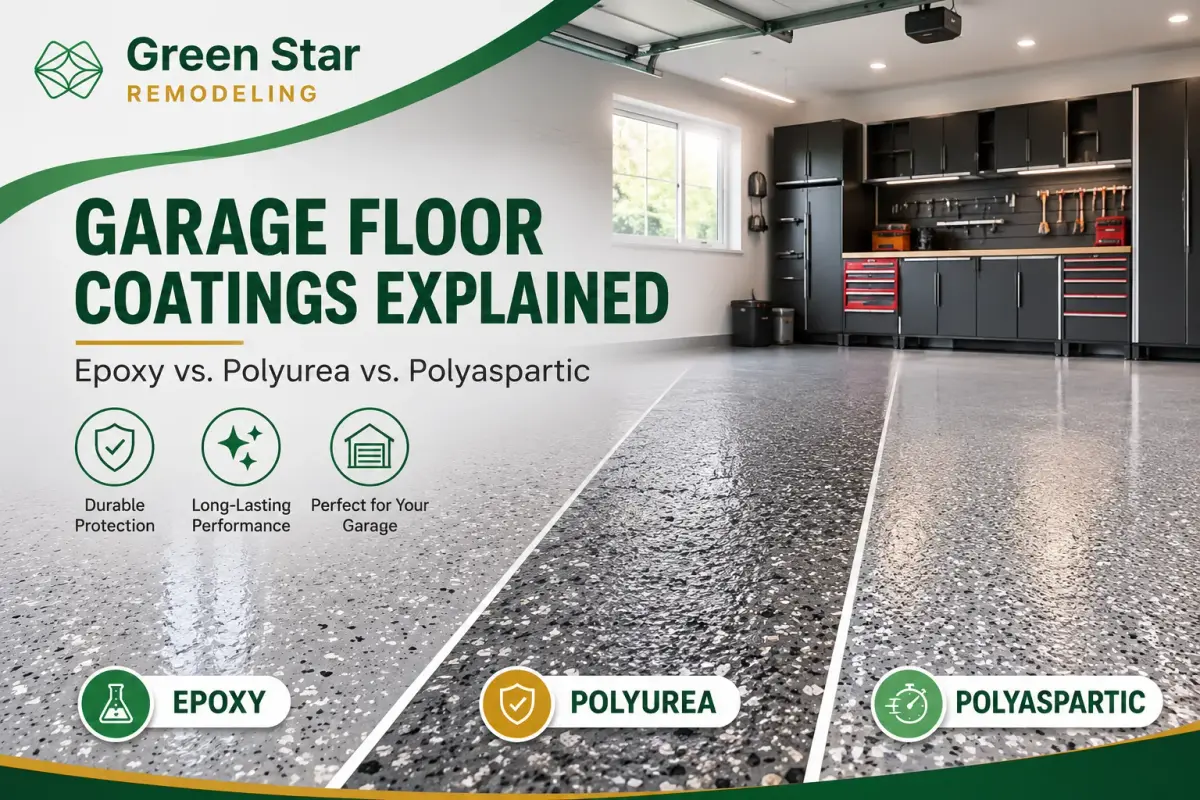
This guide breaks down the three most popular garage floor coatings, shows you exactly how they differ, and helps you pick the right one for your Los Angeles home.
Why Your Garage Floor Needs Protection
Concrete seems tough, but it’s actually porous and vulnerable. Here’s what happens to an unprotected garage floor:
Water seeps in. Moisture penetrates concrete, causing it to expand and contract. Over time, this creates cracks and surface spalling (pieces flaking off).
Chemicals eat away at it. Oil drips from your car. De-icing salts track in during winter. Household cleaning products all damage concrete slowly but surely.
UV rays break it down. Sunlight degrades concrete fibers, especially if your garage door is often open or your garage gets direct sun exposure.
Stains become permanent. Once oil or rust sets in, it’s nearly impossible to remove from bare concrete.
A good garage floor coating seals your concrete, protects it from damage, and makes cleaning easier. The question isn’t whether you need a coating, it’s which coating makes sense for your situation. A protective coating is also a smart foundation if you’re planning a full garage remodeling project.
What Is an Epoxy Garage Floor?
Epoxy is a two-part resin system. You mix a resin (one part) with a hardener (another part), and they chemically react to create a hard, plastic-like coating.
How it works: The liquid epoxy soaks into the concrete’s pores and hardens, bonding tightly to the surface. Once cured, it creates a shiny, durable layer that’s much tougher than bare concrete.
Application: A contractor pours or rolls the epoxy onto your prepared concrete floor. It takes 24 to 72 hours to fully cure (harden).
What you get: A glossy, colorful finish that looks professional and hides imperfections well.
Epoxy has been the garage floor standard for decades because it works well, looks good, and costs less than newer alternatives.
Upgrading your garage floor is often the first step in a larger garage remodeling project. Whether you’re adding storage, creating a workshop, or transforming the entire space, a quality floor coating is the perfect foundation.
Epoxy: Pros and Cons
Pros:
- Good durability: lasts 3 to 10 years with proper care
- Looks great: shiny finish available in many colors
- Affordable: entry-level option for floor protection
- Easy to clean: sealed surface repels stains and dirt
- Protects concrete: seals pores and prevents moisture penetration
Cons:
- UV yellowing: direct sunlight causes the coating to turn yellow or amber over time
- Not UV-stable: if your garage gets sun exposure, yellowing will happen
- Rigid: cannot flex with concrete movement, which can cause peeling
- Shorter lifespan: won’t last as long as polyurea or polyaspartic
- Moisture sensitivity: moisture in concrete can cause bubbling or delamination if not properly sealed first
Real-world performance: If your garage has a north-facing door (no direct sun), epoxy can last 7 to 10 years. If it gets afternoon sun, you might see yellowing after 3 to 5 years.
What Is Polyurea?
Polyurea is a different type of polymer coating. Instead of epoxy’s two-part resin system, polyurea uses a specialized spray-applied chemistry that cures incredibly fast.
How it works: Polyurea is sprayed onto the floor as two separate liquid streams that meet and instantly react, hardening within minutes.
Application: This requires specialized spray equipment and trained technicians, so it’s not a DIY product.
What you get: A thick, flexible, non-skid coating that’s darker and more durable than epoxy.
Polyurea is newer than epoxy and costs more, but for high-use garages, it’s worth the investment.
Polyurea: Pros and Cons
Pros:
- Ultra-fast cure: hardens in less than 1 hour; you can drive on it same day
- Excellent UV resistance: won’t yellow in sunlight
- Superior flexibility: moves with concrete, resists cracking and peeling
- 4x stronger than epoxy: outstanding abrasion resistance (survives tire marks, tool drops)
- Chemical resistant: stands up to oil, salt, battery acid
- Long lifespan: 15 to 20 years of protection
Cons:
- Higher cost: more expensive than epoxy per square foot
- Requires professionals: can’t be DIY’d; needs spray equipment
- Requires experience: application mistakes affect results
- Odor during application: strong smell during installation (usually gone within hours)
Real-world performance: A polyurea garage floor in Los Angeles will outlast an epoxy coating by years, especially if you get direct sun or have heavy garage use.
What Is Polyaspartic?
Polyaspartic is a hybrid coating: it combines some benefits of polyurea with lower cost and easier application than spray polyurea.
How it works: Polyaspartic is typically applied as a topcoat over an epoxy base. The base layer is standard epoxy (affordable). The top layer is polyaspartic (UV-stable and durable).
Application: Can be rolled or brushed on, making it easier to install than spray polyurea.
What you get: A long-lasting, UV-resistant floor with the durability benefits of polyurea but at a moderate cost.
This is the “Goldilocks” option for many homeowners: better than epoxy alone, but not as expensive as full spray polyurea.
Polyaspartic: Pros and Cons
Pros:
- 15+ year lifespan: excellent long-term durability
- UV-stable: won’t yellow even with direct sun exposure
- Excellent chemical resistance: handles oil, salt, cleaning chemicals
- Heat resistant: better than epoxy in high-temperature conditions
- Moderate cost: more than epoxy, less than spray polyurea
- Easier application: can be rolled or brushed (vs. spray-only polyurea)
Cons:
- Slower cure than polyurea: takes 1 to 2 hours to cure (not same-day drivable)
- Higher cost than epoxy: still a bigger investment upfront
- Topcoat requirement: usually needs an epoxy base layer, adding steps
- Requires professionals: application quality matters for durability
Real-world performance: A polyaspartic floor in a Los Angeles garage will stay vibrant and last 15+ years, making it excellent value over time.
Side-by-Side Comparison
| Feature | Epoxy | Polyurea | Polyaspartic |
|---|---|---|---|
| Cure Time | 24 to 72 hours | Less than 1 hour | 1 to 2 hours |
| UV Resistance | Poor (yellows) | Excellent | Excellent |
| Abrasion Resistance | Good | Excellent (4x epoxy) | Excellent |
| Lifespan | 3 to 10 years | 15 to 20 years | 15+ years |
| Flexibility | Rigid | Excellent | Moderate |
| Chemical Resistance | Moderate | Excellent | Excellent |
| Heat Resistance | Moderate | Moderate | Good |
| Appearance | Glossy | Matte or satin | Glossy |
| Application Difficulty | Easy | Requires professionals | Moderate |
| Same-day use | No (wait 24 to 72 hrs) | Yes (1 hour) | No (wait 1 to 2 hrs) |
Which Coating Is Right for Your Garage?
Your best choice depends on three factors: how you use your garage, your budget, and whether your garage gets direct sun.
Choose Epoxy If:
- Your budget is tight and you want basic protection
- Your garage has no direct sunlight (north-facing door)
- You can wait 24 to 72 hours before using the floor
- You’re willing to refresh the coating every 5 to 7 years
Choose Polyurea If:
- You want the absolute best performance
- You have a high-use garage (workshop, multiple vehicles, tools)
- Your garage gets direct sun and you don’t want any yellowing
- You want to drive on the floor same-day
- You’re willing to invest more upfront for 15 to 20 year durability
Choose Polyaspartic If:
- You want long-term durability without the highest cost
- Your garage gets sun exposure
- You want UV stability and excellent chemical resistance
- You can wait 1 to 2 hours before moderate use
- You’re looking for the best balance of performance and value
Why Professional Installation Matters
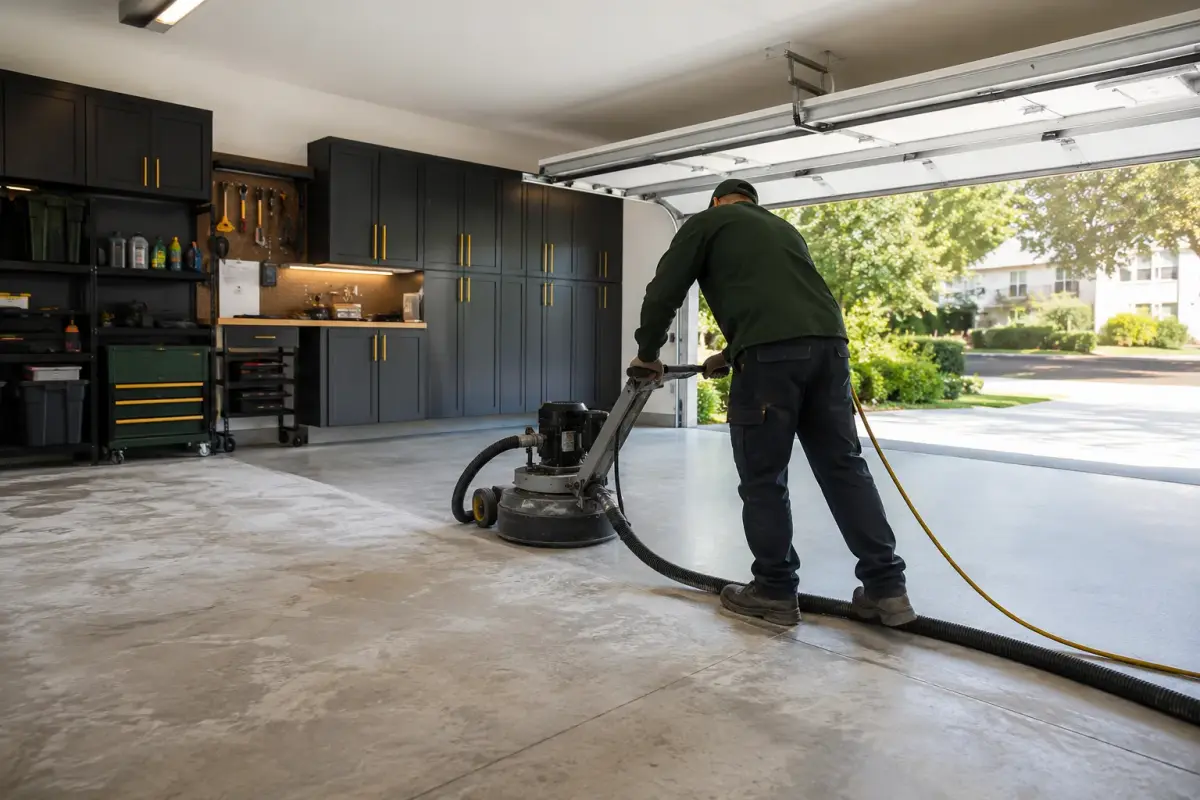
You might think garage floor coating is DIY-friendly. It can be, but the difference between a coating that lasts 3 years and one that lasts 15 years often comes down to preparation.
Surface preparation is 80% of the job. Your concrete must be clean, dry, and properly prepped. Any dust, oil, or moisture left behind will cause the coating to bubble, peel, or fail prematurely.
Moisture testing is critical. Many garage floors have hidden moisture. If moisture is trapped under the coating, it creates blistering and delamination. Professional installers test for moisture before application; DIYers often skip this step.
Application technique matters. Spray polyurea requires precision equipment and experience. Epoxy and polyaspartic need proper thickness and even coverage. Professionals get this right.
Warranty protection. Professional installations typically come with warranties. DIY applications don’t.
If you’re in Los Angeles or Santa Clarita, hiring a licensed, insured professional (like Green Star Remodeling) protects your investment and ensures your coating lasts as long as promised. A professional floor coating is also often the foundation for a complete garage transformation project.
How to Choose a Garage Floor Coating Contractor
When getting quotes from contractors, ask these questions:
- Will you test for moisture first? A good contractor always tests your concrete for moisture. If they don’t mention it, that’s a red flag.
- What’s your surface prep process? Ask specifically about grinding, cleaning, and any repairs needed. Good contractors explain this upfront.
- What warranty do you offer? Professional coatings come with warranties (typically 3 to 10 years depending on the coating). Know what’s covered.
- How long until I can use my garage? For epoxy: 24 to 72 hours. For polyurea: often same day. For polyaspartic: 1 to 2 hours. Make sure this works with your schedule.
- Are you licensed and insured? Always verify. In California, contractors should carry proper licensing and insurance.
- Can you provide references? Ask for photos or contact info from recent garage floor projects in your area.
Ready to Protect Your Garage Floor?
Your garage floor is under constant attack from moisture, chemicals, and wear. A good coating stops the damage and keeps your concrete looking great for years.
If you’re in Los Angeles or Santa Clarita and ready to upgrade your garage floor, Green Star Remodeling has installed hundreds of garage floor coatings. We handle everything from surface preparation to final application, with warranties to back up our work.
Not sure which coating is right for your Los Angeles garage? Schedule a free in-home consultation. We’ll assess your concrete, discuss your options, and provide an honest estimate.
Green Star Remodeling serves Los Angeles and Santa Clarita with licensed, insured craftsmanship (CA License #1088206).