Your garage door faces the sun, rain, and dirt every single day. Over time, paint fades, cracks, and peels. Maybe yours is looking tired, or you’re thinking about updating your home’s appearance. You might be wondering: Can I paint my garage door? Will it actually improve my home?
The answer is yes and it’s one of the easiest ways to boost your curb appeal. This guide shows you exactly how to paint a garage door, what colors work best, and when professional help makes sense.
Can You Paint a Garage Door?
Yes, you can paint a garage door. But not all garage doors are created equal, and the material matters.
Some garage doors are easier to paint than others. Some materials bond with paint beautifully. Others resist it. Before you pick up a paintbrush, you need to know what you’re working with.
Paint Compatibility by Door Material
Different garage door materials require different preparation and paint types.
Steel Doors
Steel garage doors are the most common and the easiest to paint. Steel surfaces accept paint well and hold finishes long. If your door is steel, you’re in good shape painting is straightforward.
Steel doors do rust if damaged, so inspect for rust spots first. Any rust should be cleaned or treated before painting.
Aluminum Doors
Aluminum doors are lightweight and popular in California. They accept paint, but aluminum is slicker than steel, so proper prep is essential. You’ll need a good primer to ensure paint adhesion.
Aluminum doesn’t rust, which makes maintenance simpler than steel doors.
Wood Doors
Wood garage doors add character and warmth. They accept paint beautifully but demand more maintenance. Wood expands and contracts with weather changes, which can crack paint over time. Wood also rots if not sealed properly.
If you have a wood garage door, painting is absolutely worth doing but commit to repainting every 5-7 years.
Looking to refresh more than just your garage door? Explore our Interior & Exterior Painting services for professional painting solutions. Thinking about transforming your garage instead? Learn more about our Garage Conversion services and explore your options.
Vinyl Doors
Vinyl garage doors are durable and low-maintenance, but they’re tricky to paint. Vinyl is slippery, and regular paint won’t bond well. You need special vinyl-adhesive primer and flexible paint formulated for vinyl.
Many people find replacing a vinyl door easier than painting it.
Fiberglass Doors
Fiberglass doors are durable but don’t accept paint the way wood or steel do. Like vinyl, they need special primers and flexible paint designed for fiberglass.
If your door is in good condition, painting is worth considering before replacement.
The Best Paint for Garage Doors
Not all exterior paint works for garage doors. You need paint formulated to handle weather, UV exposure, and door movement.
Acrylic Latex Paint
Acrylic latex is the most popular choice for garage doors because it:
- Works well on metal and wood
- Resists cracking (important for doors that flex)
- Dries quickly
- Is easy to clean up with water
- Holds color well in California’s sun
Most professionals recommend acrylic latex for wood or steel doors.
Oil-Based Enamel
Oil-based enamel is extremely durable and creates a harder finish than latex. It adheres well to bare metal and resists weathering.
The downside? Oil-based paint takes longer to dry, has strong odor, and requires solvent cleanup.
Latex Paint
Standard latex paint is budget-friendly but less durable than acrylic latex. It’s fine for doors in good condition.
Special Formulations
For vinyl or fiberglass doors, use paint specifically formulated for those materials. These paints have flexible binders that move with the door surface, preventing cracking and peeling.
Step-by-Step Process: How to Paint Your Garage Door
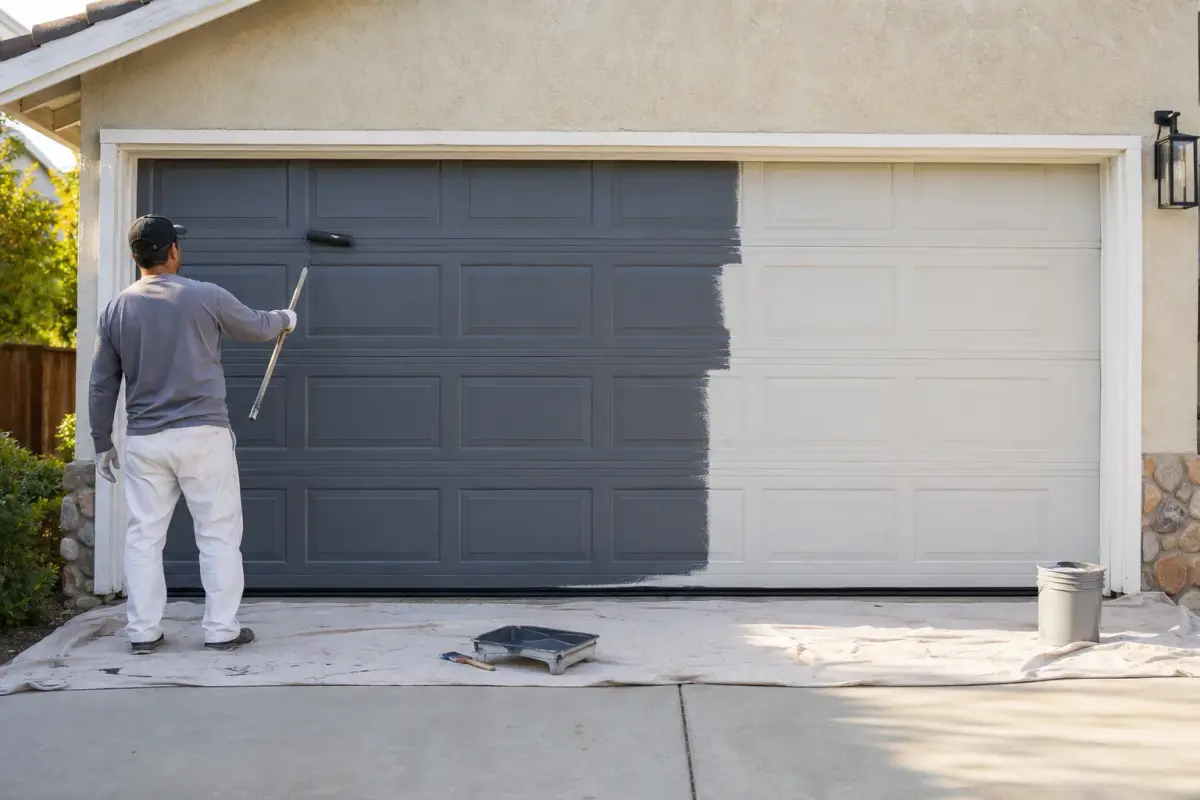
If you’re painting yourself, here’s what the process looks like.
Step 1: Inspect and Prepare
Look for rust, rot, peeling paint, or dents. Address rust spots or spalling paint before you start painting over them.
Step 2: Clean the Surface
Power wash the door or scrub it with a brush and soap. Remove all dirt, mildew, and loose paint. Let it dry completely.
Step 3: Repair Damage
Fill gaps with caulk. Sand down rough areas. Repair rust with a rust converter or light sanding. Surface prep is where most painting jobs succeed or fail.
Step 4: Prime
Apply primer to bare wood, metal, or any areas where paint was removed. Primer helps paint adhere and ensures color coverage.
Most doors need one coat of primer. Bare metal or rust-treated areas might need two.
Step 5: Paint
Apply your topcoat paint. Most jobs need two coats for good coverage. Let the first coat dry completely before applying the second.
Step 6: Seal (Optional)
If you used oil-based paint, a clear sealant isn’t necessary. If you used latex, an optional clear topcoat adds UV protection and extends paint life.
Pro Tip: Paint in the morning or evening to avoid painting in direct sun.
Best Colors for Garage Doors in 2026
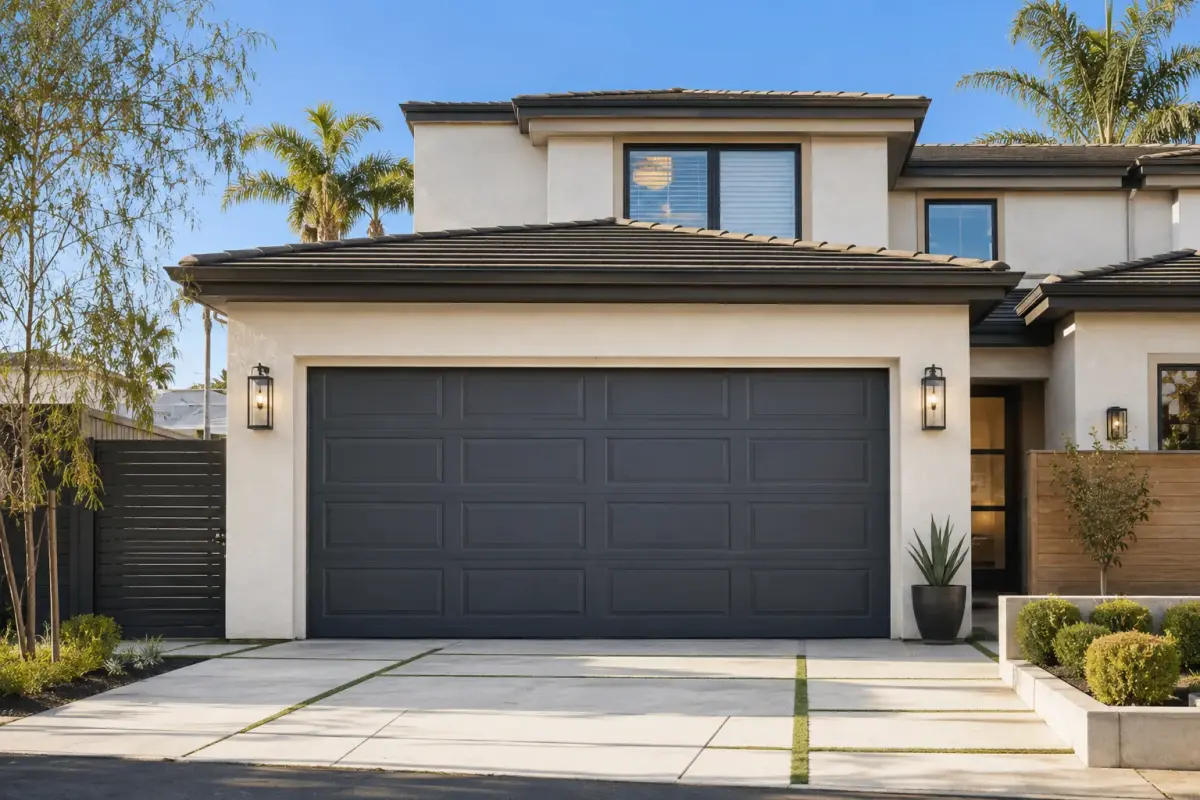
Your garage door covers about 20-30% of your home’s front-facing area. The color you choose impacts your entire home’s appearance.
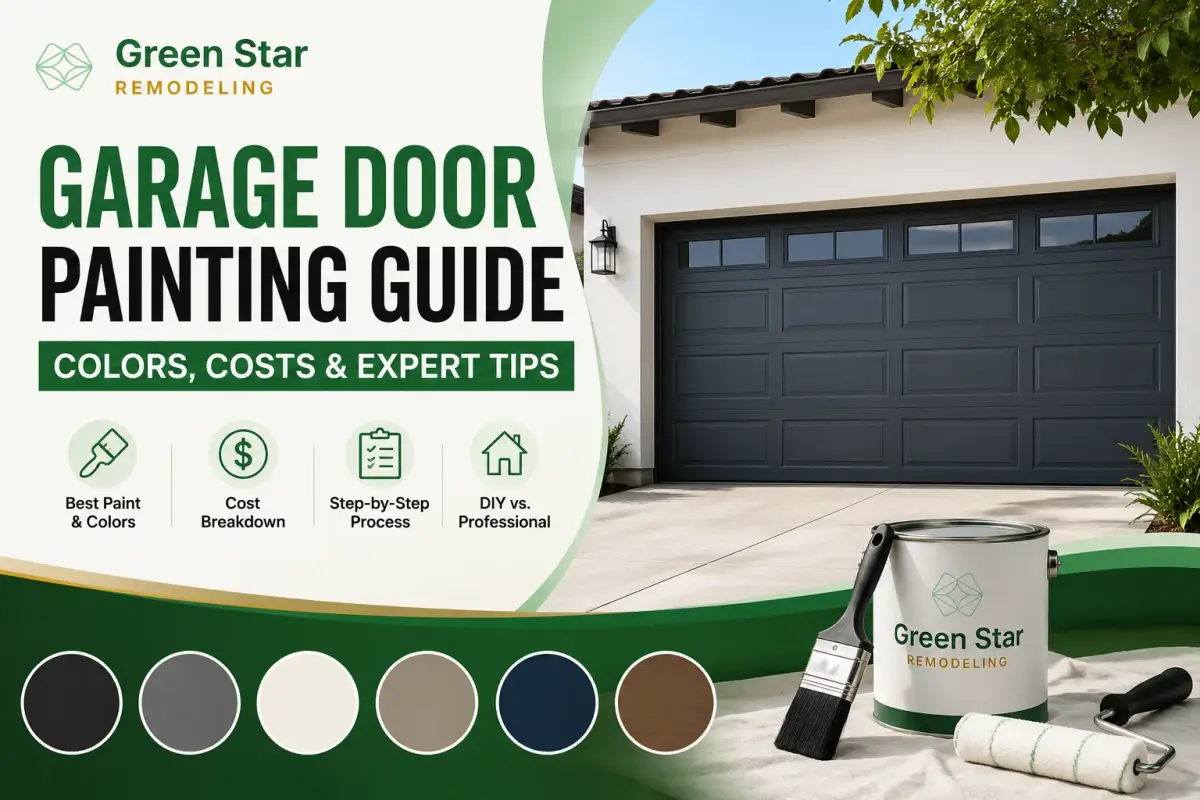
Trending Colors
Black Bold, modern, high-contrast. Works beautifully with white or gray homes.
Dark Gray or Charcoal Modern and sophisticated. Works with almost any home style.
White Classic, clean, timeless. Perfect for traditional or beach-style homes.
Warm Taupe or Greige Warm, sophisticated, on-trend. Works with contemporary homes.
Navy Blue Adds personality without the boldness of black. Works with coastal styles.
Bronze or Copper Tones Warm, sophisticated. Great for homes with wood accents.
How to Choose Your Color
- Match your home’s style Contemporary homes suit bold colors. Traditional homes suit classic colors.
- Consider your roof color A garage door that complements your roof looks intentional.
- Think about your house trim Matching or complementing trim creates visual harmony.
- View samples in sunlight Paint colors look different in morning sun, afternoon sun, and shade.
- Check your neighborhood Look at homes on your street for color trends.
Pro Tip: Most successful garage door colors are neutral (white, gray, taupe) or dark (black, navy, dark gray). If the rest of the house is due for paint as well, coordinating exterior paint with the rest of the home’s finish keeps the door, trim, and siding consistent.
When to Replace Instead of Paint
Sometimes painting doesn’t make sense. Consider replacement if:
The Door Is Damaged
If panels are dented, cracked, or warped, painting won’t fix structural issues.
Insulation Is Failing
If your garage door is insulated and the insulation is deteriorating, replacement is better than painting.
The Door Is Very Old
Garage doors last 15-30 years. If yours is 25+ years old and showing wear, replacing it adds more value.
You Want a Complete Garage Refresh
If you’re planning new flooring, storage, or electrical upgrades, a new garage door complements those improvements.
Why Paint Your Garage Door?
High Impact on Curb Appeal
Your garage door is one of the largest visible features of your home. A fresh, well-chosen color instantly improves curb appeal.
Quick Home Improvement
A painted garage door is done in a day or two. It’s one of the fastest ways to update your home’s exterior.
Affordable
Painting is much more affordable than replacing the door.
Protects the Door
A quality paint job seals the door surface, protecting it from weather and UV exposure. This extends the door’s life.
Professional vs. DIY: Which Makes Sense?
DIY if:
- Your door is in good condition (minimal rust, no peeling paint)
- You’re comfortable with ladder work and detail painting
- You have time to do proper prep
- You want to handle it yourself
Hire a Professional if:
- Your door has peeling paint, rust, or damage requiring prep
- You value a flawless finish
- Your door is large or hard to access
- You want warranty protection on the paint job
- You’re considering full garage remodeling options
Ready to Transform Your Garage?
Painting your garage door is a great first step. Once your door looks fresh, many homeowners explore other garage improvements: new flooring, storage solutions, or even converting the garage into usable living space.
If you’re in Los Angeles and considering a complete garage transformation from new flooring to ADU conversion Green Star Remodeling can help with everything.
Schedule a free consultation. We’ll assess your garage and discuss your options.
Frequently Asked Questions
Can you paint a garage door?
Yes. Steel and aluminum doors are easiest. Wood, vinyl, and fiberglass doors can be painted but require special primers.
How long does garage door paint last?
With proper preparation and quality paint, expect 5-10 years. Wood doors may need repainting more frequently due to weather.
What’s the best time to paint a garage door?
Spring or fall, when temperatures are moderate and humidity is normal. Avoid direct sun and rain forecasts.
Can I paint a vinyl garage door?
Yes, but it requires special vinyl-adhesive primer and flexible paint.
Does painting a garage door add home value?
A fresh, attractive garage door improves curb appeal, which helps with selling.
How many coats of paint does a garage door need?
Most jobs use two coats of topcoat paint plus one coat of primer for durability and coverage.
What should I do if my garage door has rust?
Clean rust spots with a wire brush or treat them with a rust converter before painting.