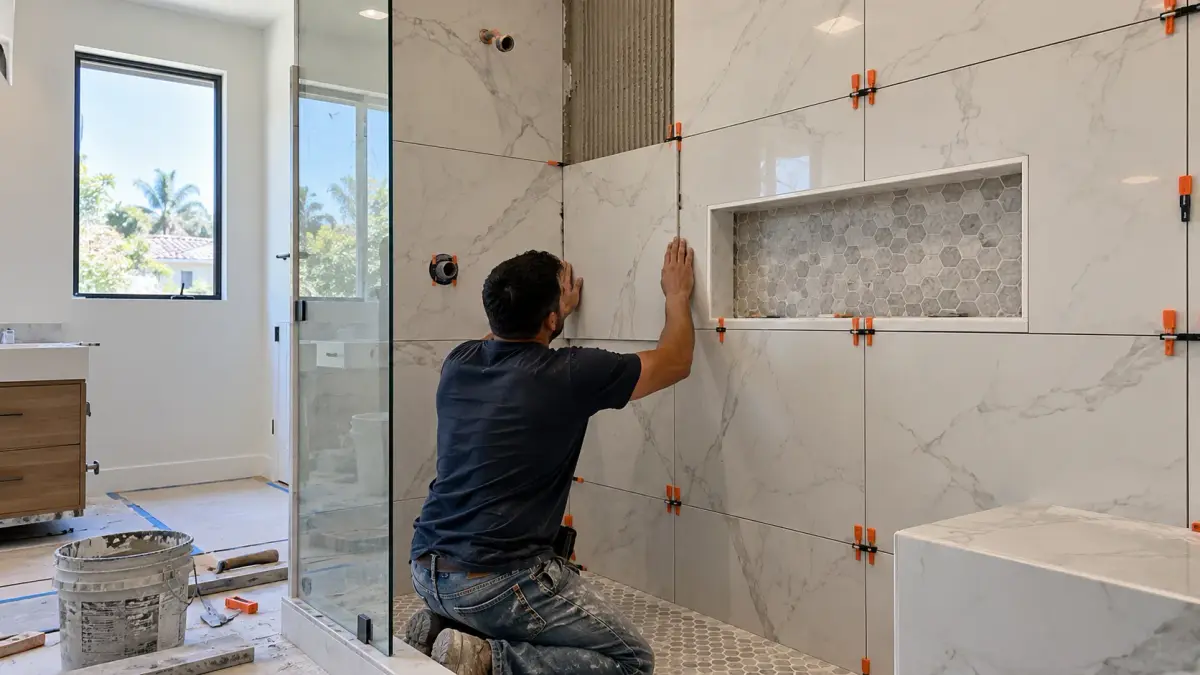
Your bathroom needs updating. New fixtures, fresh tile, maybe a little more space. You’re wondering: Do I actually need a permit? Can I just hire someone to do the work?
The answer depends on what you’re doing. Some bathroom projects require permits. Others don’t. Get it wrong, and you could face fines, insurance problems, or trouble selling your home. This guide tells you exactly what requires a permit in California and what doesn’t.
The Short Answer: It Depends on the Work
Not all bathroom work requires a permit. But most projects that involve plumbing, electrical, or structural changes do.
Permit Required: Moving fixtures, relocating plumbing, adding electrical outlets, removing or moving walls, installing new ventilation fans.
No Permit Required: Replacing fixtures in the same location, painting, retiling walls, updating mirrors or hardware (when no electrical work is involved).
The key question: Are you changing the building systems (plumbing, electrical, structure) or just replacing what already exists?
Bathroom Work That Does NOT Require a Permit
These projects are considered cosmetic updates:
Fixture Replacement in the Same Location
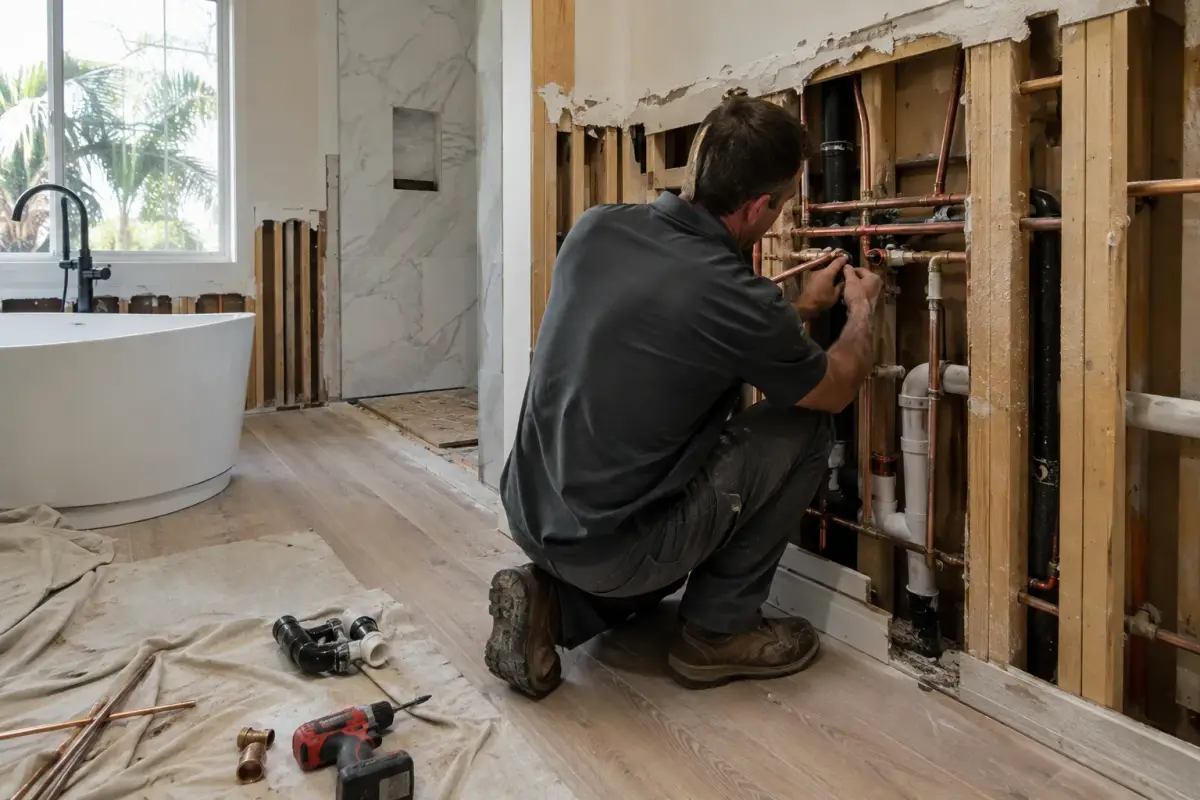
Replacing a toilet with a new one in the exact same spot? No permit required. Same with replacing a sink, faucet, or showerhead, as long as you’re not touching the plumbing lines inside the walls.
Important: You still need a licensed plumber to do the work safely, even if no permit is required.
Wall and Floor Updates
Retiling walls, replacing flooring, or installing new wall coverings don’t require permits. These are purely cosmetic changes.
Painting and Wallpaper
A fresh coat of paint or new wallpaper needs no permit.
Hardware, Mirrors, and Lighting
Installing new mirrors, towel bars, toilet paper holders, or replacing light fixtures (without moving them or changing circuits) typically doesn’t require permits.
Bathroom Work That DOES Require a Permit
These projects involve building systems and must be permitted:
Structural Changes
Moving, removing, or altering any walls even partition walls requires a permit. This includes enlarging the bathroom by taking space from an adjacent room or closet.
An inspector needs to ensure that any removed walls were not load-bearing and that all new framing is structurally sound.
Plumbing Changes
Any change to plumbing locations requires a permit:
- Moving a toilet to a different location
- Relocating the sink or shower
- Changing or rerouting drain lines
- Installing a new bathtub or shower in a different location
- Adding a second sink or toilet
Electrical Work
Any electrical changes require permits:
- Installing new outlets (especially GFCI outlets required in bathrooms)
- Adding new circuits
- Installing exhaust fans or bathroom ventilation
- Changing lighting circuits or adding new lighting in some situations
- Moving existing outlets
Ventilation and Windows
- Installing new exhaust/ventilation fans
- Enlarging or adding windows
- Adding skylights
Full Bathroom Remodels
In most California cities, a full bathroom remodel is triggered when two or more systems are updated. For example: replacing the bathtub AND vanity together, or updating fixtures AND moving an outlet.
California Building Code Requirements for Bathroom Remodels
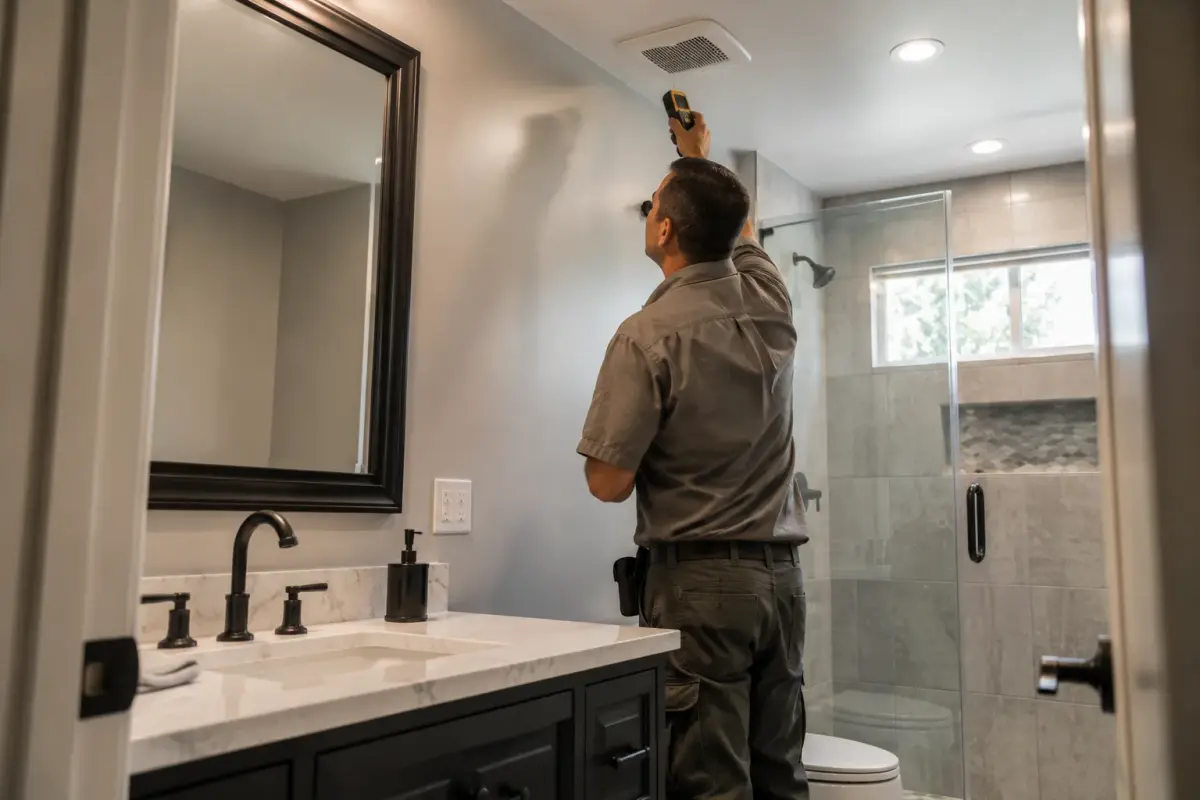
When you pull a permit, your bathroom must meet current California codes. Here’s what inspectors check:
Electrical Safety (GFCI Protection)
All receptacle outlets in bathrooms must be GFCI protected (Ground Fault Circuit Interrupter). GFCI outlets shut off power instantly if they sense moisture, preventing electrical shock.
A minimum of one 20-amp circuit is required for bathroom receptacles, and this circuit cannot have any other outlets, including lights. This dedicated circuit protects against overloads.
Lighting Standards (Title 24)
California’s Title 24 energy code requires:
- At least one high-efficiency light fixture in each bathroom
- All other lights in a bathroom must be either high efficiency or controlled by vacancy sensors
- Lighting fixture placement must meet safety standards (no lights too close to tubs or showers)
Ventilation Requirements
Bathrooms require adequate ventilation. The minimum ventilation volume is 1 cfm per 100 square feet plus 7.5 cfm per occupant. Most homes use exhaust fans to meet this requirement.
Exhaust fans must be ENERGY STAR certified and properly ducted with 4-inch or larger ducts.
Fixture Efficiency Standards
Updated fixtures must meet efficiency standards:
- Toilets: Maximum 1.28 gallons per flush (GPF)
- Showerheads: Maximum 1.8 gallons per minute (GPM)
- Faucets: Maximum 1.2 GPM
These standards save water and reduce your monthly bills.
Ceiling Height
Bathrooms must have a ceiling height of not less than 6 feet 8 inches. Exceptions apply for sloped ceilings, but at least 50% of the required floor area must meet the full height requirement.
When to Get a Permit: Work That Triggers Code Upgrades
Here’s an important rule: When you update a system, you often must bring it up to current code even if the existing installation was legal when it was built.
For example:
- Replacing an old toilet? It must be 1.28 GPF or less.
- Adding a new outlet? It must have GFCI protection.
- Installing a new exhaust fan? It must meet current Title 24 efficiency standards.
- Installing a new shower valve? It must have anti-scald protection.
This is called “triggering” a code upgrade. It’s why permits matter they ensure updated work meets safety and efficiency standards.
Can You Do Your Own Bathroom Remodel?
Yes, homeowners can pull their own permits and do their own work under California law, acting as an “owner-builder.”
However, important rules apply:
- You can only build for yourself on your own property, not for resale or for other people
- Any workers you hire must be licensed to do that specific work (plumbers, electricians, etc.)
- All work must pass inspection to current code
- You become personally responsible for safety compliance
- You still pay permit fees and inspection costs
The realistic savings for experienced owner-builders is 10-15% after accounting for project management, insurance, and inspection costs. For most homeowners, this means the savings aren’t as big as expected.
Most homeowners find hiring a licensed contractor easier because:
- The contractor handles all permits
- They know current codes and requirements
- They have insurance and bonding
- They manage inspections and coordinate with inspectors
- They know how to work with the building department
If you’re not experienced with construction and building codes, hiring a professional is the safer and smarter choice. Green Star Remodeling handles all of this complexity for you. Our team focuses on coordinating permitted bathroom construction, from plans and inspections through final sign off.
What Happens If You Renovate Without a Permit?
Not getting a required permit creates serious problems:
Immediate Consequences
If an inspector discovers unpermitted work during construction, they issue a Stop-Work Order and construction must cease immediately. You’ll then face fines and penalties, which can be double or triple the original permit fee.
Initial fines for unpermitted work in California range from $350-$600, escalating to $1,500+ if not resolved within 30 days. Additional daily fines can apply until the violation is fixed.
Long-Term Problems
When you sell your home, you must disclose any unpermitted work. This is a massive red flag for potential buyers and their lenders. Unpermitted work can kill a sale, drastically lower your home’s value, or force you to legalize the work at great expense before you can close.
Appraisers compare your home’s square footage and features against the city’s permit records. When they find a remodeled bathroom that doesn’t appear on the permit history, they must note the discrepancy. This affects your home’s appraised value and can reduce it by 10-20% or more.
Insurance Issues
If a fire or major flood occurs and is traced back to unpermitted work, your homeowner’s insurance has the right to deny your entire claim. The liability for damages and any injuries falls on you.
Some insurance companies cancel entire policies upon discovering unpermitted work. Many California homeowners only learn their policy excludes unpermitted work when they file a claim.
Financial and Legal Penalties
If an inspector discovers your unpermitted project (often thanks to a neighbor’s complaint), they can require you to tear out new tile, drywall, and cabinetry so they can inspect hidden work like plumbing and electrical. This costs far more than getting the permit originally.
The city can also make mandatory changes if they determine that any of the work violates building codes.
How Long Does a Bathroom Permit Take?
Timeline varies by city, but generally:
- Simple projects: 1-2 weeks
- Standard bathroom remodels: 3-8 weeks
- Complex projects with structural changes: 2-4+ weeks
The timeline includes:
- Initial application review (checking if your application is complete)
- Plan check (reviewing your designs for code compliance)
- Issuance of permit (once approved)
- Scheduling inspections during construction
- Final approval (after all work passes inspection)
Incomplete applications cause delays. Having plans ready and complete information speeds the process.
Our team at Green Star Remodeling manages this entire timeline for you. Check out our Bathroom Remodeling service page to see how we streamline the permit process.
How to Get a Bathroom Remodel Permit
Step 1: Check With Your Local Building Department
Contact your city or county building department. Requirements vary by location. In Los Angeles, contact the Department of Building and Safety. In Santa Clarita, contact the city building department.
Step 2: Prepare Plans and Documents
You’ll need:
- Detailed floor plans showing existing and proposed layout
- Material lists
- Electrical plans (if outlets are being added/moved)
- Plumbing plans (if plumbing is being relocated)
- Photos of existing bathroom
Step 3: Submit Application
Submit your permit application with all required documents and pay the application fee.
Step 4: Plan Review
The building department reviews your plans for code compliance. This takes several weeks. They may request changes or clarifications.
Step 5: Pay Permit Fee
Once approved, pay the permit fee (based on your project scope).
Step 6: Schedule Inspections
Your contractor schedules required inspections:
- Initial inspection (before work begins or early in the project)
- Rough-in inspection (after structural, plumbing, electrical work but before walls are closed)
- Final inspection (after all work is complete)
Frequently Asked Questions
Can I do my own bathroom renovation?
Yes, as a homeowner you can pull permits and do your own work under California’s owner-builder rules. However, any licensed work (plumbing, electrical, HVAC) must be done by or under the supervision of licensed professionals. For most homeowners, hiring a contractor is simpler, faster, and more reliable.
Do I need a permit to replace a toilet in California?
No, not if you’re replacing it in the exact same location without changing plumbing lines. However, hire a licensed plumber to ensure the work is done safely and correctly. Even though no permit is required, the plumbing must be done properly.
What happens if I remodel my bathroom without a permit?
You could face stop-work orders, fines up to $1,500+, denial of insurance claims, difficulty selling your home, and property value reduction of 10-20% or more. When selling, you must disclose unpermitted work, which deters buyers and lenders from financing the purchase.
How long does it take to get a bathroom renovation permit approved?
Standard bathroom remodels typically take 3-8 weeks from application to permit issuance. Simple projects may be faster. Timeline varies by city and how complete your application is. Incomplete applications cause delays.
Who is responsible for getting the permit, me or my contractor?
If you hire a licensed contractor, they typically pull the permit on your behalf and include permit costs in the project estimate. If you’re acting as an owner-builder, you pull the permit yourself through your local building department.
Let a Professional Handle It
Bathroom permits protect you. They ensure your work meets safety codes, supports your home’s value, and keeps your insurance coverage intact.
Permitting is complex. Code requirements change. Inspectors look for specific details. Missing one requirement can delay your entire project or force costly rework.
That’s where a licensed contractor makes all the difference. They know what inspectors require. They know how to submit plans correctly the first time. They manage all communications with the building department so you don’t have to.
See What Professional Bathroom Remodeling Looks Like
Green Star Remodeling has completed 500+ successful remodeling projects across Los Angeles and Santa Clarita. Browse our before-and-after projects to see the quality and attention to detail we bring to every bathroom renovation.
Our team handles permits, code compliance, inspections, and everything in between. From your first consultation to final walkthrough, we make sure your bathroom remodel is done right and done permitted.
Ready to Remodel Your Bathroom the Right Way?
Don’t risk fines, insurance issues, or resale problems. Let Green Star Remodeling handle your bathroom remodel from start to finish.
We’ll manage every permit, every inspection, and every detail so you can focus on enjoying your new bathroom.
Get a free estimate from our team. We serve Los Angeles, Santa Clarita, Tarzana, Calabasas, and surrounding areas.
Trust Green Star for Your Bathroom Remodel
Over 20 years of experience. 5-star rated. Licensed and insured. See why homeowners across Los Angeles choose Green Star for their bathroom remodeling projects.