
“Kitchen remodel” can mean very different things. It might be a weekend of new paint and hardware, or it might be tearing the room down to the studs. What’s included depends on the scope, and kitchen remodels fall into four tiers: a minor cosmetic update, a partial remodel, a mid-range remodel, and a full gut remodel. The bigger the scope, the more that’s included and the more it changes your layout, your budget, and your timeline.
The simplest way to know which tier you need: figure out whether your kitchen’s problem is how it looks, how it works, or both. This guide breaks down exactly what’s included at each level, plus what’s often a separate cost, so you can plan with no surprises.
The four scope tiers at a glance
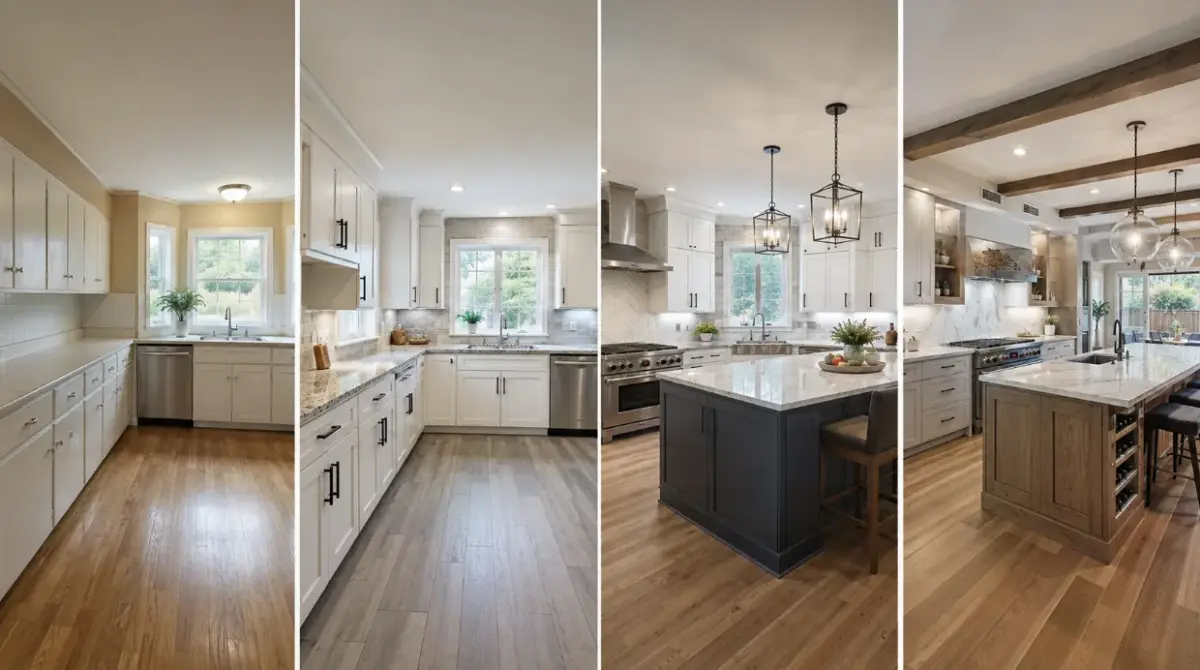
Here’s how the levels compare. Details on each follow below.
| Scope tier | What changes | Walls / layout moved? | Plumbing or electrical moved? | Permit likely? | Disruption |
|---|---|---|---|---|---|
| Minor / cosmetic | Surfaces and fixtures only | No | No | Usually no | Low |
| Partial | Most surfaces replaced | No | Minor at most | Sometimes | Medium |
| Mid-range | Surfaces plus some layout | Small changes | Some | Likely | Medium to high |
| Full gut | Everything, to the studs | Yes | Yes | Yes | High |
Minor / cosmetic update
This is the lightest touch. You keep the layout, cabinet boxes, plumbing, and wiring exactly where they are. You’re refreshing the look, not rebuilding the room.
What’s usually included:
- Painting or refacing existing cabinets
- New cabinet hardware (handles and knobs)
- A new backsplash
- New light fixtures
- A new faucet or sink
- Sometimes new countertops
Best for: a kitchen that works fine but looks dated. It’s the fastest tier, with the least mess, and you can often keep using the room during much of the work.
Partial remodel
A partial remodel replaces the main surfaces, but the layout stays the same. Nothing moves; everything gets upgraded in place.
What’s usually included:
- New cabinets (replaced, not just refaced)
- New countertops
- New appliances
- New flooring
- New backsplash and lighting
- Maybe a few added outlets
Best for: a kitchen with a good layout but worn or old materials. You get a big visual change without moving walls or pipes. See our guide on choosing cabinet styles to plan these choices.
Mid-range remodel
Here the layout starts to change. A mid-range remodel includes everything in a partial remodel, plus small moves that improve how the kitchen works.
What’s usually included:
- Everything from a partial remodel
- Relocating an appliance, like moving the range or fridge
- Adding an island
- New circuits and outlets
- Minor plumbing moves, like shifting the sink
- A full lighting plan
Best for: a kitchen whose layout almost works but needs tweaks. Because you move electrical or plumbing, this tier usually needs a permit.
Full gut remodel
This is the complete transformation. The kitchen is taken down to the studs and rebuilt from scratch. Everything is on the table.
What’s usually included:
- Full demolition
- New layout, often removing or moving walls (like going open-concept)
- Relocating plumbing and gas lines
- New electrical wiring and panel upgrades if needed
- All-new cabinets, countertops, appliances, flooring, and lighting
- Structural work where needed
Best for: a cramped, outdated, or badly laid-out kitchen you want to completely reimagine. It’s the longest, messiest tier, so plan for a temporary kitchen. But it gives you the biggest change. A full gut always needs a permit in Los Angeles, from LADBS. Here’s what a kitchen permit involves.
What’s included vs. what’s often extra
This is where most confusion (and budget stress) starts. Two remodels at the same “tier” can include different things. Always ask your contractor to list what’s included, in writing.
Usually included in a professional remodel:
- Design and planning
- Demolition and debris disposal
- Installation labor for all trades
- The agreed-upon materials
- Cleanup
Often a separate line or add-on, so confirm it:
- Permits and city fees
- Appliances (who buys them, you or the contractor?)
- Countertop fabrication and template
- Upgrades if old wiring or plumbing is found once walls open (common in older LA homes)
- Flooring or paint outside the kitchen
- A dumpster or extra hauling
A clear written estimate lists all of this, so you know exactly what “done” means before work starts.
How to choose your scope
Match the tier to your real problem:
- It just looks dated: minor cosmetic update
- The layout is fine but everything’s worn: partial remodel
- The layout is close but needs small fixes: mid-range remodel
- It’s cramped, closed-off, or badly designed: full gut remodel
Also weigh your budget, how long you’ll stay in the home, and the condition of what’s behind the walls. For real numbers by scope, see our kitchen remodel cost guide, and use our kitchen remodel checklist to plan the details.
Not sure which scope you need?
The best next step is an expert look at your kitchen. Green Star Remodeling is a licensed, bonded, and insured Los Angeles contractor (CA Lic #1088206). Our kitchen remodeling services cover every tier from a simple refresh to a full gut across the San Fernando Valley, and we spell out exactly what’s included before you commit.
Book a free, scope-defining estimate →
Frequently Asked Questions
What is included in a kitchen remodel?
It depends on the scope. A minor remodel includes surface updates like paint, hardware, backsplash, and lighting. A full remodel includes new cabinets, countertops, appliances, flooring, layout changes, and plumbing or electrical work. Most remodels also include design, demo, disposal, labor, and cleanup.
What’s the difference between a partial and a full kitchen remodel?
A partial remodel replaces surfaces like cabinets, countertops, flooring, and appliances while keeping the same layout. A full remodel takes the kitchen down to the studs. It changes the layout and moves walls, plumbing, and electrical. It costs more, takes longer, and needs a permit.
What is a minor vs. major kitchen remodel?
A minor remodel makes cosmetic changes without moving anything structural, so it’s faster and less disruptive. A major or full remodel changes the layout and moves plumbing and electrical. That needs permits and more time. It comes down to whether you keep the bones or rebuild them.
Are appliances and permits included in a kitchen remodel?
Not always, it varies by contractor. Appliances may be supplied by you or the contractor, and permits are sometimes a separate line item. Always ask for a written estimate that clearly lists whether appliances, permits, and fees are included.
Do I need a permit for a kitchen remodel in Los Angeles?
Usually yes for mid-range and full remodels, because they move plumbing, add electrical circuits, or change the layout. Minor cosmetic updates that don’t touch those systems generally don’t. Confirm your scope before demolition.