What is EPDM Roofing?
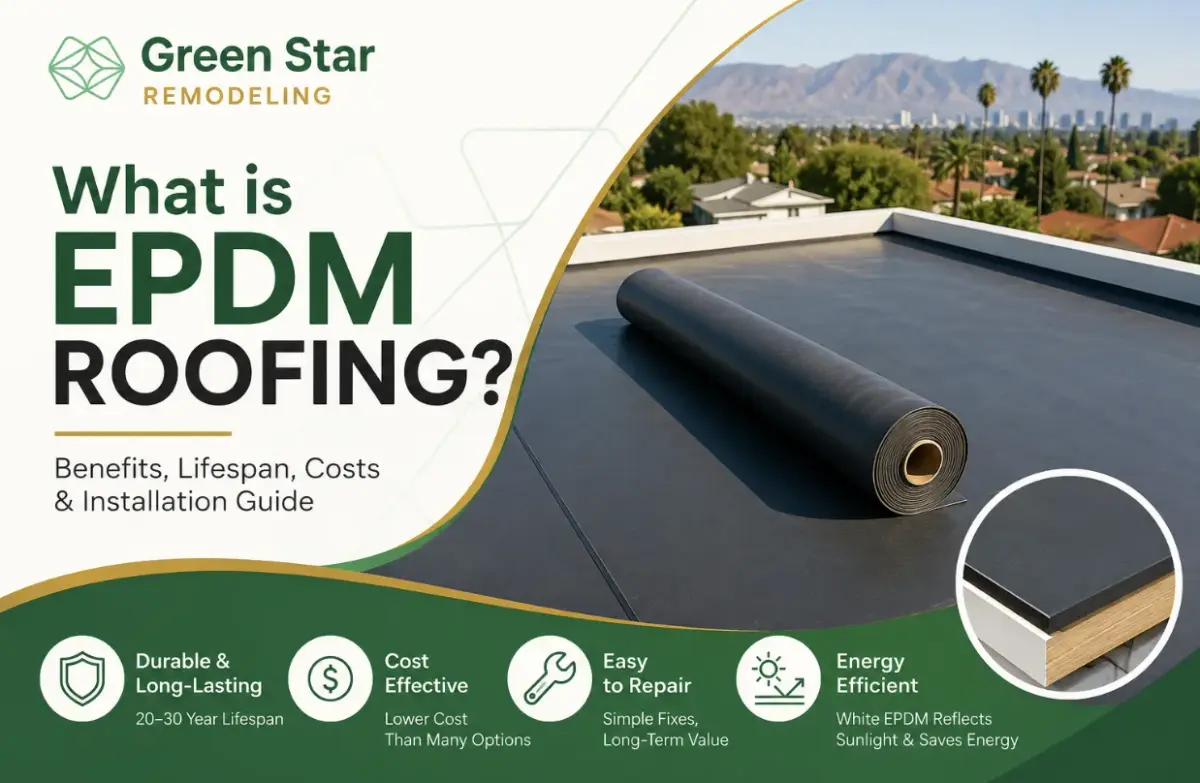
EPDM stands for Ethylene Propylene Diene Monomer. It is a tough, rubber-like material used to cover flat and low-slope roofs. Roofers roll it out in large rubber sheets, so most flat roofs need very few seams. Fewer seams mean fewer spots where water can get in.
EPDM has covered flat roofs in the United States for more than 40 years, according to the EPDM Roofing Association. If your home or ADU has a flat or low-slope roof, EPDM is one of the most common materials your roofer will offer.
What Does EPDM Stand For in Roofing?
EPDM stands for Ethylene Propylene Diene Monomer. Each word points to a part of the material’s makeup. Ethylene and propylene come from oil and natural gas. The diene monomer is the ingredient that lets the sheet cross-link during manufacturing, which is what gives EPDM its rubber-like stretch and strength.
This chemical mix makes EPDM flexible in both heat and cold. It also fights off UV rays, ozone, and weather damage better than many older roofing materials.
Black EPDM vs. White EPDM
Most EPDM comes in black. Black EPDM soaks up heat from the sun, which can push roof surface temperatures well above the outside air temperature on hot days.
White EPDM reflects sunlight instead of soaking it in. This keeps the roof surface cooler and can lower cooling costs inside the building below it.
California’s Title 24 energy code sets reflectivity rules for new roofs and re-roofing jobs. As of 2026, flat and low-slope roofs need an aged solar reflectance of about 0.63 to meet the code. Standard black EPDM does not meet this number on its own. White EPDM is one option that can help a low-slope roof move toward Title 24 compliance, though it is less common than white TPO or PVC membranes.
Why Choose an EPDM Rubber Roof for Your Home or ADU?
EPDM works well on any roof with little to no slope. This makes it a strong match for garage conversions and custom ADUs, which often use flat roof designs to keep the structure low and simple.
Homeowners building a new ADU or garage conversion in the San Fernando Valley often pick EPDM for three reasons.
First, EPDM handles large, open roof spans without needing extra seams. Second, it costs less than many other flat roof systems while still lasting for decades. Third, it repairs easily. A small tear or puncture can often be patched without replacing the whole roof.
Example: A homeowner adding a 500-square-foot ADU with a flat roof can cover the entire surface with one or two EPDM sheets. A shingle roof on the same flat surface would trap water instead of shedding it.
EPDM also pairs well with a full home remodeling project that includes a flat-roof addition, since one contractor can manage the framing, insulation, and membrane installation together.
How Long Does an EPDM Roof Last?
A properly installed EPDM roof lasts 20 to 30 years. Some well-maintained EPDM roofs have performed past 30 years, based on field data from the EPDM Roofing Association. Thicker membranes, at 60-mil or 90-mil, tend to last longer than thinner 45-mil sheets.
In Los Angeles, two local factors affect how long an EPDM roof lasts: UV exposure and thermal shock.
UV Exposure in the Los Angeles Climate
Los Angeles gets strong, direct sun for most of the year. Constant UV exposure breaks down roofing materials faster than in cloudier climates. EPDM resists UV damage better than many membranes, but black EPDM still absorbs more heat and ages faster than white EPDM in direct sun.
Thermal Shock and Installation Quality
Thermal shock happens when a roof surface heats up fast in the sun, then cools fast at night or in shade. Repeated thermal shock can stress seams and flashing points over time. Proper installation, especially at seams and roof edges, prevents most early failures linked to thermal cycling. A roofer who seals seams correctly and flashes penetrations properly protects the membrane’s full lifespan.
How Much Does EPDM Roofing Cost?
EPDM roofing costs depend on membrane thickness, roof size, and installation method. Material costs for EPDM tend to run lower than TPO or PVC, but labor costs can run slightly higher because EPDM seams are sealed with adhesive instead of heat-welded.
Three factors drive the final price on most projects.
Membrane thickness: 45-mil costs less but resists punctures less well; 60-mil balances cost and durability; 90-mil costs more but holds up best in tough conditions.
Roof size and access: Larger roofs cost more in total but often cost less per square foot. Roofs with limited access, such as those behind a fence or up a steep driveway, add labor time.
Roof complexity: Skylights, vents, HVAC units, and parapet walls all add flashing work, which raises labor cost.
For a precise estimate on your specific property, request a free in-home consultation with our licensed roofing team.
How is EPDM Roofing Installed?
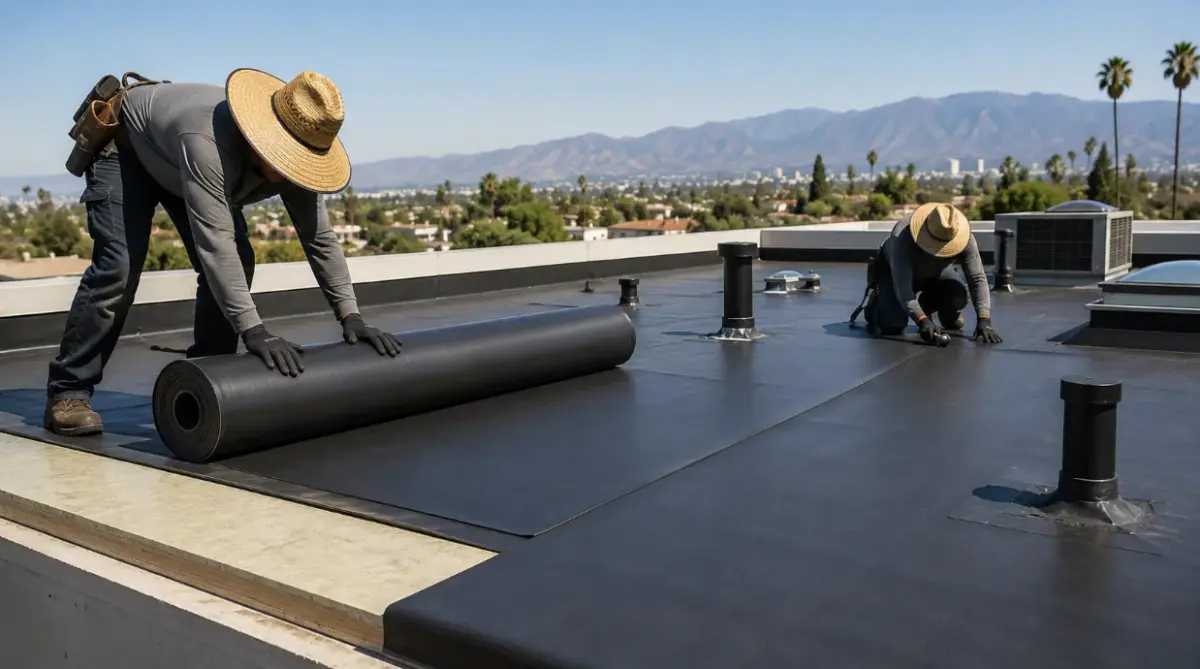
Roofers install EPDM using one of three main methods. Each method attaches the membrane to the roof deck in a different way, and the right choice depends on roof size, slope, and local wind conditions.
| Method | How It Works | Best For |
|---|---|---|
| Fully Adhered | Membrane is glued directly to the roof deck or insulation with adhesive | Roofs needing the cleanest, most wind-resistant finish |
| Mechanically Attached | Membrane is fastened with screws and plates, then seamed | Larger roofs where speed matters |
| Ballasted | Membrane is laid loose and held down with stone or paver ballast | Roofs with strong structural support for extra weight |
This is a short summary, not a full how-to. For a detailed walkthrough of each method, talk with our roofing crew about which system fits your roof.
Is EPDM the Right Choice for Your Next Project?
EPDM roofing offers a rare mix of low cost, long lifespan, and easy repair. For flat and low-slope roofs, few materials match its 20-to-30-year track record at this price point. It works especially well on ADUs, garage conversions, and additions where a flat roof design keeps construction simple.
If you’re planning a flat roof inspection, a new ADU, or a full home remodel in the San Fernando Valley or greater Los Angeles County, Green Star Remodeling can walk you through your options in person. Schedule a free consultation or call +1 800-610-4153 to get started.