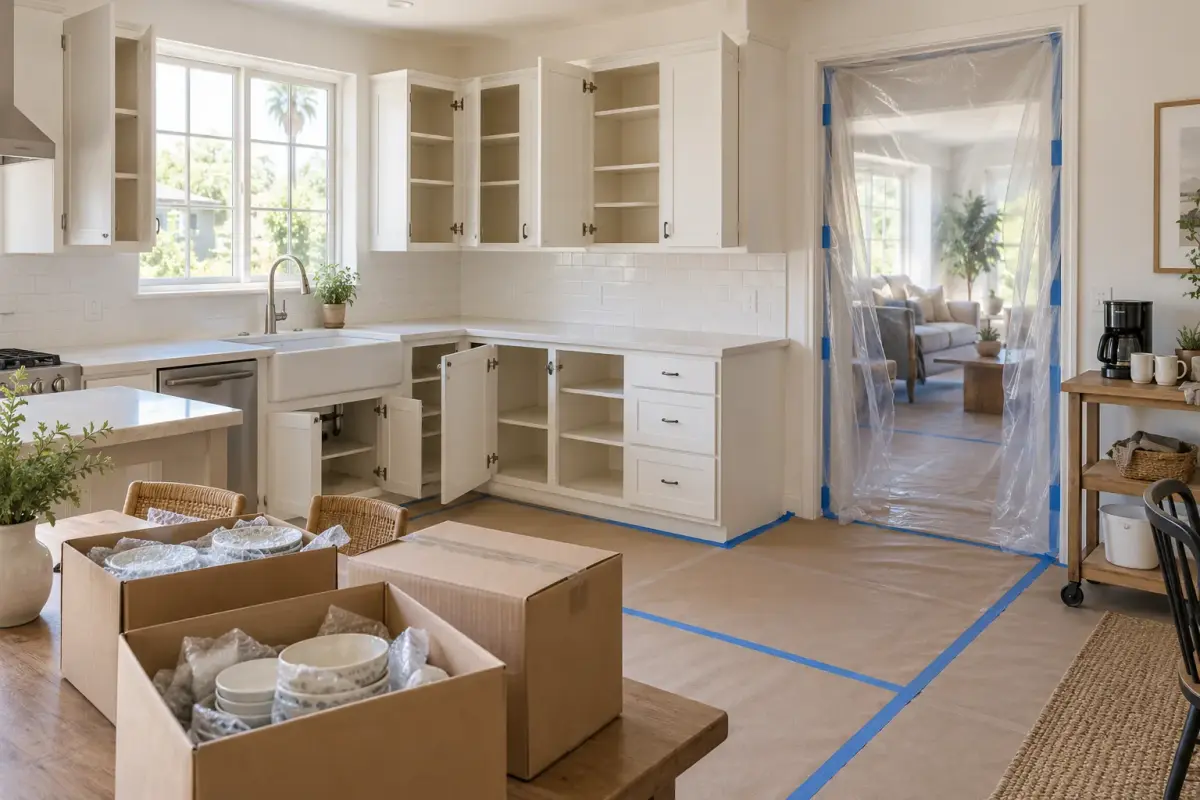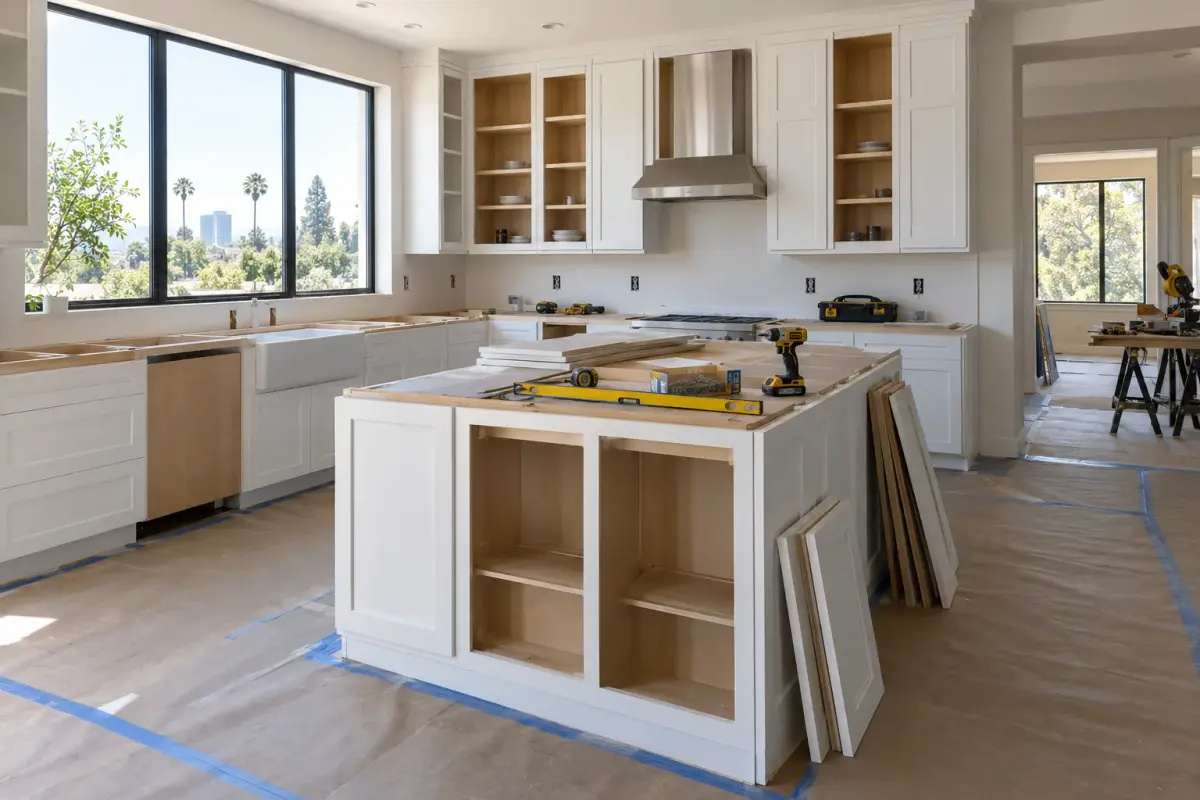
The first question for most people planning to renovate a kitchen is predictable. How long will it take? For Los Angeles homeowners, a kitchen remodel will include 6 to 12 weeks of on-site construction. This means that the total time will be between 3 to 6 months from the first design meeting to the final walkthrough once you consider planning, selections, and permits. Of course, there are various factors that will ultimately answer that question, including the size of the kitchen, where walls and plumbing will be relocated and how quickly the materials will be arriving.
We have completed kitchens all over the San Fernando Valley, Tarzana, and elsewhere in Los Angeles and what catches homeowners by surprise is not the demolition, but rather how much of the process happens before someone picks up a hammer. This guide will answer the questions as to what you can expect to happen during the process, how long each step will take, and the main reasons that the process will be delayed. Nothing should be a surprise to you as you watch the process happen.
Knowing what to expect when each phase of a kitchen remodeling project is scheduled will help you make decisions more efficiently, avoid the things that delay a project, and maintain communications with all parties affected. You will learn the stages in the order that they occur for a kitchen remodeling project in the timeline provided and why predictable gaps are to be expected. You will also learn a few things that keep a Los Angeles kitchen remodeling project on track.
Kitchen Remodel Timeline at a Glance
While we go phase by phase, here is the short answer most of you want to know: A typical Los Angeles kitchen remodeling project follows four main stages in sequence.
- Design and material selection, 2 to 6 weeks
- Permits and pre-construction, 1 to 4 weeks
- Demolition and rough work, 2 to 3 weeks
- Cabinets, countertops and finishes, 2 to 4 weeks
Although all the stages are active, a typical project is 6 to 12 weeks of construction time. Adding in design and permit stages makes the project 3 to 6 months from start to finish. Small, cosmetic updates take 3 to 4 weeks. Large, structural kitchen remodels with custom cabinets and high-end stone take many months to complete. The sections below will walk you through each of the primary stages of a kitchen remodeling project.
Why Kitchen Renovation Timelines Vary in Los Angeles
No two kitchens can work to the same timeline, and anyone who quotes you a definitive number of days to complete your project before they have even seen your space is guessing. The factors that affect the kitchen renovation timeline in Los Angeles are ones that will keep your project moving or factors that will slow it down.
Scope and layout
Small cosmetic kitchen renovations usually involve the installation of new cabinet doors, countertops, fixtures, and paint, and stay within the existing layout. Things get more complicated and time-consuming when the scope of the renovation involves the removal of cabinets, moving the range, changing the location of the sink, taking down walls, or even opening up the kitchen to the living room. Design time, the need for permits, engineering, and more trades get involved. Changes in the layout or in the structure of the kitchen and in the plumbing all significantly lengthen the schedule.
Home age and LA’s city review
In the LA and San Fernando Valley areas, a lot of homes were built many years ago. Old wiring or plumbing can add work to the timeline once the demolition work has begun. In addition, the timeline needed to obtain the permits from LADBS is very unpredictable, based on the time of the year, how complete the work plans are when they are submitted, and how efficiently LADBS performs their review.
Materials and appliances
Semi custom and custom cabinets are usually the longest lead time materials. Other special order tiles and stone, as well as imported fixtures, can easily take several weeks. The majority of unfinished kitchens are a result of either a poor level of organization when ordering the materials or changing one’s mind after the fact.
Kitchen Remodel Timeline Calendar
The following is a sample timeline for the kitchen remodel process for a typical kitchen in Los Angeles. When planning time for your project, keep in mind that larger, more custom finishes will take more time. Smaller, cosmetic-only kitchen remodels will, of course, take less time.
1. Design and Selection of Materials (2 to 6 weeks)
Design time is the most time intensive, but is also the most critical to the success of any design. Good designers will help you determine where and what to put in your new kitchen. From designing the layout, to educating you on finishes, to staying on budget, this phase is the most important. If you are quick to design and decide on finishes, this phase can take approximately 2 weeks. Those who second guess and continue to design will take months before any cabinets are ordered.
Design time also helps to catch any lapses in the design. Changes are costly, and are better to be done on paper, then afterwards. The design process is usually time consuming, as layouts must be drawn, and finishes must be confirmed. Expect to sign off on the final materials list from the design team to proceed.
Initial consultation and measurements lead to adjustments in the layout and design. Finally,you choose the cabinets, counters, back splash, and fixtures.The final scope and materials are ordered.
KEY TAKE AWAY Order cabinets as early as possible in this phase. Cabinet lead time can limit the construction start time to other trades.
Phase 2: Permits and Pre-Construction (1 to 4 weeks)
Provided your remodel includes plumbing, gas, electrical or a change in the footprint, LADBS permits are required. Most cosmetic remodels that do not change the layout do not require permits. During the permit process your contractor finalizes their materials, delivers them, and coordinates their trades to be available to start work when the permits are approved and the site is ready.
- Accelerated permit application and plan check (if required)
- Confirm materials delivery and trades
- Protect site and create a temporary kitchen
Phase 3: Demolition and Rough Work (2 to 3 weeks)
The start of the visible work happens here. The old kitchen is removed, and the work behind the walls happens; framing, plumbing, electrical and any changes that involve structure. This phase involves inspections before the walls are closed and protects the work and the Job from being done illegally. It is the phase where older Los Angeles homes show their age from things like outdated wiring, corroded plumbing, and construction that was done poorly.
- Demolition and haul-away
- Rough plumbing, electrical and framing
- Rough-in inspections
- Drywall, primed, painted
Phase 4: Cabinets, Counters and Finishes (2 to 4 weeks)
This is the fun part. Now your kitchen really starts to take shape. Cabinets come first, then the countertops are templated to the cabinets. The templating process can take a week or so, while the stone is fabricated and installed. After that, the back-splash and flooring go in. Then fixtures and appliances are installed.
- Cabinet installation
- Countertop templating, fabricating and installation
- Backsplash, flooring, paint touch-up
- Fixtures, appliances and hardware
- Final inspection, punch list, and walk-through.
Drawing of countertops can only occur when cabinets are in place, which leads to a gap in this phase of the remodel. This gap is expected and should not be of concern. Allow at least one week between cabinetry installation and countertop installation.
Quick-reference timeline
- Design and selections: 2 to 6 weeks
- Permits and pre-construction: 1 to 4 weeks
- Demolition and rough work: 2 to 3 weeks
- Cabinets, counters and finishes: 2 to 4 weeks
- Typical total on-site: about 6 to 12 weeks, or 3 to 6 months start to finish with design and permitting
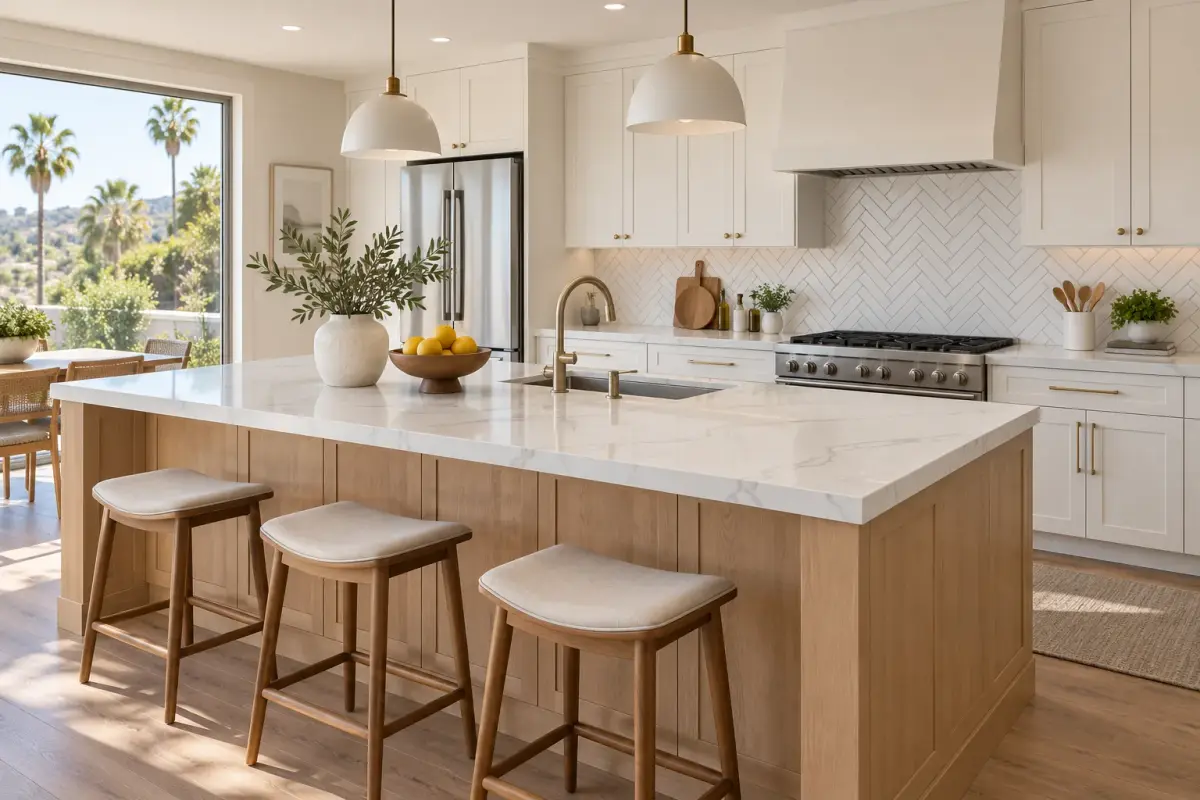
Living Through a Kitchen Remodel in Los Angeles
Most homeowners opt to stay in a worksite during renovations, and so long as you plan, a remodeled kitchen will not affect your daily life for long. The duration that you are without a working kitchen is generally in the middle of the project, from demolition to the finished install of cabinets and countertops.
Some easy tricks to make the process less unpleasant are:
- Setting up a microwave, toaster oven, kettle, and coffee maker in another room.
- Keeping a mini-fridge or your regular fridge, currently out of the work zone, handy.
- Expecting to eat mostly take out.
- Agreeing to the contractor’s daily dust protection measures.
The middle of a remodel can also be an ideal time to clean your vents, since project dust drifts through the air and becomes airborne throughout your house.
What Commonly Delays a Kitchen Remodel
In our experience, kitchen remodels around Los Angeles are very consistent with delays. The delays most often come from a list of predictable issues, and most of them can be completely prevented with planning.
Late or changed selections
Material choices that are made while the project is under construction, or even swapping a countertop or tile during the project, will require an order to be placed, stopping the project until the new selection has shipped. Material selections should be made with finality.
Long lead times
Specialty appliances, cabinets, and imported tile take time, and your contractor should order these items before starting demolition.
Hidden conditions and change orders
An older home in Los Angeles often has problems such as bad wiring, leaking pipes, or substandard framing behind the walls. Deal with these surprises during the demo as much as you have to, but expect a lengthy change order process and delays for each issue. A thorough pre-construction inspection can minimize the number of surprises.
Permit and inspection timing
If permit pullers do not submit thorough application packages with their permits, oversight by the LADBS can cause lengthy reviews. Furthermore, a missed inspection opportunity can leave a site idle for days. A contractor who takes a hands-on approach to this part of the process can maintain control of the timeline.
How to Keep Your Kitchen Remodel on Schedule
Cleaner control of the timing of your remodel than you think is possible is achievable if a few habits are developed. These keep remodels moving:
- Finalize your design and make your selections.
- Early cabinets and countertop orders are a must.
- Budget unexpected costs.
- One trader becomes your contact for design, permits, trades, and inspections.
- Constant updates and communication keeps concerns answered and issues from developing into lengthy delays.
The last point is the most important. Shortening the gap between design, permitting, ordering, and construction is key. It is the loss of weeks that commonly occurs during the gaps between these different steps. Having a project manager who pays close attention to lead times and books inspections before the rest of the trades or schedules them is key. This can often mean the difference between a project being completed in 10 weeks as opposed to taking 20 weeks.
It is commonly said in the industry that a project that is well-planned and properly executed will always win over a project that was poorly planned and executed in a rush, even if the rush was intended to save time.
The San Fernando Valley and Los Angeles areas are convenient for planning kitchen remodels. Green Star Remodeling will provide you with a realistic time estimating for your kitchen remodel. Take advantage of the free, no obligation design consultation.
Plan your kitchen remodel in Los Angeles, CA or San Fernando Valley?
Green Star Remodeling provides you with a realistic time frame with your free no -obligation design consultations.
Project Planning Begins With the Right Partners
Beginning your project with the right partners is the key to a good plan. See how we do kitchen remodels, from the design phase to the end of the project with the final walkthrough. With a full home remodel, we keep everything running smoothly in one project plan. Are you ready to begin? We have a companion kitchen remodel preparation guide to help you prepare your home. Post-construction, have your HVAC system professionally cleaned to remove fine dust.
Frequently Asked Questions
What is the expected length of time for a kitchen remodel in Los Angeles?
Each project is different and in general a kitchen remodel in Los Angeles takes between 6 to 12 weeks of on site work and 3 to 6 months when you include design, selections, and the permitting process. Cosmetic changes with the same layout or design take less time than full plumbing layout changes, for instance, which take more time.
What takes the longest during a kitchen remodel?
Two things typically take the longest: design/selection process and cabinet ordering. These occur before construction so the final construction date is directly related to whether or not you started the process early.
Do permits increase the length of a kitchen remodel in LA?
In general, yes. If your project will cause a change in plumbing, gas, electrical or footprint, then you will need to obtain LADBS permits. The time required to review permits is variable. Cosmetic work in the same layout typically does not require a permit.
Can I stay in my home during a kitchen renovation?
You can and most people do. As long as you have a temporary kitchen and some dust protection, you can stay the whole time. The days without a working kitchen are easier if you plan some meals and set up a small prep station ahead of time.
Why is there a gap in time between the installation of cabinets and countertops?
Countertops are measured and installed after cabinets. There is usually a gap between the two appointments, and that is to be expected. So no, there is no delay in the process.
How much time should be allowed for a kitchen renovation?
Allow 2-3 months for the entire renovation. This gives ample time to choose all of the components of your new kitchen and have them shipped before the demolition.
Will a larger kitchen take longer to renovate?
Not necessarily, a small kitchen can take longer to renovate even if it is a larger kitchen. It depends on the materials chosen and how much work has to be done to modify the existing space.