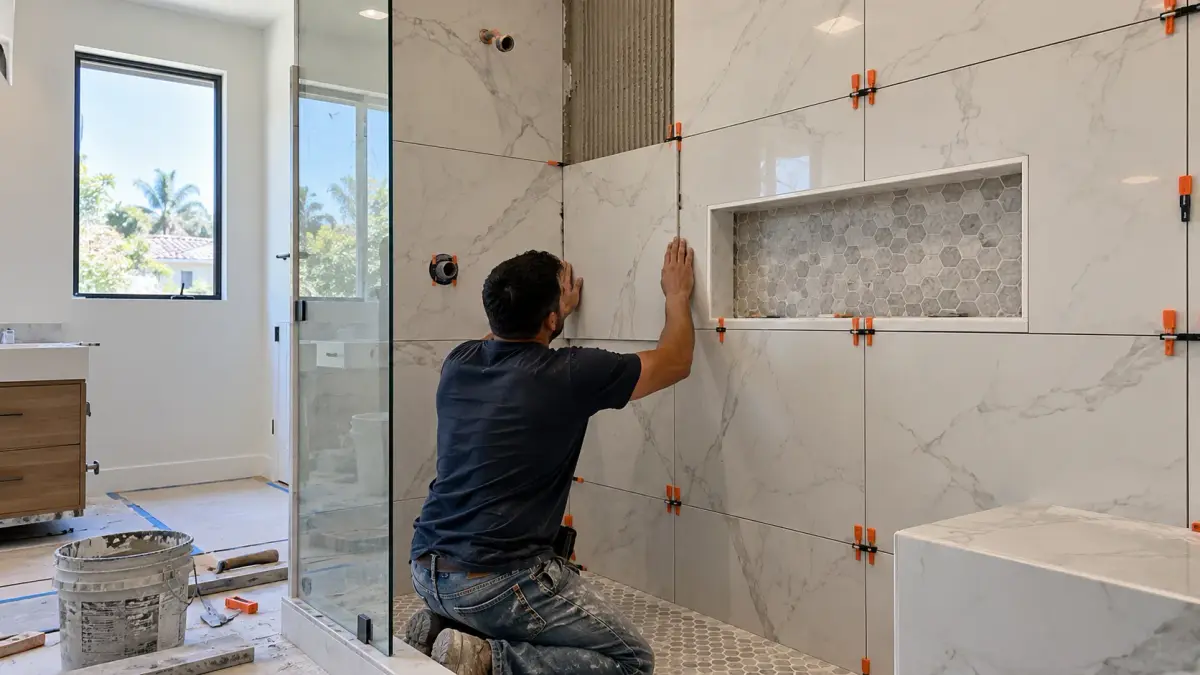
Yes, most kitchen remodels in Los Angeles require a permit from the Los Angeles Department of Building and Safety (LADBS). A permit is required whenever you relocate plumbing or gas, add or change electrical circuits, remove or alter a wall, or change the kitchen layout. Purely cosmetic work, painting, refinishing existing cabinets, or swapping countertops and fixtures like-for-like, usually does not. Non-structural remodels can use a same-day Express (e-)permit through PermitLA; structural or layout changes go through Plan Check via ePlanLA.
The rest of this guide breaks down exactly which work triggers a permit, which LADBS pathway applies, how long it takes, what’s new under the 2026 energy code, and how to apply, written by a licensed Los Angeles contractor (CA Lic #1088206) who pulls these permits every week.
Do You Need a Permit to Remodel a Kitchen in Los Angeles?
A permit is required for nearly every kitchen remodel that changes a building system: plumbing, gas, electrical, mechanical, or structural. Cosmetic-only refreshes that leave those systems untouched generally don’t need one. The safest rule of thumb: if a wall, pipe, wire, vent, or the layout moves, you need a permit.
One critical caveat: this guide covers the City of Los Angeles, where LADBS has jurisdiction. Many homes with an “LA” mailing address actually sit in a different city or in unincorporated LA County, each with its own building department.
Outside LA city limits? Cities like Pasadena, Santa Monica, Burbank, and Glendale run their own permitting, and unincorporated LA County uses LA County Public Works. Confirm your jurisdiction first using the City’s ZIMAS zoning map before assuming LADBS rules apply.
Kitchen Remodel Work That ALWAYS Needs a Permit in LA
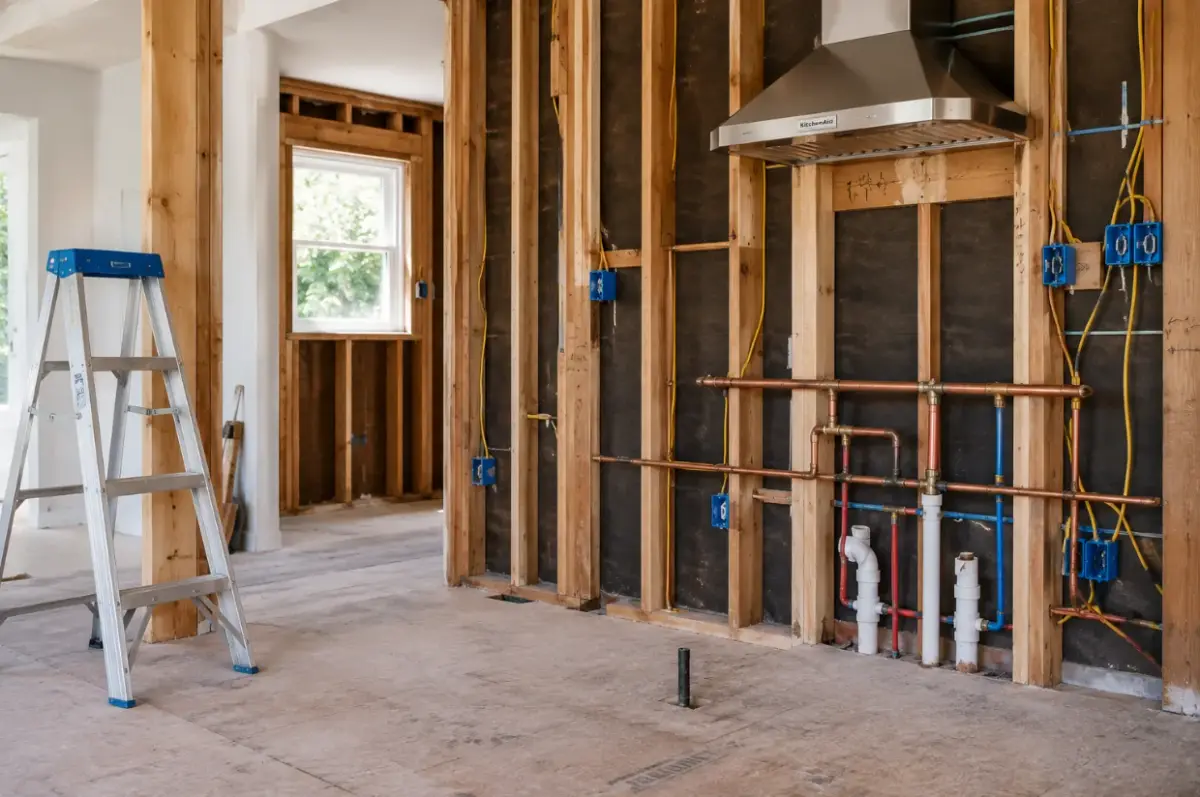
A permit is required any time your remodel affects a structural, electrical, plumbing, gas, or mechanical system. In practice, that covers most “real” remodels. Each line below is a clear trigger:
- Removing or altering a wall (especially a load-bearing wall) → building permit
- Relocating a sink, dishwasher, or gas line → plumbing / gas permit
- Adding circuits or outlets (for example, powering a new island) → electrical permit
- Installing a new range hood or mechanical ventilation → mechanical permit
- Changing the kitchen footprint or layout → plan check
If your project includes any of these, it isn’t a cosmetic update in the eyes of the City, it’s a permitted remodel, and the permit protects you at resale, at inspection, and on any future insurance claim. For full gut remodels, where electrical, plumbing, structure, and finishes are all in play, multiple trade permits are normal and expected. (You can see how this plays out across a complete project on our kitchen remodeling service page.)
Kitchen Updates That DON’T Need a Permit in LA
Cosmetic, like-for-like updates that don’t alter building systems generally don’t require a permit. That typically includes:
- Painting walls or refinishing existing cabinets
- Replacing cabinet doors, drawer fronts, or interior shelving
- A like-for-like countertop swap that isn’t part of a layout change
- New flooring
- A new backsplash or tile
- Replacing a fixture or appliance in the same location, using the existing connections
There’s an important asterisk here. During a larger remodel, work that feels “cosmetic” can quietly cross into permit territory, for example, an island that adds an outlet, or a countertop change tied to relocated plumbing. Clearance and connection rules can pull these into a permitted scope. When the line is genuinely unclear, confirm directly with LADBS through their homeowner permitting page or by calling the City’s 311 service line rather than guessing.
Express Permit vs. Plan Check: Which LADBS Pathway Applies?
LADBS offers two routes, and knowing which one you’re on tells you almost everything about your timeline. A non-structural kitchen remodel qualifies for a same-day Express (e-)permit with no plan review. Any structural or layout change goes through Plan Check.
LADBS explicitly lists kitchen remodeling, including adding or replacing plumbing fixtures and rewiring outlets, among the projects eligible for an Express Permit. Those are issued straight away through the City’s PermitLA web app, with no plans to review. Anything more complex, moving plumbing, relocating gas, removing a wall, reworking the layout, requires plans submitted through ePlanLA, the City’s electronic plan review system. Both portals require a free Angeleno account, your single login for City of Los Angeles services.
Table 1 — Which LADBS pathway does my remodel need?
| Your scope | Pathway | Plan check? | Typical issuance |
|---|---|---|---|
| New cabinets, counters, tile, fixtures (same layout) | Express / e-permit (PermitLA) | No | Same day |
| New circuit/outlet, range hood, like-for-like plumbing | Express / e-permit (PermitLA) | No | Same day |
| Move plumbing/gas, relocate appliances | Plan Check (ePlanLA) | Yes | Weeks |
| Remove/alter a wall, change layout, structural | Plan Check (ePlanLA) | Yes | Weeks+ |
| Hillside / HPOZ / coastal / fire zone parcel | Plan Check + overlay review | Yes | Longer (overlay) |
How Much Does a Kitchen Remodel Permit Cost in Los Angeles?
There’s no single flat fee, and that’s the most important thing to understand. A kitchen remodel permit cost is assembled from several pieces, and it scales with the size and complexity of your project.
Here’s how LADBS builds the number. Permits are billed by trade, so a remodel touching multiple systems carries a separate fee for each of the building, electrical, plumbing, and mechanical permits involved. On top of the trade fees, the City applies standard surcharges, and projects that require plans add a plan-check fee for the review itself. The combined total is tied to your project’s declared valuation under the Los Angeles Municipal Code, a bigger, more structural remodel sits higher on that scale than a simple same-day e-permit. Overlay zones (hillside, coastal, HPOZ, fire) and the Title 24 documentation discussed below can add to it as well.
Because every kitchen is different, the only number that actually applies to your project is the one tied to your scope and valuation. The reliable ways to get it: ask LADBS to generate a fee estimate at issuance through the official permitting portal, or have your contractor carry a permit allowance inside your written estimate so there are no surprises.
Table 2 — What determines your permit cost
| Cost driver | Why it affects the fee |
|---|---|
| Number of trades involved | Each (building / electrical / plumbing / mechanical) is its own permit |
| Express vs. Plan Check | Plan-check projects add a review fee on top of permit fees |
| Project valuation | Fees scale with the declared value of the work (LAMC) |
| Overlay zones | Hillside, coastal, HPOZ, and fire-zone reviews add cost |
| Title 24 / energy documentation | Compliance forms and any required verification add to scope |
Green Star folds the full permit allowance into your estimate, so the City fees are accounted for before demo day. Get a free in-home estimate →
How Long Does It Take to Get a Kitchen Remodel Permit in LA?
An Express permit is issued the same day. A standard Plan Check typically runs several weeks; parcels in hillside, HPOZ, coastal, or very-high fire hazard severity zones take longer because they need extra overlay review on top of the standard plan check. Plan check is rarely one-and-done: most projects go through one to three rounds of corrections before the permit is ready to issue.
Zoom out to the whole project and a permitted kitchen remodel usually spans several months from first application to final sign-off, including construction and inspections. Two timing rules are worth marking on your calendar: a building permit is generally valid for 12 months, and you need an inspection at least every 180 days to keep it active, let it sit untouched longer and the permit can expire.
Table 3 — Permit timeline by pathway
| Pathway | Time to issue | Notes |
|---|---|---|
| Express / e-permit | Same day | Non-structural work only |
| Standard Plan Check | Several weeks | Usually 1–3 correction cycles |
| Hillside / HPOZ / coastal / VHFHSZ | Longer | Extra overlay review required |
| Full project (permit → final) | Multiple months | Includes build + inspections |
A licensed contractor who knows the LADBS correction patterns can compress this considerably: clean plans clear plan check in fewer rounds. It’s the same discipline we describe in our step-by-step kitchen remodel guide.
How to Apply for a Kitchen Remodel Permit (Step by Step)

- Register an Angeleno account : your single login for PermitLA, ePlanLA, and other City of LA services.
- Determine your pathway : non-structural work goes through PermitLA (Express); plumbing/gas relocation, structural, or layout changes go through ePlanLA (Plan Check).
- Prepare your documents : for plan-check projects, that means construction plans plus Title 24 energy compliance forms (the CF1R) where the work affects lighting, ventilation, or the thermal envelope.
- Submit and pay : upload through the correct portal and pay the fees the City invoices.
- Clear corrections and reach RTI : respond to any plan-check comments until your project is marked Ready-To-Issue.
- Build : begin construction once the permit is issued.
- Pass inspections : schedule the required inspections as each phase completes (rough electrical/plumbing, framing, final, etc.).
- Get final sign-off and close the permit : the final inspection closes out the permit and is what protects you at resale.
If pulling and managing City permits sounds like a second job on top of the remodel itself, that’s exactly the part a licensed design-build contractor handles for you: plans, submittal, corrections, inspections, and close-out. Our team keeps the whole project on one track by managing design, permitting and construction together.
What’s New in 2026: Title 24 and Your Kitchen
Since January 1, 2026, kitchen remodels permitted in Los Angeles fall under the 2025 Title 24 Energy Code. The trigger is the application date: permits applied for on or after January 1, 2026 must meet the 2025 Energy Code; applications filed before that date were reviewed under the 2022 code.
For a kitchen, the homeowner-relevant changes come down to a few things. Lighting must use JA8-compliant LED fixtures, and in kitchens those fixtures generally need dimming controls. Ventilation standards are stronger, which affects range-hood and exhaust requirements. The code continues California’s push toward electrification and heat-pump-ready construction, and energy compliance is documented on the CF1R certificate that accompanies your permit. The practical takeaway: design your lighting and ventilation to the current code from the start, so the energy forms don’t bounce your plans back during review.
What Happens if You Remodel Without a Permit in LA?
Skipping a required permit is one of the most expensive shortcuts a homeowner can take. When LADBS discovers unpermitted work, and it routinely surfaces during a sale, the City charges investigation fees that run well above a normal permit fee, can issue a stop-work order, and in some cases can require you to open up or undo completed work to inspect what’s behind it.
The downstream costs are often worse than the City fees. Unpermitted kitchen work has to be disclosed when you sell and frequently derails escrow; it can give an insurer grounds to deny a claim tied to that work; and legalizing it after the fact, proving as-built work meets code retroactively, almost always costs more than permitting it correctly the first time. Permitting upfront isn’t bureaucratic friction; it’s what makes the remodel an asset instead of a liability.
Can a Homeowner Pull Their Own Kitchen Permit? (Owner-Builder)
Yes. LADBS allows owner-builder permits on homeowner-occupied property. You sign an Owner-Builder Declaration accepting responsibility and liability for the work, and you’re still required to pass every inspection the permit calls for.
Owner-builder makes sense for simple, single-trade, non-structural updates where you’re comfortable scheduling and passing City inspections yourself. Once the project involves moving plumbing or gas, adding circuits, removing a wall, or coordinating several trades against a plan-check set, a CSLB-licensed contractor usually saves more in avoided corrections, rework, and liability than the owner-builder route saves in fees.
Planning a Permitted Kitchen Remodel in Los Angeles?
Green Star Remodeling is a licensed, bonded, and insured Los Angeles remodeling contractor (CA Lic #1088206) based in Tarzana, serving the San Fernando Valley and surrounding communities. We handle the full LADBS process, pathway, plans, corrections, inspections, and close-out, so your remodel is permitted, code-compliant, and protected at resale.
Book a free in-home estimate → or see what a full kitchen remodel includes.
Frequently Asked Questions
Do I need a permit to replace kitchen cabinets in Los Angeles?
Usually no, if it’s a like-for-like swap that doesn’t touch plumbing, electrical, gas, or walls. Refinishing or replacing cabinets in the same configuration is cosmetic. The moment cabinet changes involve moving a sink, adding outlets, or altering the layout, a permit applies.
Do I need a permit to replace a countertop in LA?
A straight countertop swap in the existing layout is generally cosmetic and permit-free. But if the new countertop is part of a layout change, a relocated sink, or new plumbing connections, it becomes part of a permitted remodel rather than a standalone cosmetic update.
Do I need a permit to move a sink or gas line?
Yes. Relocating a sink, dishwasher, or gas line requires a plumbing and/or gas permit, and because it changes the layout it typically goes through Plan Check via ePlanLA rather than a same-day Express permit.
How long does a kitchen remodel permit take in LA?
An Express permit is issued the same day. A standard Plan Check usually takes several weeks across one to three correction cycles, and hillside, HPOZ, coastal, or fire-zone parcels take longer due to added overlay review.
Can I remodel my kitchen without a contractor in LA?
Yes, LADBS allows owner-builder permits on homeowner-occupied property. You accept liability via an affidavit and must pass all inspections. For multi-trade or structural remodels, a licensed contractor is usually the lower-risk, lower-cost path overall.
What if my contractor says I don’t need a permit?
Treat it as a red flag if the work moves plumbing, gas, electrical, walls, or the layout. The permit and inspections protect you at resale and on insurance claims. A licensed contractor should pull permits as a matter of course, not offer to skip them.
Does my kitchen remodel have to meet Title 24 in 2026?
Yes. Permits applied for on or after January 1, 2026 fall under the 2025 Title 24 Energy Code, which affects kitchen lighting (JA8 fixtures with dimming) and ventilation. Energy compliance is documented on the CF1R that accompanies your permit.
How do I check whether my home is in the City of LA or the County?
Use the City’s ZIMAS map. Enter your address; if it falls within City of Los Angeles jurisdiction, LADBS handles your permit. If it’s another city or unincorporated county, you’ll apply through that jurisdiction’s building department instead.
Do I need a permit for a kitchen island with new outlets?
Yes. Adding outlets or circuits to power an island requires an electrical permit, and if the island changes the layout or adds plumbing it can push the project into Plan Check rather than a same-day Express permit.
How do I close out and finalize my kitchen permit?
Schedule and pass the required inspections as each phase finishes, then complete the final inspection. That final sign-off closes the permit. An open or expired permit can complicate a future sale, so closing it out properly matters.
Disclaimer: This article is general information, not legal or code-compliance advice. Requirements vary by property and change over time, confirm specifics with LADBS for your address before starting work.