Most bathroom renovation projects that go sideways don’t fail during construction. They fail during planning — or more accurately, because planning was skipped.
A contractor gets hired before the scope is defined. Materials get ordered before permits are considered. Budgets get set based on national averages that don’t apply to the Los Angeles market. By the time the walls come down, there’s no buffer for what’s inside them.
The good news: the planning phase is entirely within your control. Done well, it’s what separates a bathroom renovation that comes in on time and on budget from one that becomes a months-long source of stress.
This guide walks through every step — from defining what you actually want to handing over keys to a licensed contractor. It’s written specifically for LA homeowners, because planning a bathroom renovation here is different from doing it in Phoenix or Portland. The permit requirements, labor market, building codes, and housing stock all shape how this process works.
Step 1: Define Your Goals and Scope
Before you look at a single tile sample or open an Instagram mood board, write down what problem you’re actually trying to solve.
That sounds simple. It rarely is. Homeowners often come into the planning process with a vague sense of wanting something “better” or “updated” — which can mean anything. Getting specific early is what lets every other decision fall into place.
Ask yourself a few direct questions:
What genuinely bothers you about the current bathroom? Poor storage? A dated tub you never use? A shower that doesn’t drain properly? A layout that makes two people getting ready at once feel impossible? Start with function, not aesthetics.
Are you renovating for daily use or for resale? These aren’t mutually exclusive, but they pull in different directions when decisions get hard. A bathroom you’re planning to live in for ten more years can reflect personal taste. A bathroom you’re renovating to sell in two years should reflect what buyers in your neighborhood and price range expect to see.
How significant is the scope? There’s a real difference between a cosmetic refresh — new tile, vanity, fixtures, paint — and a full gut renovation that involves new plumbing, electrical, and possibly layout changes. The scope you define here determines everything downstream: the budget, the permit requirements, the contractor you need, and the timeline.
Is accessibility part of the conversation? A curbless shower, grab bar blocking built into the walls, wider doorways — these are worth considering even if you’re not currently planning for mobility needs. Adding blocking for future grab bars during a renovation costs almost nothing. Doing it later means reopening walls.
Write all of this down. A clear, written scope — even a rough one — is what lets a contractor give you a meaningful estimate rather than a guess.
Step 2: Set a Realistic Budget for Los Angeles
Once you have a sense of scope, the next step is building a budget that actually reflects what things cost in this market.
This is where many LA homeowners run into their first frustration. They find a national average online, call a few contractors, and discover the bids come in meaningfully higher. There are real reasons for that gap — and understanding them helps you plan honestly rather than getting surprised later.
Labor costs in LA run above the national average. Plumbers, electricians, tile setters, and finish carpenters in Los Angeles earn more per hour than their counterparts in most other U.S. cities. That premium reflects the cost of living and the demand for skilled trades in this market. Labor typically represents 40 to 60 percent of a full bathroom renovation budget here.
Permit fees are a real line item. The Los Angeles Department of Building and Safety charges fees based on the type and scope of work. These fees need to be included in your budget from the start — not treated as a surprise add-on once you’ve already committed to a contractor.
Budget a contingency. A 15 to 20 percent contingency buffer is standard practice on LA bathroom renovations — particularly in homes built before 1980, which covers a significant portion of the housing stock across the San Fernando Valley, Encino, Sherman Oaks, and similar areas. Once walls open, you may find galvanized plumbing that needs replacing, moisture damage behind the tile, or outdated wiring that doesn’t meet current code. None of that is visible from the surface, and none of it can be ignored once it’s found.
For a detailed breakdown of what bathroom renovation scopes involve at each level — and what drives costs up or keeps them manageable — the Green Star Remodeling bathroom renovation cost guide covers the LA market specifically.
One practical note: get your budget range established before you start talking to contractors. Walking into a contractor conversation without a budget often leads to proposals that are either too ambitious or too stripped-down for what you actually need.
Step 3: Choose Your Bathroom Style and Direction
With scope and budget anchored, now comes the part most people start with: what should the bathroom look like?
LA homes cover an enormous range of architectural styles — Spanish Colonial, Craftsman bungalow, mid-century modern, contemporary hillside, 1970s tract home, newer construction. The bathroom renovation that makes sense in a 1920s Craftsman in Pasadena is different from what works in a 1990s ranch in Northridge or a contemporary condo in West LA.
A few style directions that work consistently well in LA’s climate and housing stock:
Spa-inspired. Large-format tile, frameless glass enclosures, freestanding tubs, warm lighting, minimal visual clutter. This direction translates well across bathroom sizes and fits the indoor-outdoor lifestyle that’s central to how LA homes are used.
Contemporary with warm materials. Clean lines and modern fixtures paired with wood-tone vanities, matte black hardware, and natural stone. This has been the dominant direction in LA renovation design over the past several years and holds its appeal well at resale.
Transitional. Works in more traditional homes where a fully contemporary renovation would feel out of place. Shaker-style cabinetry, subway tile with a modern twist, polished nickel hardware — familiar forms with updated details.
Use reference images to communicate your direction clearly — not to your contractor, but to yourself first. The clearer your own vision, the easier it is to make decisions quickly when you’re standing in a tile showroom and the choices feel overwhelming.
Step 4: Select Materials and Fixtures
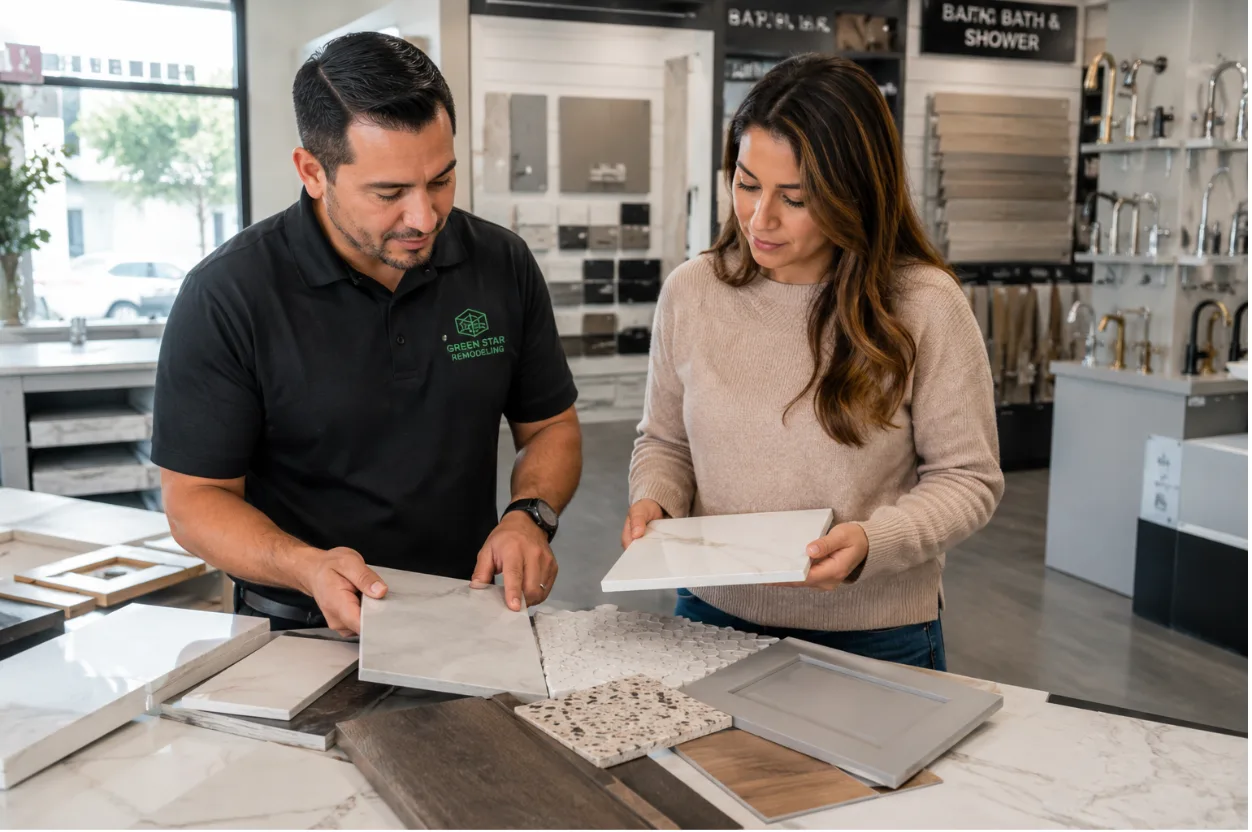
Material selection is where bathroom renovation budgets either stay on track or start escalating. Making these decisions before construction begins — not during it — is one of the most important things you can do.
Here’s what to address:
Tile. Floor tile, wall tile in wet areas, and any decorative accent tile. Large-format porcelain is practical and popular in LA renovations — it reads clean, is durable, and the fewer grout lines simplify maintenance. Natural stone (marble, travertine, quartzite) adds character but requires sealing and more careful maintenance. Ceramic tile at the entry level still performs well in secondary bathrooms.
Vanity and countertop. The vanity is usually the visual anchor of the bathroom. Semi-custom options give you more sizing flexibility than stock vanities, which matters in LA homes where bathroom dimensions are often irregular. Quartz countertops are the practical standard — durable, low-maintenance, and widely available in finishes that work across styles.
Shower and tub configuration. One of the most impactful layout decisions. Converting a tub-only bathroom to a walk-in shower is among the most common requests in LA renovation projects, but it requires plumbing changes and permits. Keeping the tub in a master bath makes sense if resale is a consideration; most buyers still expect to see a tub somewhere in the home.
Fixtures and hardware. Faucets, shower controls, towel bars, toilet paper holders, mirrors. These are often underbudgeted. Finish consistency across all hardware matters more than any individual piece — mixing metals unintentionally reads as unfinished.
Lighting and ventilation. Bathroom lighting is frequently the last thing specified and the first thing noticed when it’s wrong. Plan for layers: task lighting at the vanity, ambient overhead lighting, and ideally some form of dimming. Ventilation fans must meet California’s Title 24 requirements — minimum 50 CFM with humidistat or continuous operation control. This isn’t optional; it’s inspected.
On sourcing: LA has strong local trade showrooms — Ferguson, Kohler, Ann Sacks — where you can see materials at full scale before committing. Online sourcing works for some categories but tile, in particular, benefits from seeing in person and in the lighting conditions of your actual bathroom.
Step 5: Understand LA Permits and When You Need Them
This step trips up a surprising number of homeowners, usually because someone told them permits weren’t necessary — and they were wrong.
Here’s the clear breakdown for the Los Angeles Department of Building and Safety:
No permit required for like-for-like cosmetic work: painting, replacing a faucet in the same location, refinishing cabinets, swapping a light fixture without touching wiring.
A permit is required for any work involving:
- Moving or adding plumbing (toilet, sink, shower, tub — even shifting a toilet a few inches)
- Electrical alterations (new circuits, adding outlets, adding a dedicated circuit for a heated floor)
- Structural changes (moving walls, expanding the bathroom footprint)
- Ventilation changes (adding or relocating an exhaust fan)
For most full bathroom renovations in LA — the kind involving new tile, new fixtures, new vanity, and any plumbing updates — permits are part of the process.
The permit application goes through LADBS, either at a Construction Services Center or through the ePlanLA online portal. Simpler projects may qualify for Express Permit processing. Projects involving plumbing moves or structural changes require standard plan check review, which adds time to your pre-construction timeline.
One note worth knowing: LADBS permit requirements can vary by project type, and older homes in areas like Sherman Oaks, Tarzana, or Woodland Hills sometimes involve LADWP shutoff coordination for plumbing work on aging supply lines. A licensed contractor who regularly works in LA will navigate all of this — it’s part of what you’re paying for.
Unpermitted bathroom work creates real problems at resale. Buyers’ agents in the LA market are increasingly diligent about flagging unpermitted improvements, and lenders can require remediation before a sale closes. Don’t skip the permits.
Step 6: Hire a Licensed Contractor in Los Angeles
The contractor selection step deserves more time than most homeowners give it. Who you hire shapes everything — quality, timeline, how problems get handled, and whether the project gets built to code.
A few things that matter when evaluating contractors in LA:
License verification is non-negotiable. Check any contractor’s license at the California State License Board website before signing anything. Confirm the license is active, that the classification covers your project scope (Class B General Building Contractor for full remodels), and that the bond and insurance are current.
Permits should be pulled in the contractor’s name. If a contractor suggests you pull the permits as a homeowner, that’s a warning sign. Licensed contractors pull permits under their own license and assume responsibility for the work meeting code.
Get itemized bids, not lump sums. A professional bid breaks out labor, materials, permit fees, and allowances separately. That’s what lets you compare bids accurately and understand where flexibility exists in the budget.
Ask specifically about their experience in your neighborhood. A contractor who regularly works in Calabasas, Northridge, or Encino knows the specific permit offices, the common conditions in local homes, and what surprises tend to come up once walls open in your area’s housing stock. That local knowledge matters.
Consider a design-build approach. A contractor who handles both design and construction under one roof eliminates the coordination gap between what a designer specifies and what a contractor actually builds. It also simplifies communication and accountability throughout the project.
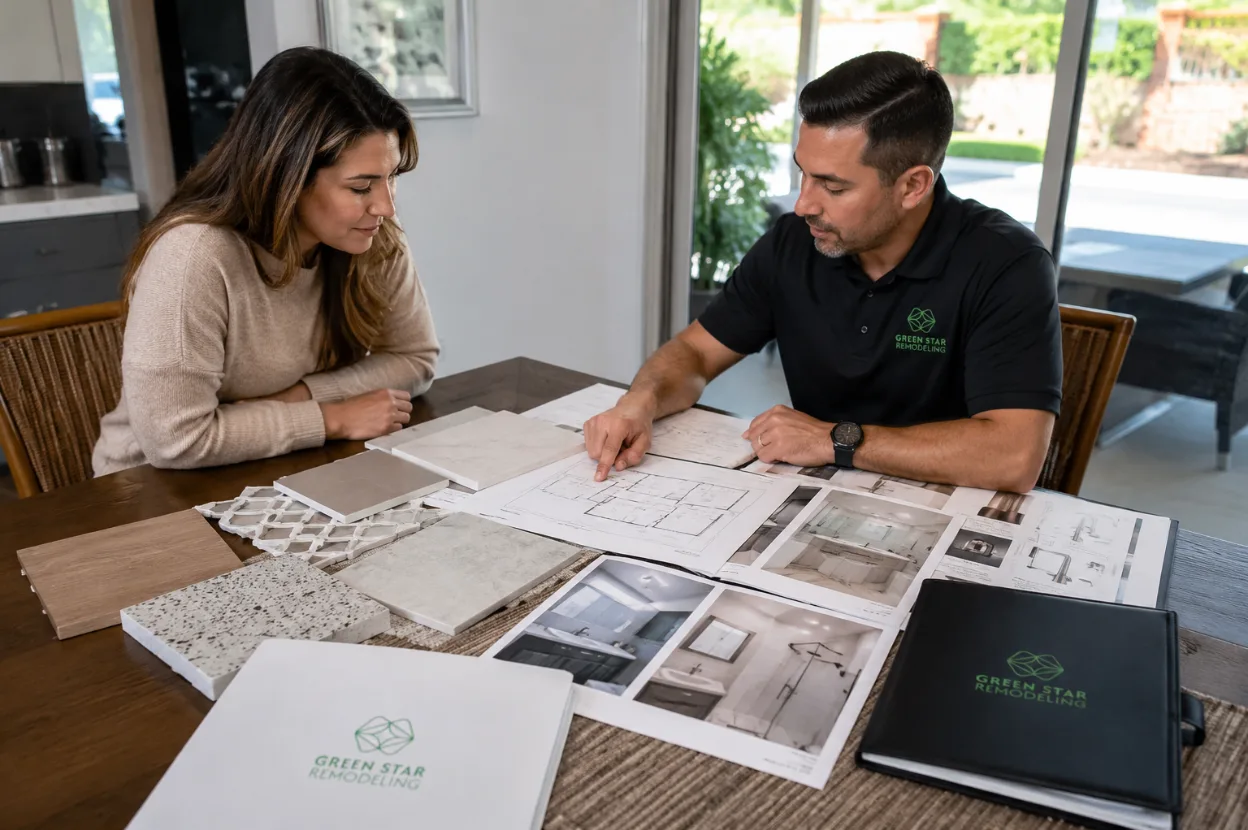
Green Star Remodeling’s bathroom remodeling service is built around this model — design, permitting, and construction handled as a single coordinated process, with transparent communication at every stage. We’re licensed and work across Los Angeles County, the San Fernando Valley, and surrounding communities.
Step 7: Create a Realistic Project Timeline
Bathroom renovations in LA take longer than the construction itself suggests, because there are phases before and after the actual build that add real time.
Here’s how a typical full bathroom renovation timeline looks:
Design and specification phase: 2–4 weeks. Finalizing scope, selecting all materials, and preparing contractor documentation. Decisions made here, not during construction.
Permit application and approval: 4–8 weeks. This is the most variable part of the timeline. Express permits for simpler scopes can be issued quickly. Standard plan check review for projects with plumbing or electrical changes takes longer. Factor this in before telling anyone when the bathroom will be done.
Material procurement: 4–12 weeks (overlapping with permits). Custom and semi-custom vanities, specialty tile, and high-end fixtures have lead times that need to align with your construction start date. A good contractor sequences material ordering to avoid having construction wait on delivery.
Construction: 3–8 weeks depending on scope. Cosmetic refreshes run shorter. Full gut renovations with layout changes run longer.
Final inspection and punch list: 1–2 weeks. The LADBS inspection must be scheduled and completed before the project is formally closed. Minor finish items get addressed during punch list.
Total from first conversation to completed bathroom: typically 3 to 5 months for a full renovation. Projects involving structural changes or custom materials can run 5 to 7 months.
Plan for bathroom unavailability during the construction phase and arrange accordingly — especially for master bathrooms where alternatives in the home may be limited.
Step 8: Prepare Your Home for Construction
The week before construction begins, a little preparation makes a meaningful difference in how smoothly things go.
Clear the bathroom completely. Every personal item, cabinet content, and decorative piece should be removed before day one. Don’t leave it for the crew to work around.
Establish a dust protection plan. Bathroom demo generates real dust. Discuss with your contractor how the work area will be contained — plastic sheeting on doorways, floor protection in adjacent hallways. Older homes in LA can have original plaster walls that produce fine dust that travels further than expected.
Identify your alternate bathroom plan. For master bathroom renovations, know exactly how the household will manage during the 3 to 6 week construction window. If there’s a guest bath, confirm it’s fully functional. If not, this is something to discuss with your contractor before the start date.
Note utility locations. Know where your main water shutoff is, both inside the home and at the street. For older homes in the Valley, LADWP coordination for shutoffs can take advance scheduling.
Communicate preferences for work hours. Contractors typically work standard business hours, but if you’re working from home or have specific constraints, establish that up front — not mid-project.
Frequently Asked Questions
How long does it take to plan a bathroom renovation in Los Angeles?
The planning phase — from defining scope to signing a contractor agreement — typically takes four to eight weeks for a full renovation. Rushing this phase is the most common cause of mid-project problems. Decisions that aren’t made before construction starts get made during it, usually at higher cost and under more pressure.
Do I need an architect or designer for a bathroom renovation in LA?
Not always. For straightforward renovations within the existing footprint, an experienced design-build contractor can handle the design and permit drawings in-house. For significant layout changes, structural work, or high-end custom projects, a separate designer or architect adds value. A design-build contractor typically has in-house design capabilities that cover most standard bathroom renovation scopes.
What’s the most common planning mistake LA homeowners make?
Setting a budget based on national averages, then getting surprised by LA-specific costs. The second most common: making material selections during construction rather than before it starts, which causes delays and often change-order costs.
How do I know if my contractor is properly licensed in California?
Check the California State License Board website at cslb.ca.gov. Enter the contractor’s license number or business name. Verify the license is active, the classification is appropriate for your project, and the bond and workers’ compensation insurance are current. This takes about two minutes and is worth doing before you sign anything.
Ready to Start Planning? Talk to Green Star Remodeling.
Planning a bathroom renovation well is the work that makes everything downstream easier — the contractor conversations, the material selections, the permit process, the construction itself.
If you’re in the early stages and want to talk through your project with a team that knows the LA market, Green Star Remodeling offers free in-home consultations. We serve homeowners across Los Angeles, Encino, Tarzana, Calabasas, Northridge, Woodland Hills, Sherman Oaks, and throughout the San Fernando Valley.
We’ll walk through your bathroom, understand your goals, and give you a clear picture of what the project realistically involves — scope, timeline, and next steps — before you commit to anything.
Book your free consultation → greenstarremodeling.com
Licensed, bonded, and insured (CA Lic #1088206). Serving Los Angeles County and the San Fernando Valley.