Energy bills keep climbing. Water rules keep tightening. And California now runs some of the strictest green building codes in the country.
That’s why more LA homeowners are looking at sustainable home remodeling. Not for the label — for what it saves them every month.
Here’s the catch. A lot of the advice online is out of date. Some federal incentives people counted on for years ended in 2025. Others are still wide open and worth real money. This guide sorts out what actually applies in 2026 — the rebates still available, the materials worth paying for, and how a green remodel works across Los Angeles, the San Fernando Valley, and Santa Clarita.
What does sustainable home remodeling actually mean?
It means renovating in a way that cuts energy use, water use, and waste — while making the home healthier to live in.
Three things drive it. Energy efficiency, like better insulation and heat pumps. Water conservation, like low-flow fixtures and drought-tolerant yards. And cleaner materials, like low-VOC paint and recycled-content surfaces.
In California, part of this is the law. The state’s green building code, CALGreen, was the first mandatory one of its kind in the country. It applies to many remodels — especially ones that expand your conditioned space.
What does it require? Divert at least 65% of construction debris from the landfill. Use low-VOC paints, adhesives, and flooring. Install high-efficiency water fixtures. A good contractor plans for this from the start, not at the final inspection.
What rebates can LA homeowners actually get in 2026?
This is where most articles get it wrong. So let’s be straight about it.
The federal tax credits are gone
The two big federal credits homeowners leaned on for years — 25C for efficient HVAC, windows, and insulation, and 25D for solar — both expired on December 31, 2025.
If your equipment went in before that date, your tax pro may still claim it on a 2025 return. For anything installed in 2026, those credits no longer exist. Plan around that.
Federal rebates still exist, but they’re tight
California runs two IRA-funded rebate programs: HOMES, for whole-home efficiency, and HEEHRA, for electrification and appliances like heat pumps. They’re income-based and can be generous.
The problem is demand. By early 2026, HEEHRA single-family money was fully reserved across the state, and new applicants went on a waitlist. These rebates only come through certified contractors — look for TECH Clean California-trained pros.
One warning. The state has flagged scammers working this space. Never hand your financial details to anyone promising to “file your rebate” for you.
Water rebates are the real 2026 win
This is where most homeowners save right now. LADWP and the SoCal Water$mart program reward several upgrades:
| Rebate (LADWP / SoCal Water$mart) | What it covers |
|---|---|
| Turf replacement | Swap a thirsty lawn for California-friendly landscaping. Pre-approval required before you start. |
| Smart irrigation controller | Adjusts watering to the weather, so you stop overwatering. |
| High-efficiency toilets and washers | Per-device rebates on qualifying water-saving fixtures. |
| Free trees (City Plants) | Shade trees that cut your cooling costs over time. |
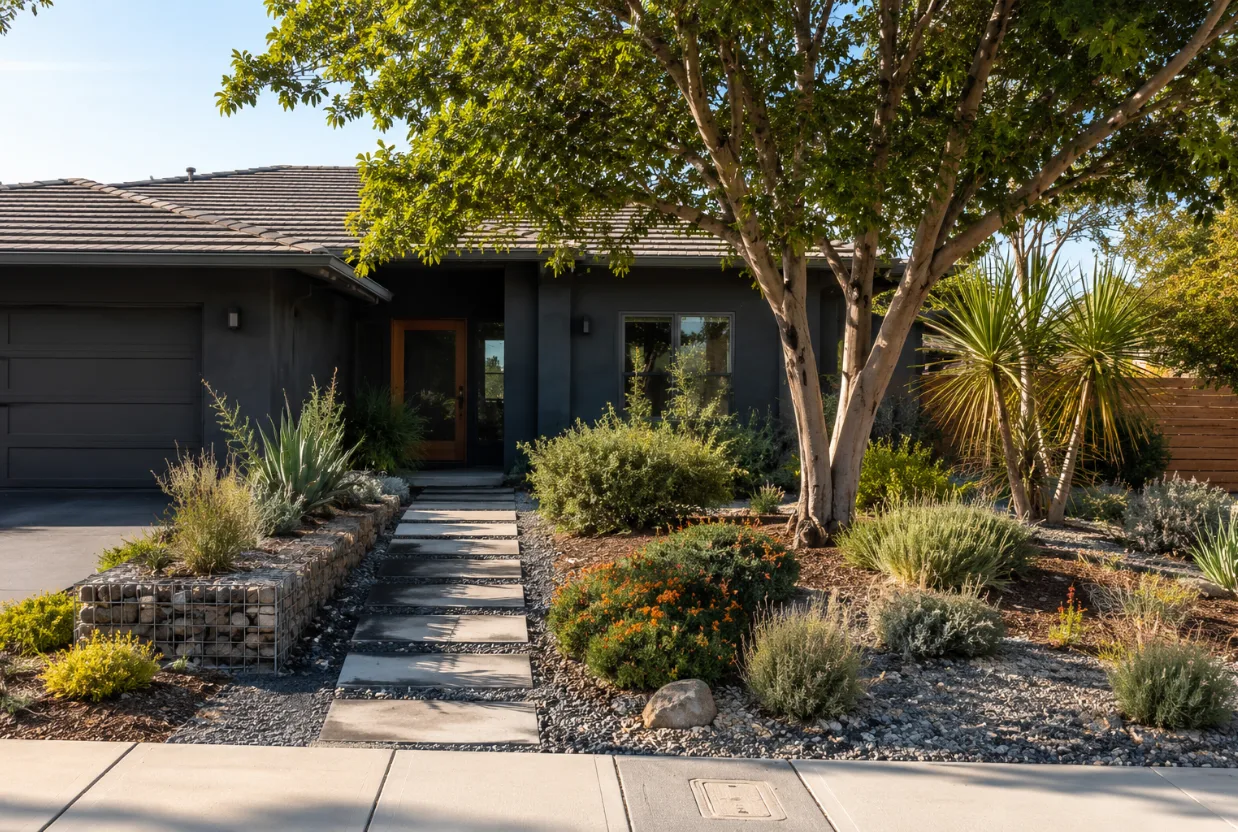
Pulling out a thirsty lawn and putting in California-friendly landscaping is the most rewarded green upgrade in LA right now. The exact amounts change often and most need pre-approval, so check the current terms before you commit — or ask us, and we’ll help you see what you qualify for.
Here’s the simple takeaway. Lead with water and electrification upgrades your local utility still pays for. Treat any federal benefit as a bonus, not a plan.
Which eco-friendly materials are worth the money?
Green doesn’t mean flimsy. The best sustainable materials are usually the most durable — and a finish that lasts twice as long is its own kind of green.
For LA’s heat and dry air, these hold up:
- Low- and zero-VOC paint. Cleaner air, and required under CALGreen anyway.
- FSC-certified or reclaimed wood for cabinets and floors.
- Recycled-content countertops — glass, quartz, or paper-composite.
- Bamboo or cork flooring. Fast-growing and tough.
- Cool roofing that reflects heat and drops your AC bill.
- Dual-pane, low-E windows paired with better insulation.
- ENERGY STAR appliances and heat-pump systems.
That last one matters more than people think. Heat-pump HVAC and water heaters run on a fraction of the energy gas uses.
Eco-friendly kitchen remodeling for sustainable homes
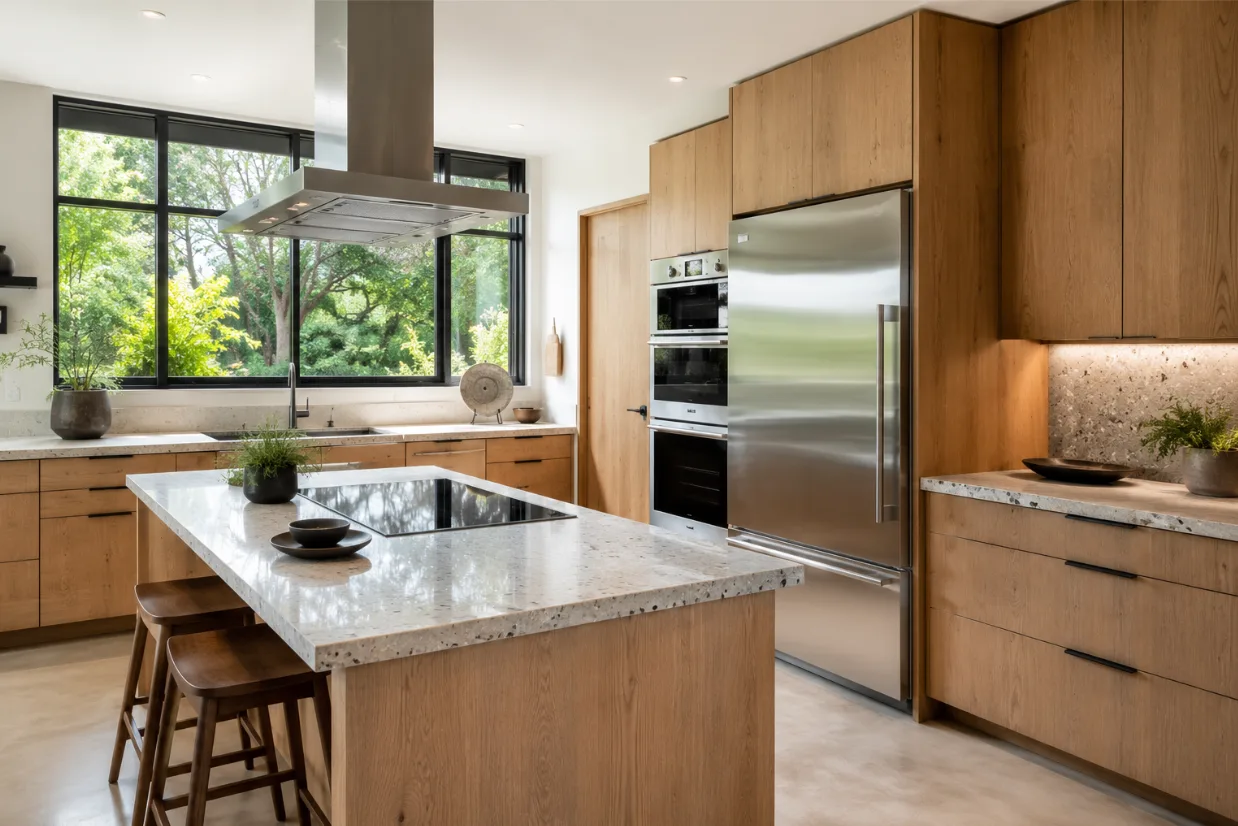
The kitchen gives you the biggest return. It packs energy, water, and materials into one room, so small changes add up fast.
Start with the appliances. An induction cooktop beats gas on efficiency and air quality. ENERGY STAR fridges and dishwashers cut both power and water. Add a heat-pump or tankless water heater, and you’ve handled the kitchen’s two biggest energy users.
Then the surfaces. Recycled-content countertops. FSC-certified or reclaimed-wood cabinets. Low-VOC finishes in the room where your family spends the most time.
Finish with a water-efficient faucet, full LED lighting, and materials chosen to last. That’s what eco-friendly kitchen remodeling for sustainable homes really looks like — lower bills every month, and a kitchen that holds its value. You can see how we approach it on our kitchen remodeling page.
What about the rest of the house?
A green remodel rarely stops at one room. The upgrades that pull the most weight:
- Bathrooms: low-flow toilets and showerheads, good ventilation to stop mold, recycled-content tile. LADWP even gives customers free showerheads and aerators.
- Landscaping: drought-tolerant plants, permeable pavers, smart irrigation. The most rebated category in LA.
- Roofing: cool roofing during a replacement cools the whole house, not just the attic.
- Whole-home electrification: heat pumps, a panel upgrade, a tighter envelope. A full home remodel is the right time to do it, while the walls are already open.
What do the best sustainable remodeling companies do differently?
Not every contractor treats this the same way. The leading companies in home remodeling sustainable eco-friendly initiatives treat green building as a real discipline — not a sticker on the truck.
When you compare sustainable home remodeling companies, watch for a few things:
- Design-build planning that bakes CALGreen and Title 24 into the plans early.
- Real waste diversion. Sorting and recycling demo debris, not dumping it.
- Honest material sourcing, with the trade-offs explained.
- Help figuring out which rebates you actually qualify for this cycle.
- A verifiable California license and full insurance.
A contractor running a genuine sustainable initiative can walk you through all of that before demo day. Green Star Remodeling is a licensed, insured design-build company (CA Lic #1088206) based in Tarzana, and we build these practices into every project.
Where do you work in Los Angeles?
We’re serving homeowners across the region — the San Fernando Valley, Calabasas, Malibu, Pacific Palisades, Santa Clarita, Northridge, Pasadena, and Thousand Oaks.
Climate and home styles shift from one area to the next. A Mediterranean home in Calabasas, a hillside lot in Pacific Palisades, and a ranch house in Santa Clarita each need a different plan. Local experience helps — both for picking materials that suit the microclimate and for handling each city’s permits and rebates. You can check the full list of areas we serve to see if your neighborhood is covered.
Ready to plan a greener remodel?
Maybe it starts with the kitchen. Maybe it’s the lawn. Maybe it’s the whole house. Either way, the right plan saves money for years.
Green Star Remodeling offers a free in-home consultation to map the most cost-effective green upgrades for your home and budget. Contact us or give us a call, and we’ll talk it through.
Frequently Asked Questions
Is sustainable remodeling more expensive?
Some green materials cost more upfront. But they usually lower your monthly bills and last longer, which closes the gap over time. Local rebates help cover the start.
Are there still tax credits in 2026?
The federal 25C and 25D credits ended after 2025. For most LA homeowners now, the active incentives are local water rebates and, for income-qualified households, California’s IRA rebate programs — some with waitlists. Always check current status first.
What’s the easiest high-return green upgrade?
Replacing turf with drought-tolerant landscaping. It’s well-rebated, cuts your water bill right away, and boosts curb appeal. Smart irrigation and LED lighting come close behind.
Do green remodels need special permits?
Many do, especially when they add conditioned space or change major systems. A licensed design-build contractor handles permitting and CALGreen compliance as part of the job.