For an attached, enclosed garage in Los Angeles, use interior paint, a satin or semi-gloss interior formula that resists scuffs and wipes clean. For surfaces actually exposed to weather, the outside face of the garage door, exterior-facing walls, soffits, and trim, use exterior paint rated for LA’s strong UV. The deciding factor is whether the surface meets the weather, not which room it technically belongs to. And in Los Angeles, one extra rule applies to both: every coating you use is governed by the region’s strict VOC limits.
That’s the short answer. Below is how it breaks down surface by surface, plus the part most guides miss: what changes when you’re converting that garage into a living space.
Attached vs. Detached Garage — The Key Distinction
Most homes across the San Fernando Valley have an attached, enclosed garage, and that space is treated as interior for painting purposes. Walls and ceiling take interior latex or acrylic paint; the concrete floor takes a floor-specific epoxy or polyurea coating (never wall paint); and exterior paint comes into play only on the parts that face outdoors: the garage door’s exterior, any outside-facing wall, and the trim.
Why not just use tougher exterior paint everywhere “to be safe”?
Because exterior paints are formulated with extra mildewcides, UV blockers, and additives that off-gas more VOCs as they cure, fine on an open-air deck, but a real air-quality problem inside an enclosed garage. The EPA and professional painters consistently advise against exterior paint on interior surfaces for exactly this reason. Interior paint in a satin or semi-gloss sheen gives you the washability a garage needs without the fumes.
A detached garage shifts the math only where walls are genuinely exposed: an uninsulated, damp, or weather-beaten wall on a standalone structure can justify an exterior-grade coating on that exposed side. The enclosed, finished interior still wants interior paint.
What About ADU Garage Conversions in Los Angeles?
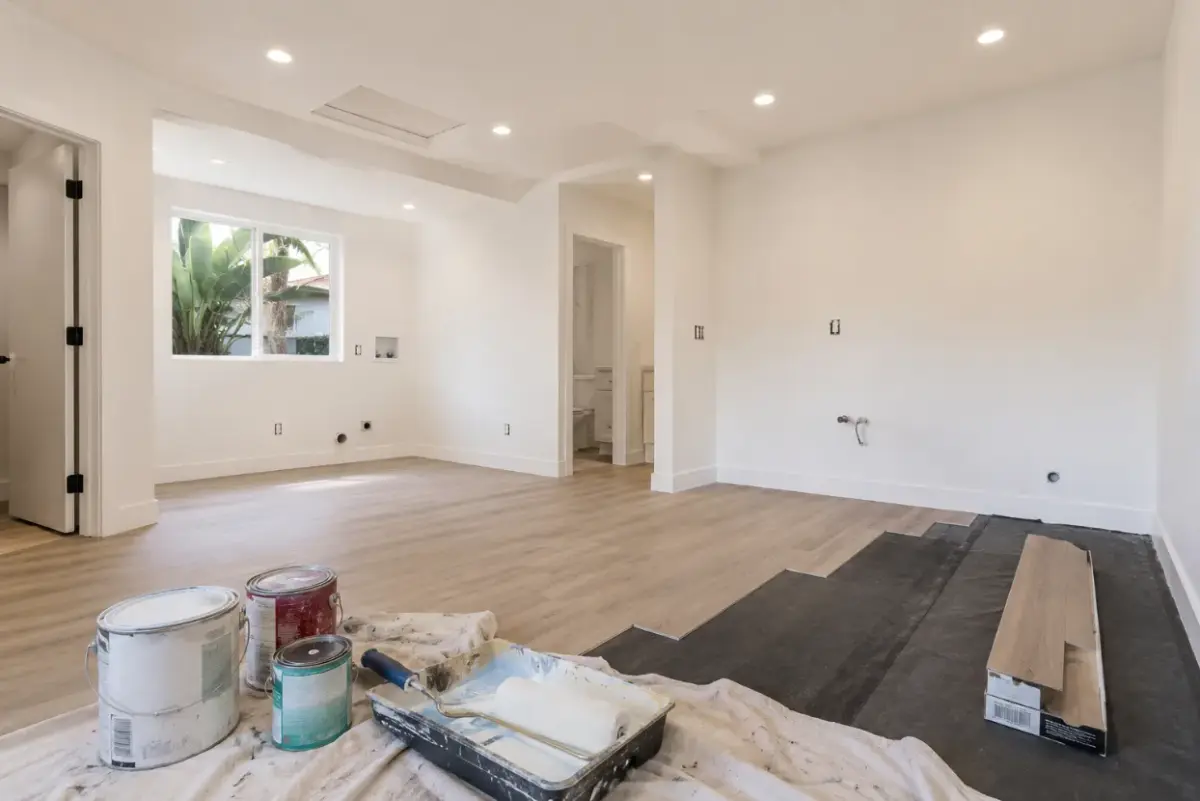
This is where the answer changes, and where it pays to plan ahead. If you’re converting a garage into a living unit (an ADU or JADU), the interior is now habitable, conditioned space, and the paint isn’t just a finish choice, it’s a code item. Under CALGreen (California’s Green Building Standards Code), additions and alterations that add conditioned living area must use low-VOC compliant paints and coatings, and your building division can ask for documentation proving it. Low-VOC isn’t a nice-to-have here; it’s part of passing inspection.
That’s on top of the everyday LA rule covered below, and on top of the permits an ADU conversion already requires: electrical, plumbing, insulation, egress, and energy compliance all come into play once a garage becomes a dwelling. If a conversion is where you’re actually headed, the paint decision is one small piece of a much larger permitted project, and it’s worth handling as part of that scope rather than as an afterthought. Our garage conversion service covers the full path, and our complete Los Angeles garage conversion guide walks through the ADU permits and requirements in detail.
On the exterior shell of a converted garage, weather protection matters more than ever. LA stucco exteriors are commonly finished with an elastomeric coating, a thicker, flexible exterior product that bridges hairline stucco cracks and seals against moisture far better than standard wall paint.
Best Paint Choices for LA Garages (by Surface)
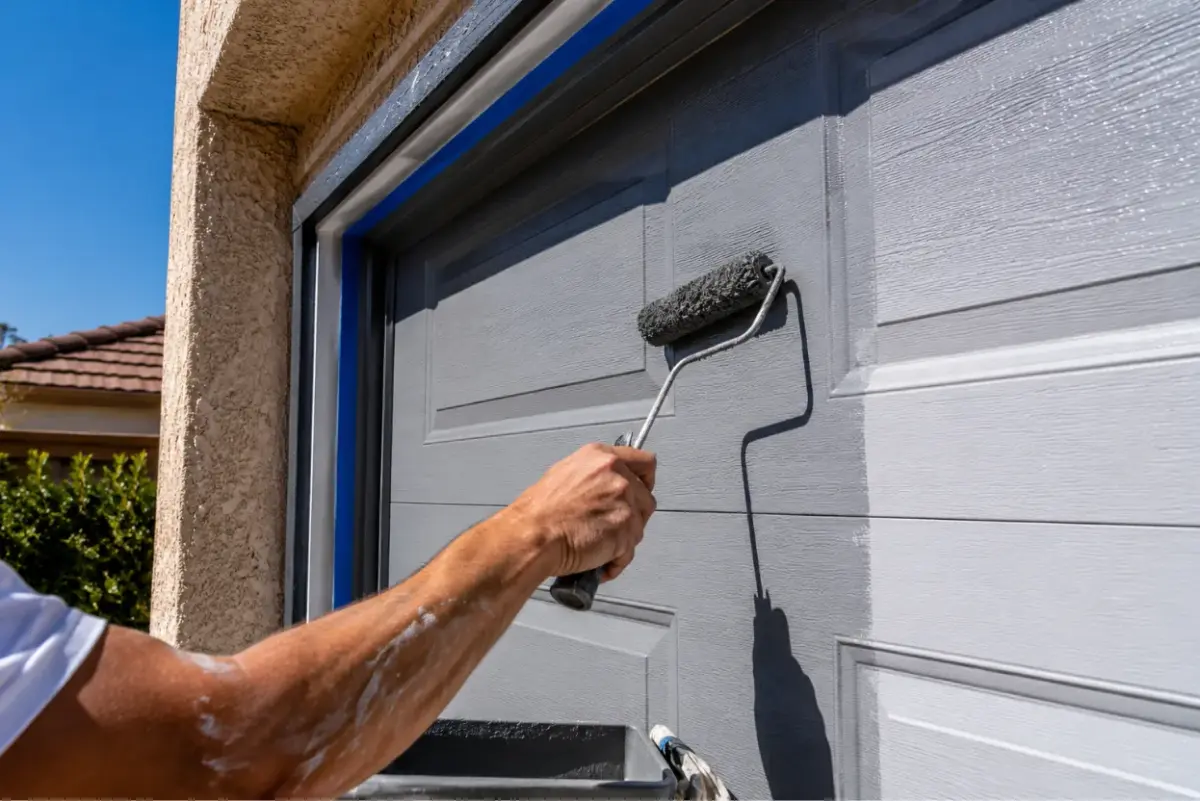
The simplest way to get it right is to match the paint to the surface, not to the building:
| Garage surface | Recommended paint | Why |
|---|---|---|
| Interior walls (enclosed/attached) | Interior latex or acrylic, satin or semi-gloss | Scuff-resistant, wipes clean, low VOC for an enclosed space |
| Ceiling | Interior latex, flat or eggshell | Hides imperfections, minimal spatter |
| Concrete floor | Epoxy or polyurea floor coating (not wall paint) | Withstands tires, oil, and abrasion; wall paint fails on floors |
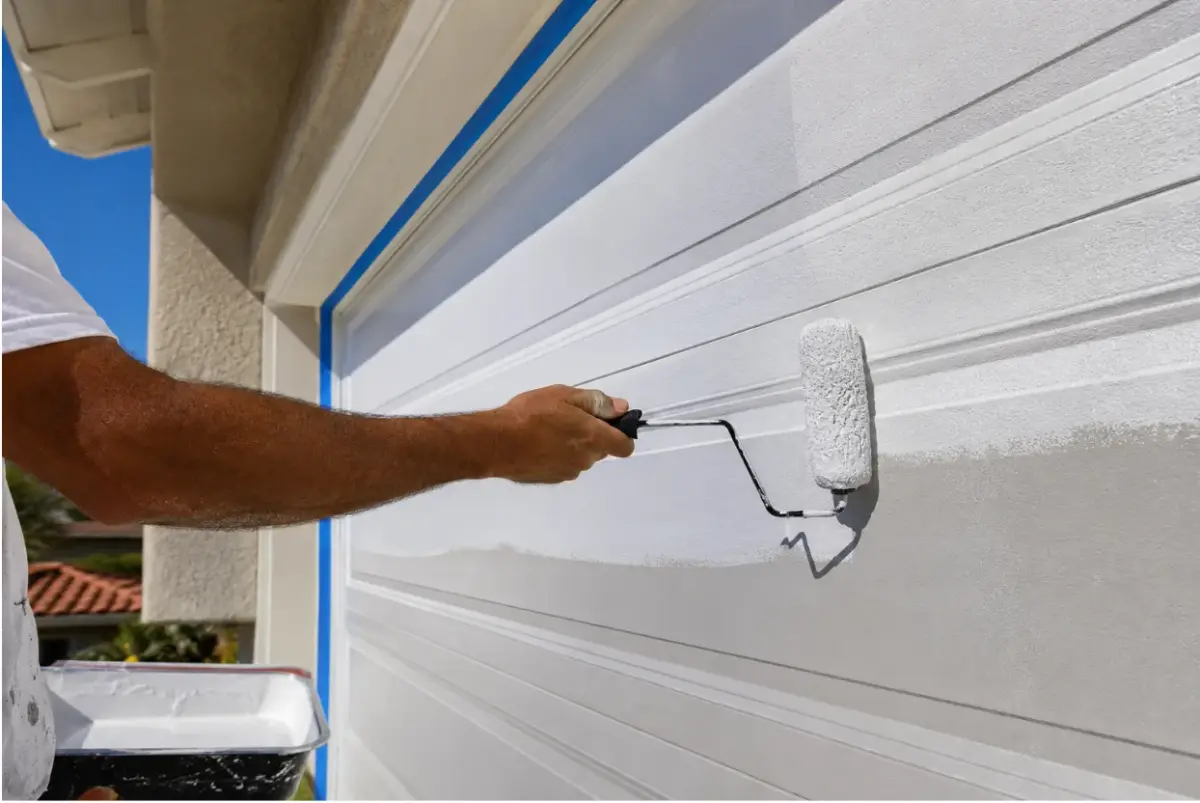
| Garage door exterior face | Exterior acrylic rated for UV | Full sun and weather exposure; resists fading and cracking |
| Garage door interior face | Interior paint (in a finished garage) | Protected side; match the interior finish |
| Outside-facing walls / stucco / trim / soffits | Exterior acrylic, or elastomeric on stucco | Weather, UV, and moisture; elastomeric bridges stucco cracks |
When in doubt, ask one question: does rain or direct sun touch this surface? If yes, it’s exterior. If it’s sealed inside an enclosed space, it’s interior.
Why Paint Choice Matters More in LA Garages
Three local realities make the right call more important here than in most of the country.
Heat. An uninsulated Valley garage in summer can climb well past 100°F, and that swing stresses paint. Interior latex handles the indoor side of an enclosed garage well; the outside-facing surfaces need exterior products built to expand, contract, and resist UV without cracking.
Air quality and the law. Los Angeles County sits inside the South Coast Air Quality Management District, and SCAQMD Rule 1113 caps the VOC content of essentially every architectural coating sold or applied here, the strictest such limits in the country, for both interior and exterior paints. The practical upshot: choose quality low- or zero-VOC products (the CARB architectural-coatings limits are the statewide baseline), and never compensate for a poorly ventilated garage by reaching for a high-VOC exterior paint indoors.
UV. Southern California sun is hard on the one surface most homeowners get wrong: the exterior face of the garage door. Coat it with interior paint and it chalks, fades, and peels fast. A UV-rated exterior acrylic is what holds up. Whether you’re refreshing a garage in Encino, finishing a workshop in Woodland Hills, or prepping a conversion in Northridge, those three pressures, heat, VOC limits, and UV, should drive the product on every surface.
The Bottom Line
Use interior paint inside an enclosed garage, exterior paint on the surfaces that face the weather, and a floor-specific coating on the concrete. If the garage is becoming an ADU, build low-VOC, code-compliant paint into the project from the start rather than patching it in later.
Whether you’re repainting a garage in Encino or converting one into an ADU in Tarzana, Green Star Remodeling handles both the painting and the full garage conversion, as one licensed contractor with a single point of contact (CA Lic #1088206).
Get a free painting estimate → · Book a garage conversion consultation →
Frequently Asked Questions
Do you use interior or exterior paint for a garage?
Use interior paint on the enclosed interior walls and ceiling of an attached garage, and exterior paint only on surfaces exposed to weather: the outside of the garage door, outward-facing walls, and trim. The concrete floor needs its own epoxy or polyurea coating.
Should I use interior or exterior paint inside my garage?
Interior paint, in a satin or semi-gloss finish. It’s washable and scuff-resistant without the higher VOC off-gassing of exterior paint, which isn’t meant for enclosed, poorly ventilated spaces. In Los Angeles, all coatings are also VOC-capped under SCAQMD Rule 1113.
What kind of paint do you use on a garage door?
Use a UV-rated exterior acrylic on the door’s exterior face, which takes full sun and weather. The interior face of the door, in a finished garage, can take interior paint to match the rest of the space.
Do I need special paint for an ADU garage conversion in LA?
Yes. A conversion creates conditioned living space, so CALGreen requires low-VOC compliant paints and coatings, with documentation available for the building division. The exterior shell is usually finished with an elastomeric coating over stucco for weather protection.