That garage you’re using to store boxes, a treadmill you haven’t touched in three years, and your kid’s old bike? It might be the most valuable unused space on your property.
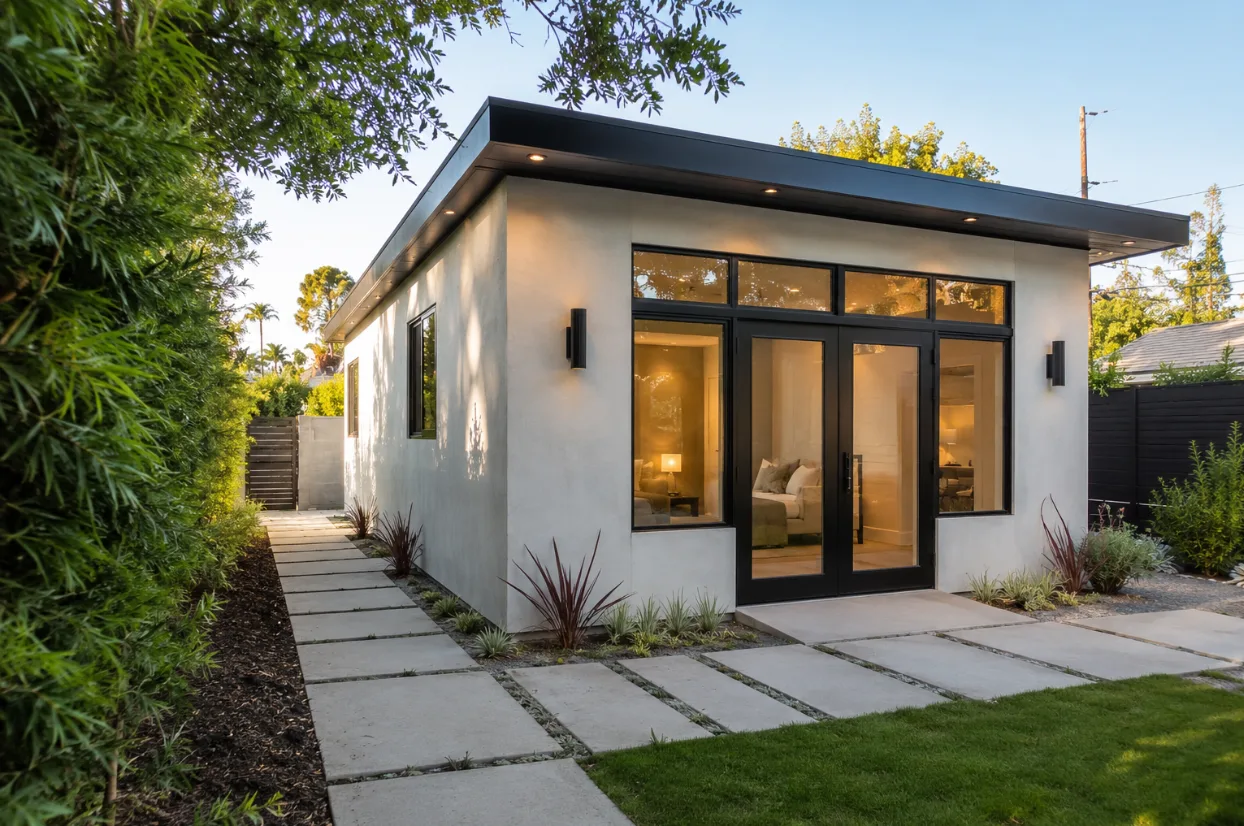
A garage conversion in Los Angeles can turn that space into a legal, rentable ADU — a full living unit with its own kitchen, bathroom, and entrance. It’s one of the most popular home improvement projects in LA right now, and for good reason. You’re starting with a structure that already exists. No new foundation. No new roof. Just a shell waiting to become something useful.
But there’s a lot to understand before you start. Permits, structural requirements, utility connections, design decisions — it’s not complicated, but it is layered. This guide answers the questions LA homeowners actually ask, in the order they tend to ask them.
Is a garage conversion the same as building an ADU?
Yes — when done correctly, a garage conversion becomes a fully permitted ADU (Accessory Dwelling Unit). That means it meets California’s definition of a complete, independent living space: its own kitchen, bathroom, sleeping area, and exterior entrance.
The “conversion” part just means you’re changing the use of an existing structure rather than building something from scratch. The garage shell stays. Everything inside gets rebuilt to habitable standards.
This is different from simply adding a room to your house. A garage conversion ADU is a separate dwelling unit — legally recognized, separately rentable, and permanently recorded on your property.
Why are garage conversions so popular in Los Angeles right now?
A few things have come together at the same time.
California law now makes it easier than it’s ever been. Recent state legislation removed most of the barriers that used to make garage conversions complicated. No replacement parking required. No setback rules for existing structures. Faster permit processing. Clearer rules.
LA’s rental market is strong. A well-finished garage ADU in the San Fernando Valley can realistically generate significant rental income month after month. Many homeowners find the rental income covers their construction financing payment and then some.
It’s faster and less expensive than building new. A detached new-construction ADU means pouring a new foundation, framing from scratch, and a longer construction timeline. A garage conversion starts with a structure that already exists. That difference in scope is meaningful — both in timeline and in overall project cost.
More households need flexible space. Aging parents who want independence without moving far away. Adult children returning home. Long-term house guests who need their own space. The garage ADU solves all of these in a way that adding a bedroom simply can’t.
Does my garage qualify for conversion in Los Angeles?
Most do, but there are a few things worth checking before you get too far into planning.
Structural condition. Your garage needs to be structurally sound. That means checking the foundation, the framing, and the roof. Many older garages across the San Fernando Valley were built as basic storage structures — no insulation, minimal electrical, a slab that wasn’t designed for habitable use. A structural assessment early in the process tells you what you’re working with.
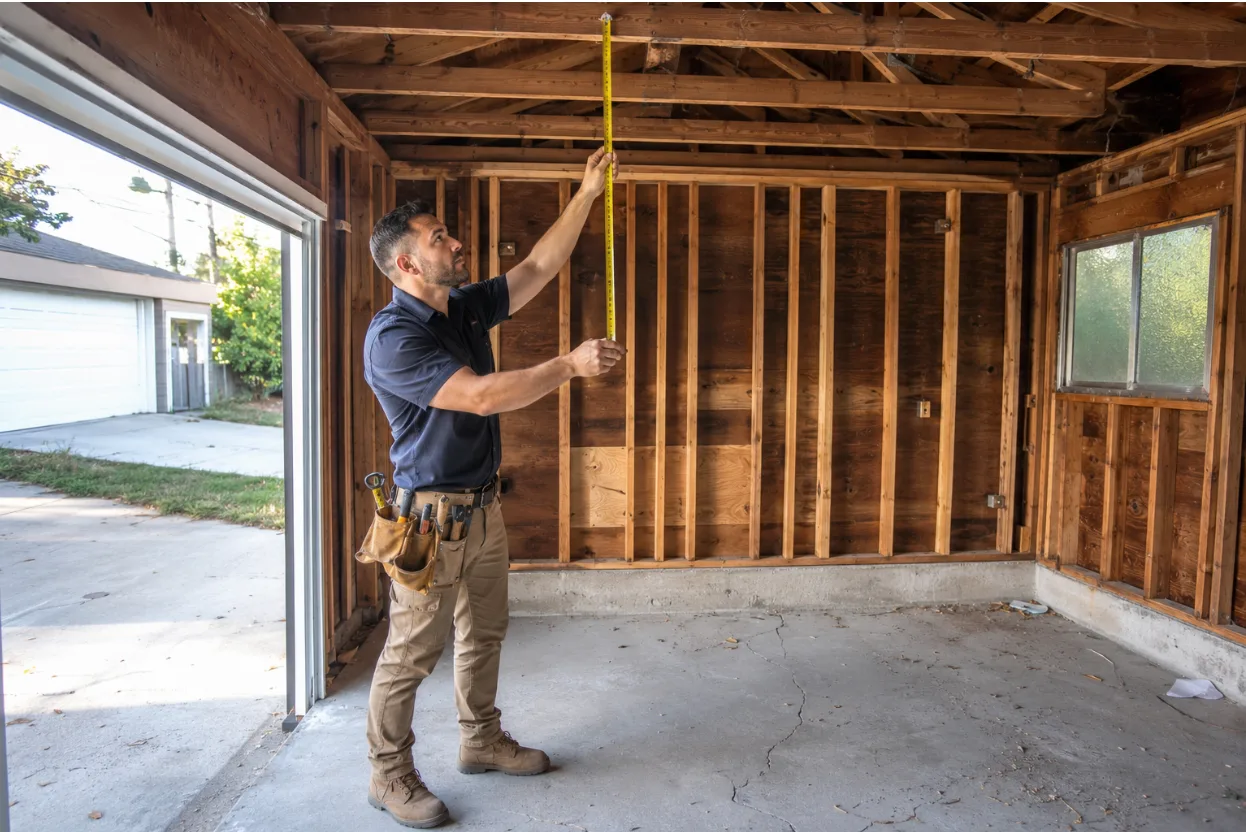
Ceiling height. California building code requires a minimum ceiling height of 7 feet for habitable space. Some jurisdictions require 7 feet 6 inches. Here’s the catch: your garage slab is going to get a new subfloor on top of it — vapor barrier, rigid insulation, plywood — which adds 2 to 3 inches of height before your finished floor even goes down. If your garage is tight on ceiling height to begin with, that detail matters more than people expect.
Location on your lot. The good news: existing structures being converted to ADUs don’t need to meet the standard 4-foot setback requirement. Your garage can sit right at the property line and still be convertible. The structure stays where it is. The only exception is if you plan to expand beyond the existing footprint — additions trigger the setback requirement.
Attached vs. detached. Both can be converted, but attached garage conversions require fire-rated separation between the ADU and the main house. That typically means 5/8” Type X drywall on the shared wall and ceiling. It’s a standard requirement — just something to plan for.
Zoning. Your property needs to be in a residential zone. Most single-family and many multifamily residential zones in Los Angeles allow ADUs. This is easy to verify through LADBS’s online property records.
If you’re not sure whether your garage qualifies, the most efficient first step is a site assessment with a contractor who regularly does this work. They’ll spot the relevant conditions in an hour and save you weeks of guessing.
Do I need a permit to convert my garage in Los Angeles?
Yes. Always. No exceptions.
Converting a garage from storage to habitable space is a change of use — and that triggers a full set of building permits. You’ll need a building permit at minimum, and typically separate permits for electrical, plumbing, and mechanical (HVAC) work as well.
This is not optional, and it’s not something to work around. Unpermitted garage conversions in Los Angeles create serious problems: insurance complications if there’s a fire or flooding, issues with your lender if you refinance, and real problems at resale when a buyer’s agent flags an unpermitted unit. In some cases, the city can require you to undo the work entirely.
Working with a licensed contractor who pulls permits under their own license — not yours — is the right way to do this. Green Star Remodeling handles all permit coordination as part of every ADU construction project. You don’t chase paperwork. We do.
What does the LADBS permit process actually look like?
For City of Los Angeles properties, all ADU permits go through the Los Angeles Department of Building and Safety (LADBS).
Here’s how the process works in practice:
Design and documentation. Before anything goes to LADBS, you need a complete set of plans: architectural drawings, structural engineering calculations, a Title 24 energy compliance report, and a plot plan showing your property with the proposed ADU location. This package is what your contractor or designer prepares.
Application submission. Plans go in through the ePlanLA online portal or in person at an LADBS Construction Services Center. Under SB 543, LADBS must tell you within 15 business days whether your application is complete. If they miss that deadline, it’s automatically deemed complete — the city can’t sit on applications the way they used to.
Plan check. LADBS reviews your plans for building code compliance, zoning, and Title 24 energy standards. This is where corrections may come back. A complete, well-prepared submittal gets fewer corrections and moves faster.
Permit issued. Once approved, you pay permit fees, pull the permit, and construction begins.
Inspections during construction. LADBS inspects at key milestones — foundation, framing, rough-in plumbing and electrical, and final. Each inspection needs to pass before moving to the next phase.
Final inspection and Certificate of Occupancy. This is the finish line. Once issued, the ADU is legal and livable.
How long does this take? Using LADBS’s pre-approved Standard Plans, permit approval typically runs 3 to 6 weeks for a garage conversion. Custom designs go through the standard 60-day review window. Construction itself typically takes 12 to 16 weeks after the permit is in hand. Total project time from design to move-in: most garage conversions land between 5 and 8 months.
Do I have to replace the parking spot I’m losing?
No. This is one of the clearest wins in current California ADU law.
When you convert a garage to an ADU, state law explicitly prohibits the city from requiring you to replace the lost parking spaces. No tandem spots required. No covered carport required. You simply lose the garage, and that’s the end of the parking conversation.
This used to be a major obstacle. Homeowners would want to convert but couldn’t figure out where to put replacement parking on a tight lot. That requirement is gone.
What does a garage actually need to become livable space?
This is where most homeowners get surprised — in a good way once they understand it, but surprised nonetheless. A garage conversion isn’t a cosmetic remodel. You’re turning an uninsulated, unconditioned storage structure into a full dwelling unit. Here’s what that involves:
The slab. Your garage floor was built for a car, not a living room. It has a drainage slope, no vapor barrier, and typically no insulation underneath. Before your finished floor goes down, the slab needs a vapor barrier, rigid insulation, and a plywood subfloor. This brings it up to code and makes the space livable — but as mentioned above, it also raises your finished floor height by a couple of inches.
Insulation. Garages have none. A converted ADU typically needs R-15 to R-21 insulation in the walls and R-30 or higher in the ceiling to meet California’s Title 24 energy code. This isn’t optional — it’s inspected.
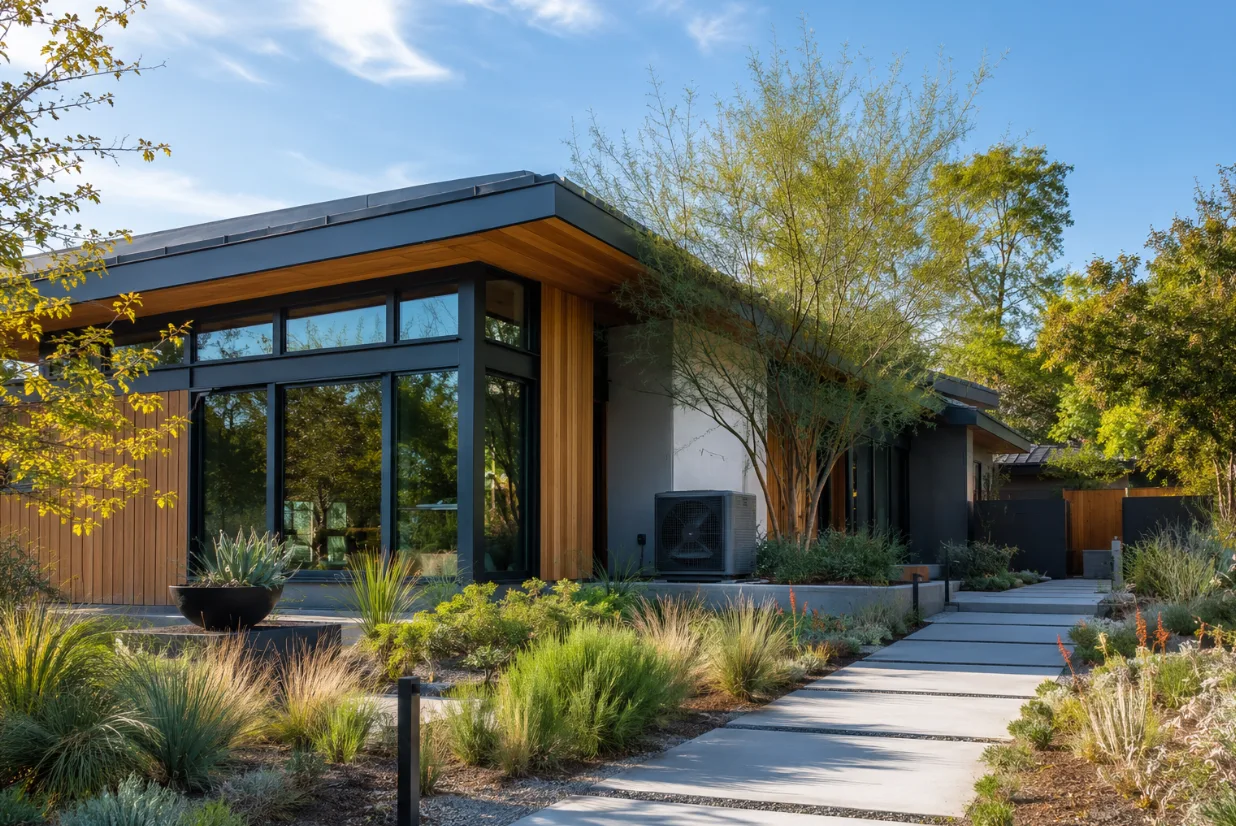
Heating and cooling. The ADU needs a permanent heating system. Most LA garage conversions use a ductless mini-split heat pump. It provides both heating and cooling in one unit, doesn’t require ductwork, handles a 400 to 500 square foot space efficiently, and satisfies Title 24 without the complexity of connecting to your main home’s HVAC system.
Plumbing. Your garage has no plumbing. Adding a kitchen and bathroom means trenching new supply lines, drain lines, and venting — usually routed under or through the slab to connect to your main home’s sewer lateral. This is one of the more labor-intensive parts of the project and a significant cost driver.
Electrical. Most garages share one or two circuits with the main house. A converted ADU needs its own dedicated subpanel with circuits for kitchen appliances, bathroom, HVAC, lighting, and outlets. Before your designer finalizes plans, your contractor should confirm that your main panel has capacity for the additional load.
Windows and egress. Habitable rooms need natural light and ventilation — window area equal to at least 8% of the floor area for light and 4% for ventilation. Sleeping areas need an egress window: a minimum clear opening of 5.7 square feet, with the sill no higher than 44 inches from the floor. This is a life-safety requirement and it’s inspected. Converting the old garage door opening into a large window or glass door system is the most common — and most effective — way to meet this requirement while also dramatically improving the space’s livability and street presence.
The garage door opening itself. The overhead door gets replaced with a permanent wall framed to code, with windows, a door, or a glass door system. Fire-rated assembly is required if the wall faces a property line within 5 feet.
Can I make the garage bigger as part of the conversion?
You can add square footage, but it changes the rules.
A straight conversion — staying within the existing footprint — keeps things simple. No new setback required, faster permit review, and lower cost.
If you want to expand — add a room, bump out a wall, extend the roofline — you’re now adding new construction on top of the conversion. That addition triggers the standard 4-foot side and rear setback requirement for the new portion. It also adds foundation work, framing, roofing, and a more complex permit package.
Expansions make sense when the garage is genuinely too small for what you need — a single-car garage at around 250 square feet is tight for a full ADU. But the cost and complexity jump is real. For most homeowners, a standard two-car garage (roughly 400 to 500 square feet) converts cleanly to a comfortable studio or one-bedroom ADU without any expansion needed.
Will my property taxes go up?
Yes, but probably not as much as you think.
California’s Prop 13 protects your existing assessed value. The county doesn’t reassess the whole property — they do what’s called a “blended assessment.” They add the value of the new construction to your current tax basis. Your existing home’s assessed value stays where it is. Only the ADU addition gets newly assessed.
The result: your annual tax bill will go up, but by a fraction of what a full reassessment would cost. Most homeowners find the rental income from the ADU covers the tax increase many times over.
Can I rent out the garage ADU without living on my property?
Yes — for a standard ADU, you don’t need to live there.
California law (AB 976, effective January 2024) permanently eliminated owner-occupancy requirements for standard ADUs. You can rent both the main house and the garage ADU to separate tenants without living on-site yourself.
If you’re converting to a JADU instead of a full ADU — which is less common with garages, but possible — the rules depend on whether the JADU shares a bathroom with the main house.
One note on short-term rentals: JADUs cannot be rented on a short-term basis under AB 1154. Full ADUs may be eligible depending on the City of Los Angeles’s Home Sharing ordinance — but most garage ADU owners in LA rent long-term anyway.
What design choices matter most in a garage conversion?
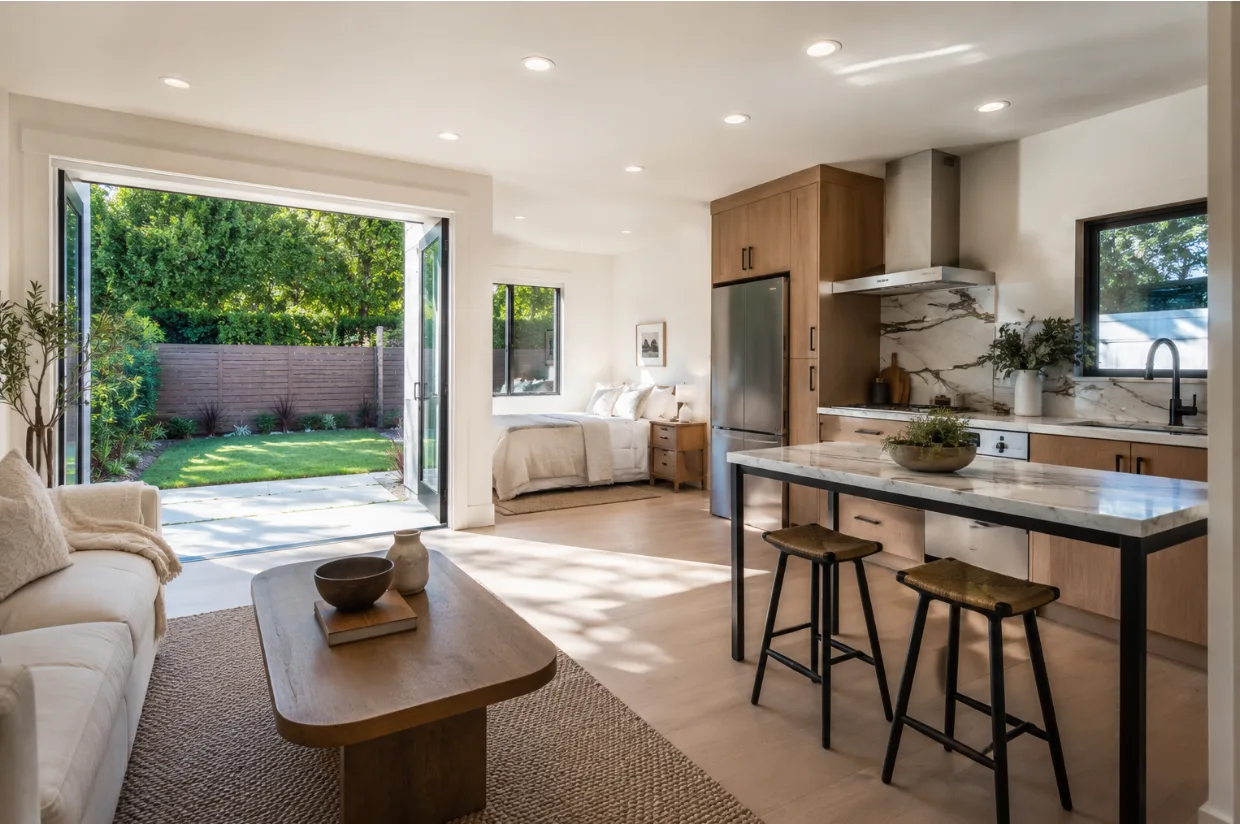
The structure dictates a lot, but there are decisions that make a real difference in how livable the space feels.
The garage door opening is your biggest opportunity. That wide opening — usually 8 to 16 feet — is a blank canvas. Replace it with a wall of glass, a large sliding door, or bifold glass panels and you transform what felt like a garage into a bright, airy living space. This single design decision affects natural light, ventilation, egress compliance, and the entire feel of the unit. It’s worth investing in.
Ceiling height determines the vibe. If your garage has any extra height to work with, consider vaulted or exposed ceilings. Even a few extra feet makes a 400-square-foot studio feel significantly larger. If you’re tight on height, lower-profile lighting and lighter finishes compensate visually.
Keep the layout honest. A 400 sq ft studio works well when the layout is efficient — sleeping, living, kitchen, and bath each get clearly defined zones without wasted circulation space. A Murphy bed, built-in storage, and a smart kitchen layout (galley or L-shaped) make the difference between a space that feels cramped and one that feels like a thoughtful small home.
Separate utilities. If you plan to rent the unit, separate metering for electricity and gas is worth doing during construction. It’s far easier to run separate service now than to retrofit it later, and tenants generally prefer — and expect — to control their own utility bills.
If you’re also updating your yard or outdoor space as part of the project, our landscaping and pools service can coordinate that work alongside the conversion. Reconfiguring your outdoor space and adding an ADU at the same time, with one contractor managing both, avoids a second round of disruption after the main project finishes.
Is a garage conversion worth it financially in Los Angeles?
For most LA homeowners, yes — particularly in neighborhoods where rental demand is strong.
The financial case rests on three things: what you put in, what you get back monthly, and what it does to your property value long-term.
On the income side, a well-finished garage ADU in the San Fernando Valley, Encino, Northridge, or similar neighborhoods generates meaningful monthly rental income. Strong locations command more. The unit pays for itself over time through that income stream.
On property value, an ADU adds livable square footage and an income-generating asset to your property — both of which buyers pay attention to. The LA real estate market recognizes this.
What makes the math work or not: the gap between what the project costs and what the unit earns. That gap varies by property, by finish level, and by location. We don’t publish generic price ranges because they rarely apply to any specific project — your garage’s condition, your neighborhood, and your goals all affect the real number.
What we do offer is a free, honest assessment. We walk your property, look at your garage’s actual condition, and give you a realistic picture of scope and timeline before you commit to anything.
For a broader look at how ADU projects fit into the LA remodeling landscape and what they typically do to home value, see our home remodeling value and ROI guide.
What should I look for when choosing a contractor for a garage conversion in LA?
This is the most important decision you’ll make on this project.
License first. Verify any contractor’s license at the California State License Board website (cslb.ca.gov) before signing anything. You want an active Class B General Building Contractor license. Confirm the bond and workers’ compensation insurance are current.
They should pull permits in their own name. If a contractor suggests you pull permits as the homeowner — or suggests “permitting it as something else” to speed things up — walk away. That’s not a shortcut, it’s exposure. Contractors who do this work correctly pull permits under their own license and stand behind the work.
Ask about local experience specifically. A contractor who regularly works in Tarzana, Encino, Northridge, or Woodland Hills knows what LADBS’s Valley District office expects, what foundation conditions are common in your area’s housing stock, and what site-specific surprises tend to come up in San Fernando Valley homes. That local knowledge saves time and money.
Ask for an itemized scope. A professional proposal breaks out design, structural engineering, Title 24 calculations, permits, plumbing, electrical, HVAC, framing, insulation, finishes — separately. A lump sum with no breakdown is a flag.
Check their project history. Completed ADU projects in LA are the best evidence. Ask for references from homeowners in similar neighborhoods with similar projects.
What’s the difference between a full home remodel and a garage conversion ADU?
They’re separate projects, but they’re not mutually exclusive.
A garage conversion ADU adds a rentable, livable unit to your existing property — separate from the main house, with its own entrance and independent facilities. It doesn’t touch the main home.
A full home remodel updates and improves the primary residence itself — kitchen, bathrooms, living spaces, layout.
Some homeowners do both at the same time. If you’re already bringing in trades for a full home remodeling project, coordinating a garage conversion alongside it is more efficient than running two separate projects back to back. Shared mobilization, shared utility work, and a single point of contact for both scopes typically reduces total cost and shortens the combined timeline.
Ready to See What Your Garage Could Become?
Green Star Remodeling has been working with Los Angeles homeowners for over 20 years. We’re licensed (CA License #1088206), we handle design, permitting, and construction under one roof, and we serve homeowners throughout Encino, Tarzana, Northridge, Woodland Hills, Calabasas, Sherman Oaks, and the San Fernando Valley.
We’ll walk your property, assess your garage’s actual condition, and give you a clear, honest picture of what the conversion involves — scope, timeline, and what to expect from the permit process — before you commit to anything.
Schedule your free garage conversion consultation →
No pressure. No vague estimates. Just a real conversation about what’s possible on your property.
Disclaimer: This article is for informational purposes only and should not be considered legal, engineering, or professional advice. California ADU laws and local regulations may change over time and can vary by jurisdiction. Always verify current requirements with the appropriate local building department or qualified professional before planning or submitting an ADU permit application.