
A roof replacement sounds like a big, messy disruption. The truth is calmer than most people expect. A typical home’s roof is replaced in about 1 to 3 days: the crew protects your yard, tears off the old roof, checks the wood underneath, and installs the new one, then does a full cleanup and a final city inspection. Larger homes, tile roofs, or bad weather can stretch that to a week or more.
Here in Los Angeles, a replacement also comes with a few local steps: permits, energy rules, and cleanup around your driveway and pool. This guide walks you through the whole thing, day by day, so you know exactly what to expect before the first nail comes out. (Still deciding if you even need a new roof? Start with our guide on roof repair vs. replacement.)
Before the crew arrives
Good projects are won before day one. Here’s what happens in the days leading up to the work:
- Inspection and contract. Your contractor confirms the scope and puts it in writing.
- The permit. Most roof replacements in the City of LA need an LADBS permit. Your contractor pulls it and handles the paperwork.
- Material delivery. Shingles or tile, underlayment, and flashing are dropped off, often the day before. Expect a pallet in the driveway.
- Your prep. Move cars out of the driveway and away from the house. Take down loose wall art inside (hammering causes vibration). Cover pool equipment and delicate plants if asked.
- Pets and kids. Plan for the noise. It’s loud all day, so a quiet room, a friend’s house, or daycare for pets is a smart idea.
Day-by-day: what actually happens
Every roof is a little different, but the flow is almost always the same.
- Protect the property (morning of day 1). The crew lays tarps and plywood over landscaping, windows, and walls to catch debris.
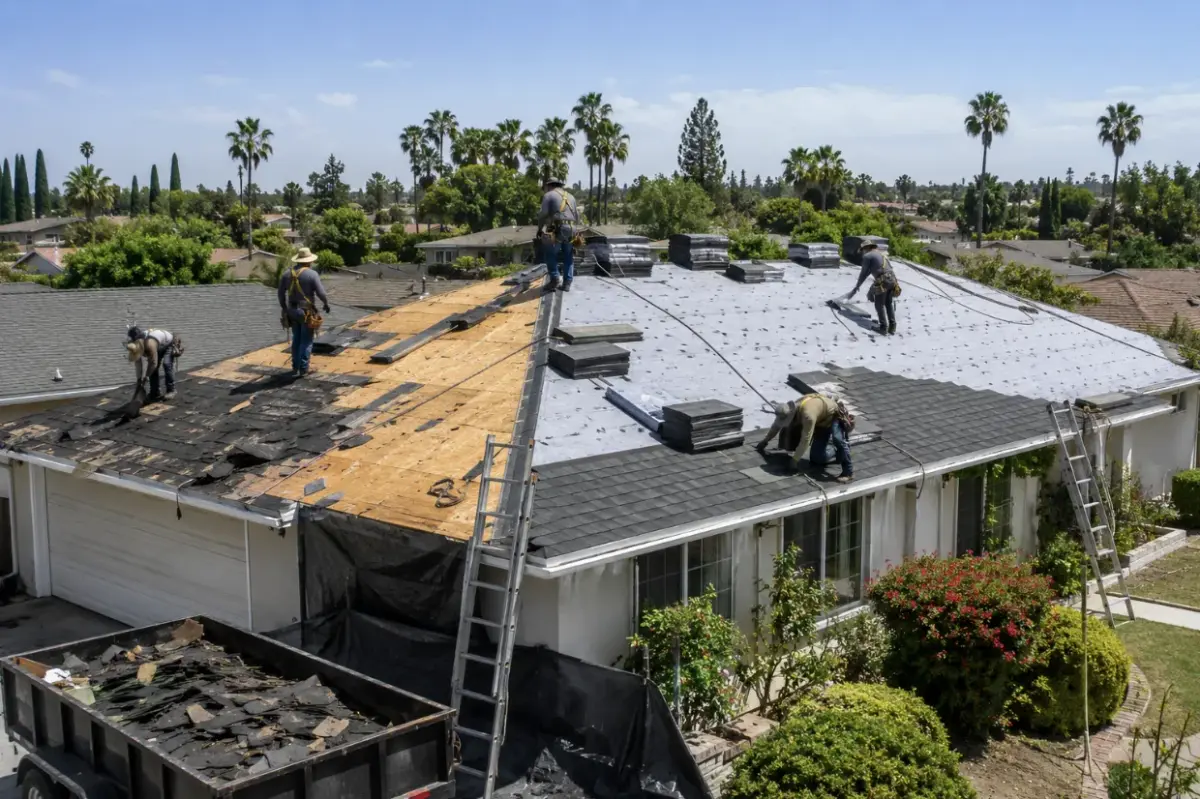
- Tear off the old roof. Old shingles or tiles come off down to the wood deck. Debris goes straight into a dumpster or trailer.
- Inspect the deck. With the roof off, the crew checks the wood underneath for rot or soft spots. Any bad wood is replaced so your new roof sits on a solid base.
- Install the underlayment and flashing. A water-resistant layer goes down, plus new flashing around the chimney, vents, and valleys, the spots most likely to leak.
- Install the new roof. Shingles or tile go on, along with ridge vents and ridge caps. This is the longest step.
- Clean up. The crew hauls away all debris and runs a magnet over your yard and driveway to pick up stray nails.
- Final walkthrough and city inspection. You review the work, and a city inspector signs off on the permit.
Should you stay home during the replacement?
You don’t have to stay, but you can. Here’s how to decide.
You can leave: the crew works outside and doesn’t need access to your home for most jobs. Many homeowners go to work as usual.
It helps to be reachable, though. Sometimes the crew finds a surprise (like hidden wood rot) and needs a quick decision. Being available by phone keeps the project moving.
A few real-life notes:
- It’s loud. Hammering and footsteps overhead last all day. If you work from home or have a napping baby, plan around it.
- Pets get stressed. The noise and strangers on the roof can scare animals. A quiet interior room or a day away is kinder to them.
- Driveway access is limited. The dumpster and materials may block it, so park on the street.
How long does it take?
For most single-family homes, a roof replacement takes 1 to 3 days. What changes the timeline:
- Roof size and shape. Bigger roofs, or ones with lots of angles, valleys, and skylights, take longer.
- Material. Asphalt shingles go fast. Tile roofs, common on LA’s Spanish-style homes, take more time and care.
- Surprises. Hidden wood rot or damaged decking adds a step.
- Weather. LA rarely stops a job, but winter rain or high Santa Ana winds can pause work for safety.
Your contractor should give you a clear start date and an estimated finish before work begins.
What’s included vs. what may cost extra
Knowing this upfront prevents surprises. A standard replacement usually includes:
- Tear-off and disposal of the old roof
- New underlayment, flashing, and drip edge
- Your chosen roofing material and installation
- Ridge vents and ridge caps
- Full cleanup and a magnetic nail sweep
- The permit and final inspection
- A workmanship warranty
Common add-ons that can grow the scope (your contractor should flag these in writing):
- Deck repair if rot or damaged wood is found once the old roof is off
- Code-required upgrades, like a Title 24 “cool roof” material or a Class A fire-rated system in a wildfire zone
- Removing extra old layers if your roof already has two
- Ventilation, skylight, or chimney work
- New gutters or fascia if they’re worn
We don’t list prices here because every roof differs, but a good estimate spells all of this out line by line, so nothing is a shock later. For a real number on your home, an inspection and written estimate are the only reliable path.
Working with your insurance company
If a storm, hail, or a fallen branch damaged your roof, insurance may help pay for the replacement. Here’s how to handle it well. (Note: we’re roofers, not insurance advisors. For policy questions, talk to your agent or a licensed public adjuster.)
Know your coverage type first. Policies pay one of two ways:
- RCV (Replacement Cost Value) pays the full cost of a new roof, minus your deductible.
- ACV (Actual Cash Value) pays that amount minus depreciation for the roof’s age, so an older roof gets a smaller payout.
Expect two checks with RCV. The insurer sends a first check for the ACV amount. After the work is done and you submit the final invoice, they release the held-back “recoverable depreciation” as a second check.
What’s usually covered: sudden storm, wind, hail, or falling-tree damage. What’s usually not: age, wear and tear, or poor past installation.
Tips to get a fair settlement:
- Get a professional inspection before you file, with clear photos and measurements.
- Have your roofer present during the adjuster’s visit so nothing gets missed.
- Ask for an itemized estimate that separates storm damage from code-required upgrades (like LA’s cool-roof or fire rules). Those may be covered if your policy has “Ordinance or Law” coverage.
- Keep every conversation in writing.
Can a city require you to replace your roof? Yes. If your roof is deemed unsafe or a code violation, a city can order repairs or replacement. And after a covered loss, current LA codes can require upgrades that weren’t in place when your old roof went on.
Get your free roof inspection
The best way to know what your replacement will involve is a professional look at your actual roof. Green Star Remodeling is a licensed, bonded, and insured Los Angeles contractor (CA Lic #1088206). We handle the full process, permit, tear-off, install, cleanup, code compliance, and final inspection across the San Fernando Valley and greater LA, with honest guidance every step of the way. Learn more about our roofing services.
Schedule your free roof inspection →
Frequently Asked Questions
What happens during a roof replacement?
The crew protects your yard, tears off the old roof, checks and repairs the wood deck, installs new underlayment and flashing, and lays the new roofing material. They finish with a full cleanup, a magnetic nail sweep, and a final city inspection to close the permit.
Should I stay home during a roof replacement?
You don’t have to. The crew works outside and rarely needs to enter your home. But it helps to be reachable by phone in case they find hidden damage and need a quick decision. Plan for all-day noise, especially for pets and anyone working from home.
How long does a roof replacement take?
Most single-family homes take 1 to 3 days. Larger roofs, complex shapes, or tile roofs take longer, and winter rain or high winds can add a day. Your contractor should give you a start date and estimated finish before work begins.
Can a city require me to replace my roof?
Yes. If a roof is unsafe or violates code, a city can order repairs or a replacement. Also, after storm damage, current Los Angeles codes like cool-roof or fire-rating rules may require upgrades your old roof didn’t have.
Does insurance cover a roof replacement?
It can, if a covered event like a storm, hail, or falling tree caused the damage. Age and wear are usually not covered. Your payout depends on whether your policy is RCV (full cost) or ACV (cost minus depreciation), and your deductible always applies.